



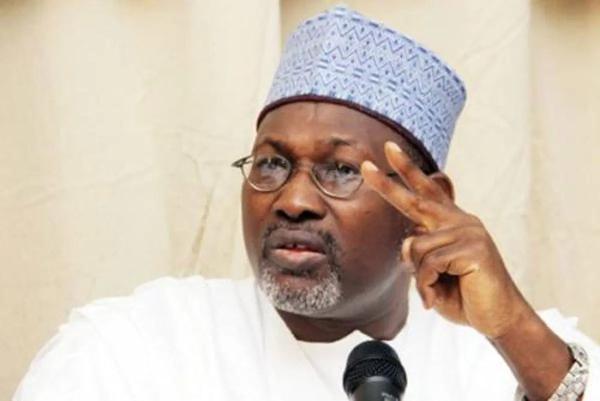
Jega declares Nigeria “stuck in a vicious cycle where those elected to protect democracy become its greatest threat”
By Jeph Ajobaju, Chief Copy Editor
**********************************
“At the cente of Nigeria’s crisis of governance is the immunity clause in our Constitution. It was meant to protect high office holders, presidents and governors, from frivolous litigation while in office. Instead, it has become a protective shield for corruption and abuse.
“Under this provision, executives have looted public funds, manipulated institutions, and trampled on rights without consequence. They know that for four or eight years, they are above the law.
“This is not democracy, it is elected autocracy. The immunity clause must go. Real-time accountability should apply to all public officers, regardless of rank” – Jega.
**********************************
Attahiru Jega – with his years of experience in both the theory of politics (as a professor of political science) and in the lawlessness in the practical Nigeria terrain (as a former Independent National Electoral Commission (INEC) Chairman) – has reinforced the general consensus that the country’s current democracy is a scam, having been replaced with “elected autocracy.”
He lamented that despite Nigeria witnessing nearly three decades of uninterrupted civil rule, democracy is still dangerously underdeveloped.
Jega, who garnered national respect for conducting the 2015 election generally regarded as fair, spoke in a paper titled “Required Reforms for Stronger Democratic Institutions in Nigeria” at The Platform Nigeria: June 12, 2025 edition, organised by The Covenant Nation Global in Lagos.
“We have perfected the rituals of democracy, elections, party campaigns, political handovers, but have failed to build the substance,” he said.
“Institutions that work, leaders who serve, and a citizenry that trusts. We are stuck in a vicious cycle where those elected to protect democracy become its greatest threat.”
If we are to salvage the republic, he warned, Nigeria must embrace far-reaching institutional reforms that will ensure accountability, strengthen the rule of law, and make governance truly serve the people.
“At the cente of Nigeria’s crisis of governance is the immunity clause in our Constitution. It was meant to protect high office holders, presidents and governors, from frivolous litigation while in office. Instead, it has become a protective shield for corruption and abuse.
“Under this provision, executives have looted public funds, manipulated institutions, and trampled on rights without consequence. They know that for four or eight years, they are above the law.
“This is not democracy, it is elected autocracy. The immunity clause must go. Real-time accountability should apply to all public officers, regardless of rank.”
However, Jega explained that removing immunity is only the beginning.
“Therefore, to build a democracy where power truly serves the people, we must fix the broken judiciary.
“In recent years, the courts have become compromised by political interference, underfunding, and opaque appointments. Judges are too often beholden to the executives who determine their career progression and salaries.
“The result is a judiciary that delays justice, tolerates impunity, and sometimes becomes a willing accomplice in subverting the will of the people. A democracy without an independent judiciary is like a car without brakes, it’s only a matter of time before it crashes.”
Judicial reform, he affirmed, must be both comprehensive and urgent. Other measures he suggested to strengthen democratic tenets include:
- All election petitions must be resolved before winners are sworn in to prevent courts from becoming post-election war rooms.
- The appointment of Judges should prioritise merit, experience, and character, not political loyalty.
- Contradictory court orders, often issued on the same issue from different courts, must end. These practices have turned the judiciary into a playground for desperate politicians.
- The courts must once again become temples of justice where the poor and powerful are treated equally.
Jega argued that a strong democracy also depends on a free and responsible press.
Unfortunately, in Nigeria, he noted, the media is under siege. Journalists are routinely harassed, denied access to public information, or co-opted by political actors.
“Many operate in fear, while others compromise truth for patronage. If the press cannot freely investigate, question, and report without fear, then democratic oversight collapses.
“The Freedom of Information Act must be fully enforced, and government agencies that violate it should face meaningful sanctions.
“At the same time, media professionals must adopt and uphold ethical standards to fight disinformation and hate speech, which also threaten democracy.”
In his view, elections remain the formal expression of democracy, but their credibility is what gives democracy its substance.
“INEC has made strides, particularly in deploying technology, but deep challenges remain.
“Executive control over the appointment of INEC leadership continues to cast doubt on the commission’s independence.
“Moreover, the body is overburdened, tasked not only with conducting elections but also prosecuting electoral offenders and regulating political parties. This is neither practical nor sustainable.
“INEC must be unbundled, with specialised, autonomous institutions taking on these additional roles, leaving the Commission to focus solely on election management.
“Technology is crucial to electoral integrity, but only if it is used transparently.
“Electronic transmission of results, biometric accreditation, and digital tracking must be standardised and secure. We must eliminate the space for human manipulation and back-end rigging.
“Citizens must be able to trust that their votes count and that elections are won fairly. Without credible elections, democracy becomes a hollow ritual, expensive, time-consuming, and meaningless.
Jega said another major problem is the unchecked dominance of the executive arm at both state and federal levels, noting that, over the years, this arm of government has become bloated with power and surrounded by an ever-growing army of political appointees.
“Often, Governors and the President operate as if they are above scrutiny, allocating security votes without transparency, ignoring legislative oversight, and appointing cronies without merit. The result is government as personal enterprise, not public service.”
He suggested that Nigeria must drastically cut the number of political appointments and enforce strict transparency in public spending, especially security-related funds, which have become slush funds in many states.
“Budgets must be adhered to, not treated as mere suggestions. And we must demand the highest ethical standards from our elected officials, not celebrate mediocrity or reward loyalty over competence.”
But Jega insisted that institutions alone are not enough, saying the long-term solution to the survival of democracy depends on the engagement and commitment of citizens, as too many Nigerians have lost faith in the system and for good reason.
“Corruption, impunity, and exclusion have driven apathy. But democracy cannot be outsourced. Citizens must demand accountability, participate actively, and reject vote-buying, ethnic politics, and the politics of handouts. Democracy belongs to the people, but only if the people claim it.
“Inclusive participation is vital. Nigeria must make room for the diaspora to vote, provide early voting options for essential workers, and create legislative quotas for women, youth, and persons with disabilities.
“We cannot continue to lock out the very groups whose energy and innovation can revitalise our politics. A democracy that does not reflect the diversity of its people is not representative, it is a lie.
“Ultimately, what Nigeria needs is not just periodic elections, but a full democratic reset. We must abandon the illusion that civil rule is the same as democratic governance. That myth has held us back for too long.
“If we continue down the path of weak institutions, unaccountable power, and silenced dissent, we risk not just democratic stagnation, but democratic collapse.
“This is a generational task, but one that cannot wait. We must remove executive immunity, strengthen the judiciary, empower the media, protect the vote, and curtail executive overreach.
“We must shift from a culture of impunity to a culture of responsibility; from patronage to public service; from autocracy dressed as democracy to the real thing.
“Nigeria is not doomed. But we are running out of time. This republic can still be saved, if we act with urgency, clarity, and courage. Let the reforms begin. Let the people rise. Let democracy, finally, be real.”
Read also:


