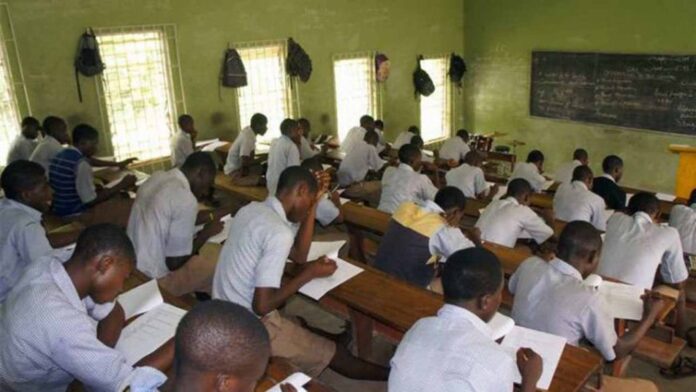
Nigerian kids in Togo, Benin join home candidates, Education Ministry promises fair and inclusive admission
By Jeph Ajobaju, Chief Copy Editor
More than 100 Nigerian kids in Togo and Benin Republic joined a total 64,000 – mostly home-based – candidates to write this year’s National Common Entrance Examination (NCEE) for admission into Unity Schools (formerly Federal Government Colleges), according to conductor National Examinations Council (NECO).
Lagos alone registered more than 15,000 candidates, the highest from any state.
Education Minister of State Suwaiba Ahmad expressed satisfaction with the smooth examination after she monitored the exercise at Model Secondary School, Maitama, and Government Secondary School, Tudun Wada.
“I’m very happy with the way the exams have been conducted. They started on time, students were orderly, and invigilators were present and active. We had 64,000 candidates, 30,000 male and 34,000 female, which shows a strong interest in our Unity Colleges,” she said.
“Nigerians are still eager to have their children in Federal Government Colleges. This turnout shows that parents still value the role of unity schools in national cohesion.”
NECO Registrar Ibrahim Wushishi confirmed that Lagos recorded the highest number of registered candidates with over 15,000 and the Republic of Togo had the lowest with 17.
“We had about 109 candidates from Benin Republic and Togo combined, all Nigerian citizens residing there. This is a truly regional exercise that affirms the reach and reputation of our Unity Colleges,” he stressed.
“Materials arrived on time, the exam started as scheduled, and so far, we’ve seen no issues. This smooth process gives us hope that upcoming senior secondary exams, both WAEC and NECO, will follow suit.
Wushishi acknowledged the inclusion of children with special needs, for which facilities like braille materials and support personnel were provided.
Binta Abdulkadir, Director of Senior Secondary Education at the Federal Ministry of Education, explained that admission into Unity Schools will be based on merit, state quota, and exigency catering largely to children of civil servants.
She stressed that “final admissions will depend on the released results, but we remain committed to a fair and inclusive process.”
Read also: