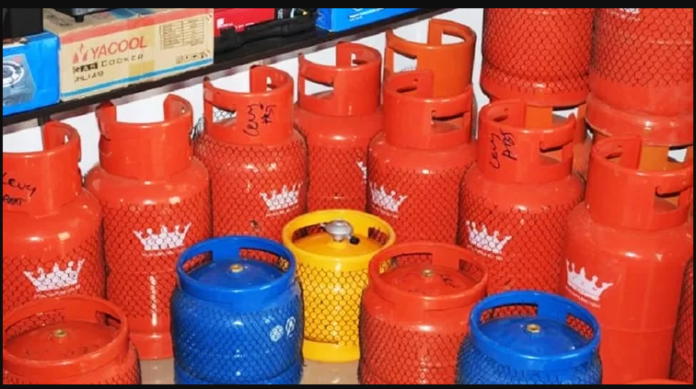
Many families in Lagos and other parts of the country have been thrown into confusion following the worsening scarcity and rising prices of Liquefied Petroleum Gas (LPG) otherwise known as cooking gas
By Emma Ogbuehi
Many families in Lagos and other parts of the country have been thrown into confusion following the worsening scarcity and rising prices of Liquefied Petroleum Gas (LPG) otherwise known as cooking gas. Since last Thursday when the shortage became manifest, households have been in confusion and have been forced to alternative sources of energy. As if the scarcity is not enough, few available stations dispensing the product have hiked their rates making the prices rise to 100 percent or more in some instances.
In some retail outlets in Lagos, the price of refilling a 12.5kg cylinder of cooking gas, has increased to N25,000 this week from N12,500 the previous week. In consequence, the price of 1kg currently retails at between N1, 500 and N2, 000, depending on the location.
READ ALSO:
Cooking gas price for 12.5kg cylinder refill rises to N20,268.06, up 2.18% MoM
In the entire FESTAC Town/Amuwo Odofin area of Lagos, only the NIPCO Gas station had products and attendant long queue by Saturday, October 6. Other outlets such as Mobil, Forte Oil, and road side marketers, were under lock. Same ugly tale of acute scarcity replicated in Ikeja, Mushin, Agege and other parts of the state.
Vanguard quotes Executive Secretary of the Nigerian Association of Liquefied Petroleum Gas Marketers, (NALPGAM), Bassey Essien, as blaming the crisis on the disruption caused by the recent industrial action by the Petroleum and Natural Gas Senior Staff Association of Nigeria, PENGASSAN.
He said: “Dangote Petroleum Refinery is currently the highest local supplier of cooking gas in Nigeria. The crisis involving PENGASSAN scuttled distribution. Many dealers could not replenish their stocks during the period.
‘’What we are witnessing is a function of demand and supply. In practice, the demand for cooking gas is higher than supply. But supply would likely stabilise in the coming days, following resolution of the conflict.”
Recently, Aliko Dangote, President of the Dangote Group, disclosed that the refinery was currently producing 2,000 tonnes of LPG per day, adding that it planned to increase output further in order to meet the nation’s demand.
Dangote, who expressed concerns about Nigeria’s energy poverty, said: “If the distributors are not trying to bring it down, we’ll go directly and sell to consumers so that people will now transit from firewood or kerosene to LPG for cooking.”
Before the intervention of the refinery, the nation’s LPG demand was largely met by the NLNG Limited.
In a report obtained yesterday, the NLNG limited, stated: “At NLNG, we are committed to making clean, reliable energy accessible to every Nigerian home. Since 2007, under our Domestic LPG, DLPG, scheme, we have been supplying Butane – commonly known as cooking gas – to homes across Nigeria.
“Over the years, we have steadily increased the volume reserved for the domestic market. In 2022, we took a bold step and committed 100% of our Butane production to Nigeria’s domestic needs. Thanks to this commitment, all of our Butane output is now fully absorbed locally.
“To get cooking gas to Nigerian homes efficiently, NLNG supplies Butane to selected partners (our Off-takers) through approved coastal LPG terminals.
“These terminals are currently located in Lagos and Rivers States, with more facilities in Delta State under review – and plans underway to expand to even more locations. By reaching different regions, we are bringing cooking gas closer to consumers.
‘’We have also chartered a dedicated vessel to ensure regular, reliable delivery of Butane to these terminals, making cooking gas more available, accessible, affordable, and acceptable across the country.”