



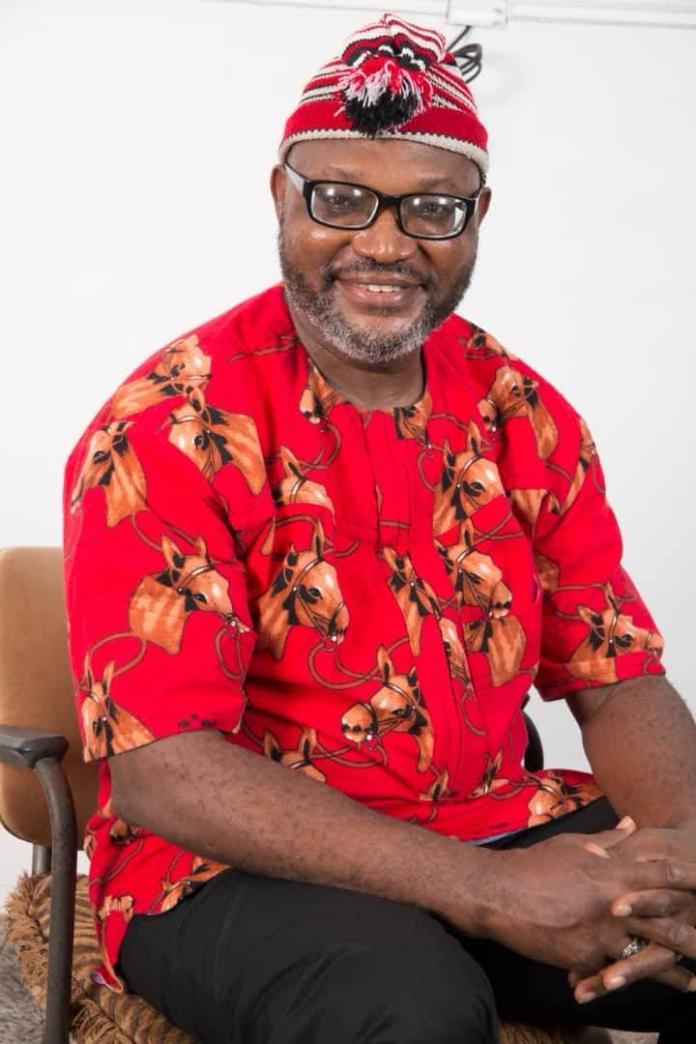
When Ohanaeze Ndigbo was founded in 1976, six years after the debilitating civil war, no one was sure how far it could go. Five decades later, the organization is still standing strong as the apex Igbo socio-cultural organization despite numerous challenges and difficulties. In celebration of its golden jubilee, a Russian-trained scholar, Chief Kalu Onuma, the Admin Secretary of Ndigbo Lagos, has written a book, “Ohanaeze at 50: The Burden of Memory, The Politics of Relevance,” which he describes as a critical biographical reflection of an Igbo institution. Ahead of the public presentation of this consequential book on Tuesday, September 22, 2026, the first to be written on Ohanaeze, Kalu Onuma sat down with Ikechukwu Amaechi of TheNiche for a no-holds barred interview on the strengths and weaknesses of the organization and its prospects in the next 50 years.
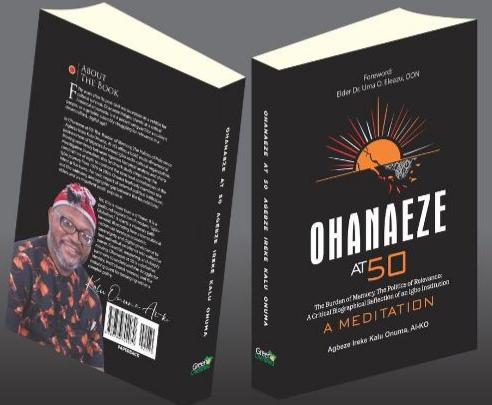
Your new book, Ohanaeze at 50: The Burden of Memory, The Politics of Relevance, will be presented to the public on Tuesday, September 22. What is it about? What was your motivation in writing the book?
I came back from Russia or the Soviet Union as it was called then after a long sojourn there as a student, and one of the first things I did and, indeed, continue to do was to be in the public space through Ohanaeze and all other Igbo organisations. I started as a young man carrying the bags of my mentor and the then President-General of Ohanaeze, Justice Eze Ozobu, who served through the transition period that produced the Ohanaeze Constitution, which birthed the first election that brought in Prof Joe Irukwu.
From that time, I observed closely, listened attentively, saw the inner workings of the organisation, admired some of the men like Prof Ben Nwabueze, Chief C.C. Onoh, Ikemba Odimegwu Ojukwu, Senator Uche Chukwumerije, Chief Nnia Nwodo , Chief Joe Nworgu, Chief Nweke Anyigor and several others and I came to understand the organisation a little bit more, saw their struggles and the challenges they had to go through. While many people will just see the newspaper publications, I saw the work, the sweat, decisions and the pains and pleasure that went into those communiques. But when I relocated to Lagos and took up a job as the Admin Secretary of Ndigbo Lagos, it became very evident that Ohanaeze had challenges and many of those challenges were from within and self-inflicted. Granted, some of the challenges were external, but how the organisation dealt with those challenges continued to bother me.
Before the civil war, there was the Igbo State Union, a powerful pan-Igbo organisation that unified Igbo people in Nigeria from 1948 until it was banned in 1966. To what extent would you say that Ohanaeze is a reincarnation of that organisation?
These were two different organisations. I do not submit, with all my research and conversations, that Ohanaeze is a reincarnation of the Igbo State Union. However, you could say that Ohanaeze succeeded the Igbo State Union as a commonly accepted platform for Igbo conversation. That is what I would say based on my many years of research into the two organisations.
The Igbo State Union had something that Ohanaeze is yet to scratch the surface. It touched lives where it mattered most. Igbo State Union built schools, encouraged education, encouraged and promoted young men, mentored them and then transferred wealth from wherever members lived to the Igbo heartland. And we could still see today and point at various institutions that were directly built from the interventions of the Union. But Ohanaeze was built on a different paradigm. It became necessary as a gathering point after the war and its goals are different. Ohanaeze was established to silently and quietly give Ndigbo a voice back into the Nigerian mainstream.
Would you then say that Ohanaeze is a child of necessity, a reaction to the existential threat Ndigbo faced coming back to Nigeria after the war?
Both organisations were children of necessity but those necessities differ. For Ohanaeze, it was to give Ndigbo a footing back in a united Nigeria six years after the war. It was, therefore, necessary that its approach to issues and style would be very cautious and that cautiousness was actually borne out of an Igbo aphorism – ako na uche. Child of necessity? Yes! Borne out of the civil war? Yes! It was necessary at the time to become what it became and how it became.
What in essence is the book all about?
The book, Ohanaeze at 50, is not a linear history. It is not a commissioned project by the executives of the organisation in which case one has to write in a particular way for a predetermined outcome. This is an independent intellectual work that interrogated Ohanaeze on the basis of the fact that it is a multi-purpose vehicle for Ndigbo. Sometimes in reading the book and in writing it, you will feel as if you are conducting a post-mortem, but most times, post-mortems are conducted on dead organisms, but I conducted a post-mortem on a living institution believing that it is time like a gardener would do, to cut off the dead woods and branches so that the new branches and leaves can sprout and the tree will bloom. So, I didn’t just take episodic incidents in Ohanaeze and write a linear history – it was started at such a time and this is where it is now. No! I looked at various aspects of the organization. The things that have been tried and got right, the things that are strong, we called it strong and the things that are unique, we called it unique. Where the organization had challenges, we recognized it. And of course, we tried as much as we can in writing this book to be fair both to ourselves because I am a member of Ohanaeze and to be fair to those who kept the organization going during the lean years.
So, what should the people expect when they pick up a copy of the book to read?
They will not see praise singing, but they will not also see condemnation for the sake of it. What they will see is an honest attempt at understanding what the organisation was, is and could become 50 years from now.
As someone who has done extensive work on 50 years of Ohanaeze, to what extent would you say that the organization has fulfilled the dreams of its founding fathers?
If you say that their goal was to give us a voice in Nigeria, they succeeded. If you say that their goal was to bring us back into the Nigerian mainstream, they succeeded. But if you say that they serve, as advertised, the sole voice that speaks for Ndigbo, then there is more to be desired. And if you say that it is a socio-cultural organization, there is more to be desired because in the course of this research, many of the challenges that Ohanaeze should have got involved in – the promotion of our culture, sustenance of our language – they have not done very well there because I am not talking about organizing social events, coming out dancing and bringing out our masquerades, I am talking about sustaining it, promoting museums, promoting studies on various aspects of our culture, ethics and vernacular that are today endangered, I will say that Ohanaeze has not done very well in that direction. Then, most times when Ohanaeze advertising itself as a socio-cultural organization and in most cases begin to court politics and get courted by politicians, they would deflate some times, and sometimes they will get embroiled in the conversation. That is an aspect that has to be reworked, something that Ohanaeze has to sit down and really define and draw a line between the things that it wants to achieve and things that it doesn’t want to achieve.
So, on the whole, if you are asking me on the scale of 1 to 10, I will score Ohanaeze after 50 years 5 because it is not easy under the tumultuous military governments, which, don’t forget, under our own brother, General Aguiyi Ironsi, banned such organisations and they had to walk very thin fine lines but they succeeded. The Oputa panel was a major success for Ohanaeze and so many other engagements which I consider successes. So, I will score them 5 with the hope that the remaining five points on the scale, will be consolidated over the next 50 years if some of the ideas I threw in in the book as my own views of how we could begin to reengage and reform the organization begin to get traction.
You have mentioned some successes, what would you consider as the biggest weakness of Ohanaeze right now?
One word summarises it – elitism!
How do you mean?
What I mean is that the average Igbo man on the street sees Ohanaeze as an elitist organization and to some extent, that is correct. And when one considers it, and you look at the composition of the various organs and those who are attracted to attend these meetings and at the end of the day those who make the decisions, people out there on the street do not feel the “Oha” part of it as a consolidated arm of Ohanaeze. They only see the “Eze” component, which is the elite of the society. So, elitism is one weakness of Ohanaeze which I think something must be done about it.
How can that weakness be addressed?
What I have suggested in the book is this: there are two critical segments of our population that have no strong footing in Ohanaeze. And those two groups are women and youths. You cannot exclude a major part of your population – at least 60 per cent of your population if you take two of them together – and keep them on the periphery and expect to grow.
So, one of the first things we can do to tackle this major weakness is to bring these people in. I do not mean creating a youth wing or women wing, we have all that but that hasn’t solved the problem. We have to bring them into the room where conversations are held, where decisions are made. By so doing, you listen to them and hear their views and take those views on board rather than treating them as if they have to wait for their turn. There is really no turn and there is really no need to continue excluding this chunk of Igbo population.
Now, you categorise the youths from the age of 18 to 30. That is a very large number. And what these youths bring to the table is far different from what the leaders can bring to the table. They bring new perspectives, a lot of energy and we should be able to find a way not just to mentor them but to include them, in other words, inclusiveness should be the watchword of Ohanaeze. And then you talk about the women. How do you bring in the women, we have a lot of professional women. If you take a statistics of very successful Igbo women, there are so many of them out there. They should attend the meetings, listen and be allowed to make their own contributions. We should be able to consequentially bring them into serious decision making that will allow them show and give what they have.
These are some of the key issues I discussed extensively in the book. And again, open up your books because wherever there is this opaqueness, it always diminishes the enthusiasm that people should have. That is what I call the “mgbe emesia akpa ya” mentality. Who is going to do that “mgbe emesia,” who is going to “Kpaa ya” when the Oha is kept out of the room when the conversation took place.
So, for me, go back to the basics of the Ohanaeze Constitution and one of the first things there is that the highest decision making body is neither the executive nor the Ime Obi. It is the general assembly. And over the years, I can tell you, that the general assembly has really not asserted those powers given to it by the constitution because that is where the “Oha” and that is where the Igbo democracy actually resides.
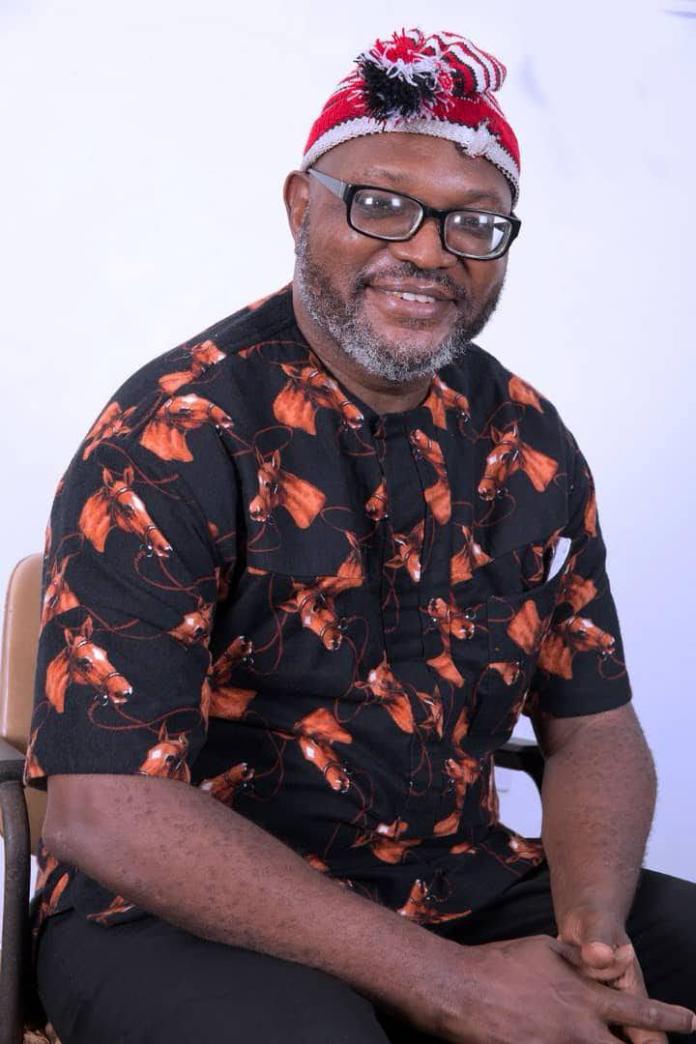
Chief Kalu Onuma
You seem to forget that the Igbo society is essentially patriarchal.
You can say that but no one can stretch that argument because in my own neck of the woods in Igboland, we are matriarchal, not patriarchal. This is where education and mobility come in and mobility takes us anywhere in the world. There is just no part of this world that you cannot find an Igbo man and each time we visit them and come back home, we bring little chunk of what those traditions and cultures do.
How have other cultures finding themselves in similar circumstances succeeded? These are lessons that we need to learn. We do not continue to pretend that we are patriarchal and then keep stonewalling and blocking ourselves from the trajectory of growth. In the 21st century, we shouldn’t really be discussing whether to allow this or that, everybody who can bring something to the table that is valuable to the growth of the organization and our communities should be brought in irrespective of what our tradition says. Yes, there are many traditions in Igboland where women are occupying very serious positions and doing extremely well. And when you look at what is happening all over the world, they promote the girl-child to do everything and we are proud that they are doing very well. How come in the very organization where we say that we are practicing democracy, we do not allow this very significant chunk of our population to become part of the conversation?
I think our history, even though it is our history, should really not play the role of keeping us back. It should rather, be able to teach us and then from teaching us, we should be able to learn and from learning, we should be able to grow.
One of the accusations against Ohanaeze is that it does not speak out when Igbo interests are undermined in Nigeria. Do you think that is a fair charge?
To some extent, yes. But to some extent no. Don’t forget, each time you want to analyse an organization or organism, you should do so by asking the foremost question: what was it set up to do? Under what circumstances was it birthed? Ohanaeze was birthed in fear at a period when Ndigbo were not too sure where they were standing, were not too sure what would happen next. We were just coming out six years after a brutal civil war, abandoned property saga, we have just come out of a situation where a Mamman Nasir drew maps in the air and recreated the whole and entire Eastern Nigeria. We were just coming out from the fear of having lost loved ones and you cannot in all sincerity think all these would have been lost on the DNA of the organization. So, most times when Ohanaeze didn’t speak out, it is the DNA kicking in. It is the fear of what next, it is the fear of what will happen. And most times I understand them. Don’t forget, we are the only community, the only set of people who are so dispersed in this country and we have seen right from 1976 till now how for no reason whatsoever, what never concerned us, people have unleashed their bile, their wickedness and their anger on us. And most times when Ohanaeze toed that line of silence, of speaking without conviction, it is those things that inform it.
But this is where I come into the no part of my answer. There are ways that Ohanaeze can do better than what it is doing now. That is why the organization has to be run like a very serious organization that has many arms and platforms that it can actually engage. Today, Ohanaeze is beginning to try to keep documentations so that it can preserve its institutional memory. If we do have an institutional memory and we are speaking from the point of information, and not from emotion, then this fear factor would have gone.
So, for those out there who believe that Ohanaeze has not done very well in speaking out, they are correct. For those who think that they have done very well, they are equally correct. There is this fine line that I try to toe – to find out that common ground because looking at it from the inside, you see the challenges. It is like when a man has many children, you must find a way to make each and every one of them believe that you love them. But sometimes, it is equally important to say the hard truth so that the person could learn. In this case, I think there is more to desire from Ohanaeze. It can do more and speak out more often.
But again, the question needs to be asked, what Ohanaeze are we talking about? A man sits in his bedroom in Gwarzo or a very small village in Igboland or, indeed, anywhere else in Nigeria and claims that Ohanaeze has spoken and finds a way of getting what he said into the media. But when you start reading, you will find out that it is one small, inconsequential person that has no followership that is talking. That is another challenge. So, when sometimes statements are made that Ohanaeze has done this or that, the question I always ask myself is which Ohanaeze is speaking?
That is another problem that we really need to tackle headlong and find a way to consolidate so that when Ohanaeze speaks, it has to be from one central voice and one central place. Over the years, this problem has dogged this organization and we have to find a way to resolve it.
Juxtaposed with other socio-cultural organisations like Arewa Consultative Forum and Afenifere, how has Ohanaeze fared?
That question takes me back to what I said earlier. Each of these organisations was born for different reasons, but mostly political. But Ohanaeze was not particularly a political organization. Yes, they occasionally dabble into politics and make political statements, but they do not derive from the same river source. So, it is really difficult to compare Ohanaeze with the other organisations which have very clearly defined mandate of what they are pursuing.
But I will tell you the truth. There are times when I think that Ohanaeze could do better. But there are also times when I feel that Ohanaeze has actually done better. There also times when I feel that the other groups – ACF and Afenifere – have done better than Ohanaeze. And each time, I say those things with qualification because you need to actually qualify what you are agreeing with and what you are disagreeing with. But on the whole, if you are asking me on a scale of 1 to 10, to score Ohanaeze as against these other organisations, politically, I will score Ohanaeze 4, economically I will score Ohanaeze 5, socially, I will score Ohanaeze 6. And in communication, I will score them 3. You see these other groups have done a better job. They have been there longer, and they are embedded from different historical sources and different currents. So, I really do not like comparing them but that is my assessment.
To what extent do you think that the “Igbo enwe eze” syndrome is at the root of the incessant debilitating in-fighting in Ohanaeze? How cohesive is Ohanaeze?
It is not cohesive, it has challenges, it has difficulties, it has its own internal frictions but all these do not represent what the organization is. My take is that in spite of all these challenges, the disunity, the “Igbo enwe eze” syndrome, the in-fighting – all these things are there, no one can deny them – however, there is equally embedded in the Ohanaeze constitution mechanisms and systems that are used in resolving this but you will need a very strong leadership and followership that believes that our rules must be respected. Because when rules are not respected, anyone can run amok. Anyone can claim whatever he wants and that becomes the norm. So, what you see everywhere you have Ohanaeze is simply because our rules of engagement are not respected, are not obeyed and implemented. And until and unless we do that, this in-fighting will continue.
And I dealt with this issue a lot in the book. I did two trips to Bamako, Mali as an envoy to the then president of Ohanaeze, Ambassador Ralph Uwechue, when we were having these same problems even though the Igbos in Mali, especially in Bamako had the largest population than any other Nigerian tribe. Yet, they were not speaking with one voice. I went there on two different occasions at the instance of the President-General to mediate. The first time we succeeded but two months after, the truce broke down to the point that it became very serious they resorted to using the Malian police against one another.
And at the heart of the crisis was the question of rules not being respected. Rules are there to be respected even if you do not agree with the rules, as long as you are a member of the organization, those rules must be respected. At the national level, we see this happening. At the state chapters and wherever Ohanaeze exists, the inability of members, irrespective of their station in life, to obey the rules has always been the problem.
In recent years, Ohanaeze elections have become very problematic with overt political interference, not only from the Southeast governors but even the presidency. To what extent do you think political interference has hindered the growth of Ohanaeze?
To answer this question, we have to go back to what I said earlier. Because the organization has become unnecessarily elitist, that is why all these tendencies are very possible. If we take Ohanaeze back to the Oha (the people), I doubt if it would have been possible to actually to politicize and draw Ohanaeze into partisan politics. If the Oha have an influence on what happens, when it happens and why it happens, then, this will not happen.
And the question of the presidency having interest is all speculation because in all my years of research I never found any document to support that suggestion that the presidency has an overbearing interest in who emerges as the Ohanaeze leaders. So, I will leave that as speculation until probably in the course of further research, something emerges that supports that view. Yes, the governors of the Southeast, from 1999 till date have had direct influence on Ohanaeze. However, it is the inability of the organization itself to go back to its fundamental rules and draw the line that yes, you can be part of Ohanaeze, and by virtue of your position, you have influence, but thus far, no more because when you allow the governor or whosoever to play an unusual role in the organization, of course, he will demand to have more voice. That is natural.
But again, take this back to the Oha and let them in all ramifications become the pillars of this organisation. Let me tell you something, if the governors fund Ohanaeze, it is because the Oha have failed to fund Ohanaeze. Ask anybody who has claimed to be an Ohanaeze member whether they have been able to pay N100 a month into Ohanaeze coffers. They have not. You cannot claim and take ownership of something you are not prepared to fund. And I have always loved this saying of King David in the Bible when he needed to build a house for God, and he was looking for a land and when he found one, he met the owner who offered to give him the land free. But David refused, saying that he cannot give to the Lord what does not cost him anything. The Oha cannot claim ownership of Ohanaeze if they are not prepared to fund it and if they don’t fund it, whosoever funds it is going to have more voice.
So, the people must fund the organization. When Nnia Nwodo was president, and even before him, but Nwodo took that as a gospel that one of the reasons any chapter would be taken seriously is that each registered member must pay monthly dues. Unfortunately, that never happened. So, if we want to take back Ohanaeze and shield it from overt interference of the governors, the Oha must do the needful.
How could you dismiss the issue of presidential interference as mere speculation in spite of the drama that happened during the Irukwu presidency when pressure from Aso Rock made him to abandon a speech endorsed by Ohanaeze leadership to read another that supported President Olusegun Obasanjo’s third term shenanigan?
I remember. I lived through it and was part of that saga. But again, despite the fact that Irukwu did not read the original speech that was agreed, still in all my research, there is no documentation, no statement, no report in the media that Obasanjo either directly or through any of his agents put pressure on Irukwu to change that speech. If pressure was mounted, and, by the way, I do believe that there was pressure, and I do believe that there were interests, but I cannot categorically point fingers of blame at the federal government.
Yes, there are speculations but they remain just that – speculations. And by their very nature, speculations could either be right or wrong. But if you are doing a job of this magnitude, you need to stick to the fact and avoid speculations no matter how convincing they seem to be. I do believe that there are interferences coming from very strong men in Igboland, from strong institutions or cliques in Igboland and from outside, however, if we cannot prove it, we cannot state it.
That is why I keep going back to the Oha. Until we the people , that is what our constitution says, take back our organization, not just verbally but begin to intervene when we need to, we will just be wasting time, these interferences real or imagined will continue. Until we begin to pay our dues, until we begin to do the things we need to do, we cannot claim ownership of an organization we do not fund. Whoever funds an organization speaks. That is the way it is.
And that is why we are even discussing the influence of the governors. They are there today as governors but they won’t be there forever. Many of them of the Class of 1999 – Achike Udenwa, Chimaroke Nnamani, Orji Uzor Kalu, Sam Egwu – they had one influence or the other on Ohanaeze, some of them positive and most of them very negative. But today, they are no longer governors.
So, the fact is that no one stays as governor forever but the Oha remains permanent and the indices upon which we can judge an institution like Ohanaeze.
Realistically speaking, do you think that Ohanaeze can survive the next 50 years?
Yes, I do!
What makes you think so?
Because it is not dead and the signs of life are significant. Secondly, interest of Ndigbo in the organization is very strong. Thirdly, it requires strong and visionary leadership and good understanding of the values and history of Ndigbo. And as long as we live, the Igbos will always want to meet, they will always want a platform and Ohanaeze has presented itself, survived 50 years of antagonisms and I still think of all the organisations out there, it has stood the test of time and survived and it is standing on a very strong foundation. All we need is to build up the platforms.
But how can Ohanaeze survive the next 50 years when the younger generation seem not to be interested? What happens when the old men who are at the helm right now are no longer there?
This book was written mostly for the next 50 years and the next generation. Unlike what you think, interest in Ohanaeze is quite high and conversations are ongoing and, of course, those conversations may not necessarily be aligning with what we think or want right now but a lot is happening and I believe that one of the things this book would engineer will be further serious conversations around Ohanaeze.
I have a daughter and at some point in the book, I did mention that some of her questions on what Ohanaeze is about informed my choice of words, language and the way I treated some sensitive issues in such a way that any young Igbo person wherever you are, when you pick up this book, what it will be telling you is that you have a stake and that stake can only be claimed by you. If somebody gives you an inheritance, which the old men have done by creating and sustaining an organization and handing over to us, even if that organization requires a retooling, the benefactors must step up to the plate. That is the challenge of the next 50 years and it is a historical imperative. So, I am pretty sure that Ohanaeze will survive the next 50 years.
The golden jubilee of any organization is worthy of celebration. To what extent did you get the buy-in of Ohanaeze leadership in writing this book?
I spoke to people independently and interviewed those I needed to interview but I never wrote an official letter to the Ohanaeze leadership seeking authorization because I didn’t want the project to be influenced in anyway. So, it is not a commissioned project. It is a personal project, a work I took upon myself, but everybody and materials I consulted are there in the bibliography for everybody to see.
What is your advice to Ndigbo who are showing lukewarm attitude to Ohanaeze?
Join Ohanaeze. What you will see when you join will be far different from the other organisations you already belong to. When you see confusion, don’t take it to mean we are unguarded. When you see in-fighting, don’t take it as anything else. Bring your knowledge, bring your enthusiasm, bring your wisdom but above all bring your patience, ask questions. Ohanaeze is our own. No one person owns it. People will claim I own Ohanaeze. That is not true because no one person does. Ohanaeze is for all of us and I encourage every young man and woman not to despair. There is still life in Ohanaeze.


