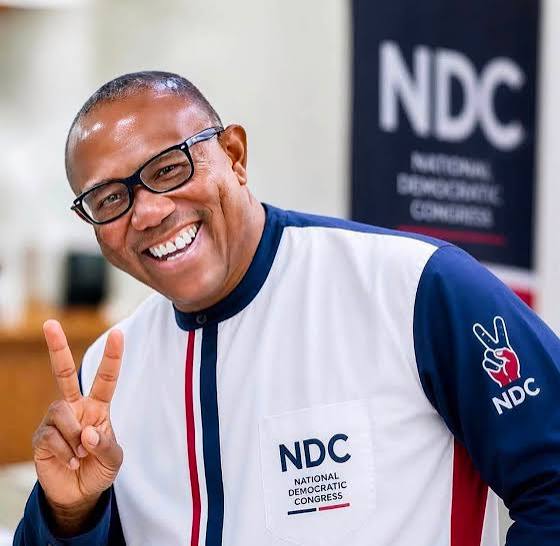
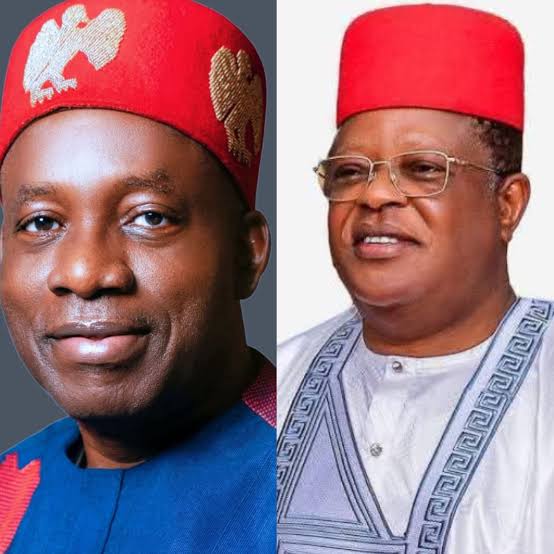
In 1929, the courageous women of the Eastern Nigeria rose in unison and told the warrant chiefs that they were no longer wanted in the area. On Friday, November 20, the fearless residents of Onitsha stood firmly behind Peter Obi, in a bold move that sent signals to Soludo and Umahi that they were on their own. When therefore Soludo and Umahi humour Tinubu that they would win the South East for him, they know that they are not telling him the truth; they lack the capacity for doing so. Both, in a way, desire to play the modern warrant chiefs of the South East. But they dare not try any funny move in that direction.
By Emeka Alex Duru
The period of the Warrant Chiefs in the colonial administration of the Eastern Nigeria, which covered 1891 to 1929, is one that does not elicit much enthusiasm in Igbo history. It was an era that was marked by oppression and impunity. The Warrant Chiefs were appointed by the British colonial authorities and given powers to act for the government in areas of administration and collection of taxes, following the failure of the Indirect Rule system in the area. Their appointment is shrouded in paradoxes. Foremost historian, Professor Adiele Afigbo, argued that while there were credible officers among the appointees, many were social misfits and rogues who, out of misunderstanding on the nature of their job, were pushed out by their communities to be killed by the white man, if it came to that. With the warrant from the colonial masters, their status changed and they became the lords of the land.
Many, at some point, grew rich, illicitly and began to exercise authorities that were not originally bestowed on them. Subsequent reactions to their highhandedness and corruption in the system counted among the factors that led to the famous Women’s Revolt of 1929 in Eastern Nigeria (narrowly referred to as Aba Women Riot in some accounts). The upheaval compelled the colonial masters to abolish the warrant chief system the following year, 1930.
READ ALSO:
Dangers of Tinubu’s campaigns without contents
The story of the warrant chiefs and their repulsion, demonstrate the trademark resistance of the Igbo to oppression and imposition. Though that era of fangs and force, may have gone, the symbolism subsists in form of principled protest devoid of violence. That was played out on Friday, November 20, when the presidential candidate of the Nigeria Democratic Congress (NDC), Peter Obi, visited Onitsha, Anambra State for his party’s townhall meeting. The turn-out was simply, huge and tumultuous. The entire thing was instructive.
Recall that a day earlier, Anambra state governor, Charles Soludo, had hosted a rally in Awka, the capital, where he collapsed his All progressives Grand alliance (APGA) structure into the presidential campaign of President Bola Tinubu, the All Progressives Congress (APC) flag bearer in the 2027 elections. The Awka event featured the Vice President, Kashim Shettima who represented the President, members of the national and state assemblies among other party chieftains. As with such occasions, party supporters were hauled from the 21 local government areas in the state. Yet, the attendance at the Alex Ekwueme complex of the event, was marginal. Similar sprinkle of procured attendees was on display in Abakiliki, when the Works Minister, David Umahi, put up a caricature of a rally for Tinubu in Ebonyi state. Put together, the efforts by Soludo and Umahi, paled to insignificance, compared to the organic crowd that showed up for Obi.
That is quite intriguing. While he was alive, the iconic Igbo leader, Dim Chukwuemeka Odumegwu-Ojukwu (Ikemba), avoided open contest with any of his contemporaries on their standing among the people. He rather challenged anyone daring him to take a lead from one end of Ogbete market in Enugu, Ariara in Aba or any other market in Igbo land while he marched from the opposite direction; at the end of the day, each leader would count the number of followers behind him. None of his critics for the bet. Of course, none could have taken the risk, knowing that he would dust them. Ikemba was clearly the man of the people. That was what Obi demonstrated on Friday, by making a mockery of the scanty crowd that Soludo managed to pull a day earlier and Umahi, some weeks back.
Growing up in Aba, the commercial nerve centre of Abia state, we learned of the philosophy; Aba ma Ndi-Aba – a popular expression among residents of the city and those familiar with it. The slogan which literally means “Aba knows its own people”, came handy on purpose, often in appreciating virtues and or denouncing perceived vices. It was a clarion call of sort. Then, when certain individuals were seen to have acted in situations that were considered noble by the residents, they were lionised and adopted as worthy members of the entity. They needed not be residents of the commercial city. What mattered most was that they were seen to have put up actions that had impacted positively on the people.
It was in this respect that late Ojukwu remained a hero to Aba indigenes and residents. At his death, the people, not given to sycophancy or forgetting favours, recalled how the Biafran leader literally put his life on the line in defence of his people. To show their gratitude, Aba residents insisted on his lying-in state in Aba Township Stadium where they paid him last respect.
Governor of old Imo State, late Dr. Sam Mbakwe, was equally revered by inhabitants of Aba for his commendable role in fighting for the Igbo man, before, during and after the 1967-1970 Civil War. Besides, his frontal attack on the Ndiegoro flood menace, which earned him the sobriquet “weeping governor”, his people-oriented governance remains a sacrifice that Aba residents do not forget in a hurry.
Similar appreciation of favour was extended to the Second Republic politician, Adeniran Ogunsanya, chairman of the defunct Nigeria Peoples Party (NPP), for identifying with the Igbo at their hour of need. At his death, in fact, not only were the markets in the commercial city shut, busses were hired for traders and workers to travel to Lagos to pay him last respect. It is on such occasions that the Aba ma ndi-Aba mantra can be adequately appreciated.
The crowd in Onitsha, comprising the old and young, men and women, the strong and infirm, echoed similar chorus for Obi on Friday. In describing the event of the day, erstwhile Anambra commissioner for Information and former Managing Director of The Sun Newspapers, Dr. Tony Onyima, aptly stated; “The REAL City Boy returned home and Onitsha claimed him in style. You can’t fight God’s grace”. Beat that if you can! Everything spoke in tandem with the assertion by Onyima. Obi is not from Onitsha, not even from Anambra North Senatorial District. He is from Agulu, Anaocha Council of Anambra Central Senatorial District. In Onitsha, every minute, every hour counts in business transactions. But the people kept all behind to identify with someone who has identified with them; who appreciates the level of hunger in the land; who has direct knowledge of the magnitude of displacement Nigerians have suffered due to insecurity and has consistently assured them of a better tomorrow.
The Onitsha NDC outing was therefore more than a townhall meeting but a referendum on Obi’s acceptance value among his people. By extension, it was equally a refined protest against the pretension to South East leadership by Soludo and Umahi. Soludo had a foretaste of what was in the offing days earlier when on his visit to a popular activist pastor, Chukwuemeka Cyril Ohanaemere (Odumeje), members of the congregation burst into a song “Obi ka anyi ga eso. Ma o na a ga a ga, ma o na a la a la, Obi ka anyi ga eso (Obi we shall follow. Whether he is going forward of going back, Obi we shall follow)”. There is no better way of telling the governor where he is placed by the people.
In 1929, the courageous women of the Eastern Nigeria rose in unison and told the warrant chiefs that they were no longer wanted in the area. On Friday, November 20, the fearless residents of Onitsha stood firmly behind Peter Obi, in a bold move that sent signals to Soludo and Umahi that they were on their own. When therefore Soludo and Umahi humour Tinubu that they would win the South East for him, they know that they are not telling him the truth; they lack the capacity for doing so. Both, in a way, desire to play the modern warrant chiefs of the South East. But they dare not try any funny move in that direction.