



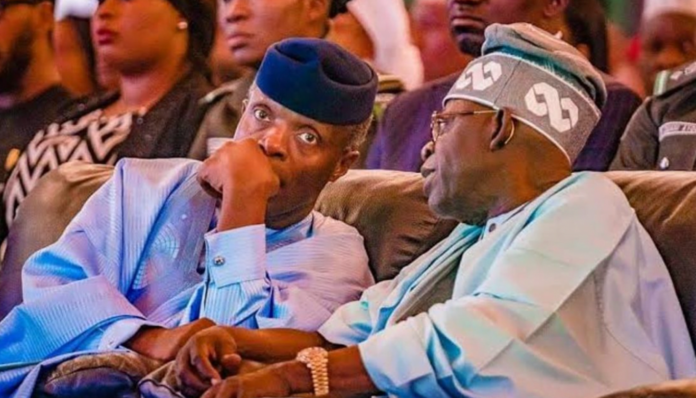
The Falcons’ victory gave the nation a reason to unite—and gave both Tinubu and Osinbajo a platform to speak. While there was no direct mention of each other, the messages struck a common tone of hope, resilience, and shared pride. Nigerians, reading between the lines, are left wondering: could this common ground be the start of political healing?
By Martins Adebote
In the wake of Nigeria’s thrilling victory at the Women’s Africa Cup of Nations (WAFCON), two familiar names once bound by loyalty and later divided by ambition have re-entered the public imagination—President Bola Ahmed Tinubu and Professor Yemi Osinbajo, Nigeria’s former Vice President.
Both men issued impassioned statements congratulating the Super Falcons on their hard-fought win. Osinbajo hailed the women as the embodiment of the Nigerian spirit—“Naija no dey carry last.” Tinubu echoed this national pride with presidential confidence, expressing his eagerness to receive the team in Abuja.
To the average observer, it might appear routine—statesmen expressing patriotism. But in a country where political gestures often carry deeper meanings, many are asking: Could this be a soft signal of reconciliation between the President and his once-loyal deputy?
READ ALSO:
Super Falcons clinches $1m prize after winning tenth WAFCON title
From Lagos allies to Abuja rivals
The political history of Tinubu and Osinbajo is well known. As Governor of Lagos State, Tinubu appointed Osinbajo Attorney General in 1999, marking the beginning of a trusted alliance. In 2015, Tinubu’s influence was widely credited with Osinbajo’s nomination as Vice President under Muhammadu Buhari.
However, the 2022 presidential primaries shattered that narrative. Osinbajo’s decision to contest the All Progressives Congress (APC) ticket against Tinubu was seen as a bold but controversial move. Tinubu, in a statement that echoed across Nigeria’s political landscape, said: “I have no son grown enough to declare.” Their relationship has been cold ever since.
Falcons’ win: National pride or political olive branch?
Fast forward to July 2025. The Falcons’ victory gave the nation a reason to unite—and gave both Tinubu and Osinbajo a platform to speak.
While there was no direct mention of each other, the messages struck a common tone of hope, resilience, and shared pride. Nigerians, reading between the lines, are left wondering: could this common ground be the start of political healing?
Most likely not—at least not yet
This appears to be symbolism without substance. A case of two statesmen fulfilling a civic duty, rather than reaching across a political chasm.
Why reconciliation still matters
That said, a mended relationship between Tinubu and Osinbajo would be beneficial for the country. Osinbajo is globally respected for his intellect, integrity, and diplomatic strength. Tinubu, now navigating the complex waters of economic reform and national cohesion, would benefit from a unifying partnership rooted in shared history and complementary strengths.
Their alliance, if ever revived, could set a strong precedent for Nigerian politics—where former rivals become collaborators in the interest of national progress.
But such a move would require more than tweets or congratulatory remarks. It would require humility, dialogue, and a deliberate effort to transcend ego in service to Nigeria.
Conclusion
For now, the Falcons’ victory has given the nation a renewed sense of pride. Whether it also opens a new chapter in the relationship between President Tinubu and Professor Osinbajo remains to be seen.
But in a country craving unity and visionary leadership, even the hint of reconciliation offers a hopeful sign—however faint.
Martins Adebote, a public affairs analyst, development strategist, and advocate for visionary leadership in Africa, writes from Lagos.


