Smart physics for Nigeria’s national security: Harnessing space science, technology, and AI
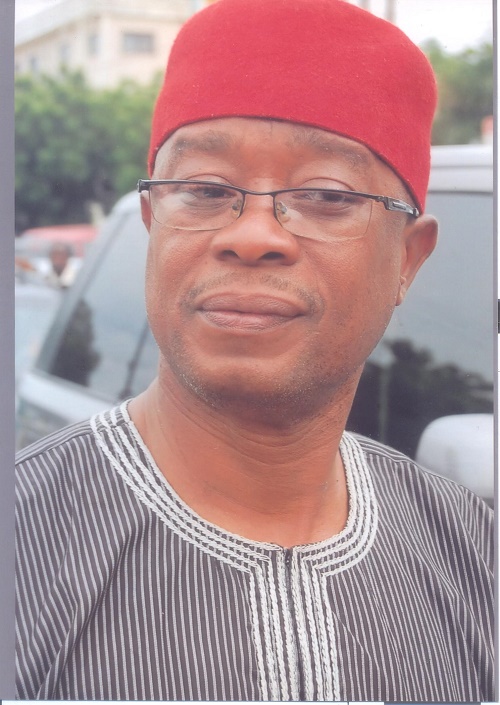
By Victor Uzodinma Chukwuma
Opening protocol
Distinguished Excellencies, the Executive Governor of Oyo State, Seyi Makinde, the Honourable Minister of Science, Technology and Innovation; the President of the Nigerian Institute of Physics, Prof Joseph O. Coker, FNIP; and Members of Council of the Nigerian Institute of Physics; our Chief host and Vice Chancellor, Lead City University, Ibadan, Prof Kabiru Aderemi Adeyemo and other Vice Chancellors present; esteemed colleagues from industry, academia and the armed forces; ladies and gentlemen — I bring you warm greetings and the profound honour of addressing the 47th Annual Conference of the Nigerian Institute of Physics.
The theme chosen for this gathering — “Smart Physics: A New Perspective for Technological Advancement” — is not merely an intellectual proposition. It is a clarion call. And today I want to answer that call directly: Smart Physics for Nigeria’s technological advancement, right now, at this moment in our history, means one thing above all else — the bold, strategic, and urgent utilisation of the frontiers of Space Science, Space Technology, and Artificial Intelligence to secure our nation’s future.
Prologue
Mmele and the wisdom of the unburned
Please, my esteemed audience, permit me to begin with a fable. There was once a Tortoise named Mbe – celebrated across the forest for his cunning and wit. He was sharp of mind and quick of tongue. But the forest that praised him also surrounded him with danger he did not see coming. A trusted friend, smiling and familiar, robbed him of everything: his provisions, his secrets, his trust. The predator did not come roaring from outside the gate. It came quietly from within. And for seven days and nights, Mbe sat alone at the edge of the forest, neither eating nor sleeping – only thinking.
On the eighth day, he rose – not in anger, but in resolve. He called his children before him and told them everything, sparing himself no dignity in the telling. Then he asked them one question: “How many times must something happen to a person before they learn their lesson?”
One by one, his children answered. Three times. Four times. Five. With each reply, Mbe’s face grew heavier – for he heard in every answer the echo of his own costly life.
Then his youngest daughter, Mmele, raised her hand and said: “Father, I would not wait for anything to happen to me at all. You have told us your story. I have listened. And I have learned. The world is full of those who have been burned – their scars are a map. I will study every scar. I will watch the horizon before the storm appears. I will know the enemy’s footprint before his foot falls. I intend to read the map, not walk into the fire.”
Mbe rose to his feet and wept – not from sadness, but from relief. He placed both hands on her shoulders and said: “This one is not just clever. This one is wise. The forest will not wait for you to be ready. Strength alone will not save you – for the enemy who cannot match your strength will find your blind spot. But the one who sees before being seen, who knows before being told, who prepares before the crisis arrives – that one cannot be ambushed. Knowledge deployed in the service of protection: that is what secures a people. That is what makes a nation sovereign. That is what makes the world a better place.”
Distinguished colleagues, Nigeria is Mbe’s forest. The threats besieging us — insurgency, banditry, economic fragility, environmental crisis — did not arrive without warning. The world has been showing us the map for years. Other nations have read it. They have built their satellite eyes, sharpened their artificial intelligence, and hardened their defences with the weapons of science. Nigeria’s moment of choice is now — and it falls to us, the physicists, the scientists, the builders of knowledge, to be Mmele for our nation: to read the map before the fire reaches our door, and to act before crisis demands what preparation could have prevented.
I. The geopolitical classroom: What the world is teaching us
Before we speak of Nigeria, let us read the world’s most recent lesson in survival. The unprecedented events of the US/Israel-Iran confrontation have fundamentally redefined what national security means in the 21st century. Iran, a nation under extraordinary military pressure, stared into the abyss of potential devastation – and did not fall. Why? Not because of superior numbers. Not solely because of conventional weaponry. Iran survived and, in strategic terms, arguably held its ground because it had invested heavily in the frontiers of space science, technology, and AI.
Its satellite surveillance systems provided early warning. Its AI-driven missile guidance and drone swarm technologies created layered, asymmetric defensive and offensive capabilities. Its cyber-warfare infrastructure—built on deep physics and computational science—disrupted adversaries’ command-and-control chains. Space-based communication ensured resilience when terrestrial systems were targeted.
The lesson is unambiguous: in the modern era, the nation that controls the scientific and technological frontier controls its own destiny. The physics community is not peripheral to this reality — it is central to it. Nigeria, let us ask ourselves honestly: are we reading this lesson?
II. Nigeria under siege: Understanding our vulnerability
Nigeria today faces a security crisis of staggering proportions. And unlike the conflicts of the Cold War era, we are not threatened primarily by a rival state’s armies massing at our borders.
We are under siege from within and from non-state forces that exploit every gap in our technological and institutional armour.
The maps of a challenged Nigeria tell the story with painful clarity. Across the northeast, Boko Haram and its offshoots have turned communities into combat zones. Across the northwest, banditry and kidnapping have made vast swathes of our territory ungovernable. The Niger Delta remains a theatre of resource conflict. Across the Middle Belt, farmer-herder clashes claim lives with tragic regularity. Cybercrime and economic crimes cost our economy billions annually, shaking investor confidence and deepening poverty.
These are not merely security problems. They are science and technology problems. They are failures of surveillance, of communication, of data intelligence, of infrastructure resilience — all domains where physics, and specifically smart physics at the frontier, provides the answers.
The concept of national security as understood today demands that a government protect the state and its citizens against all kinds of national crises through a variety of power projections: economic, military, diplomatic, and — crucially — technological. Security threats include not only conventional foes but also non-state actors such as violent extremists, narcotic cartels, organised crime networks, and even environmental disasters. To secure Nigeria comprehensively, we must secure it technologically.
III. The architecture of modern national security: Where physics lives
Modern national security rests on several interdependent pillars, and I want to show you precisely where smart physics — space science, space technology, and AI — sits at the foundation of each one.
A. Critical infrastructure resilience
Critical infrastructure consists of assets essential for sustainable social and economic development: electricity generation, transmission, and distribution; oil exploration, exploitation, production, and distribution; telecommunications; water supply, including dams; transportation systems; and agriculture, food production, and distribution.
Every single one of these systems can be monitored, protected, optimised, and made resilient through space technology and AI. Earth observation satellites detect illegal pipeline vandalism in real time. AI-driven grid management systems predict and prevent power failures before they cascade. Remote sensing technologies monitor dam integrity and water levels. Smart agricultural systems using satellite data and machine learning increase food production and predict food security crises before they become humanitarian emergencies.
This is not science fiction. This is operational technology that Nigeria can and must deploy now.
B. Economic security
Economic security is the bedrock of all other forms of national security. A nation that cannot feed itself, pay its civil servants, or maintain basic services is vulnerable to every form of instability. Nigeria’s economic security today depends critically on oil revenues, agricultural productivity, and the development of a diversified technology economy.
Space technology and AI drive economic security in direct, measurable ways. Remote sensing satellites optimise oil exploration, reducing costs and increasing yields. Precision agriculture technologies, powered by satellite data and AI, can transform agricultural productivity in Nigeria. A domestic space technology industry — satellites designed, built, and operated in Nigeria — creates high-value employment, develops human capital, and generates export potential. The NIP and Nigeria’s physics community must champion this pathway.
C. Environmental and energy security
Climate change is a threat multiplier. The desertification of the Sahel, changing rainfall patterns, and the encroachment of Lake Chad’s shrinkage upon communities in the northeast are not peripheral concerns — they drive displacement, resource conflict, and insurgency.
Environmental monitoring from space provides the data we need to manage these threats proactively rather than reactively. Energy security — reliable, affordable, clean energy — is foundational to everything else. Space-based solar power is no longer merely theoretical. AI-optimised renewable energy grids, combined with satellite data-driven resource mapping, can end Nigeria’s energy poverty while simultaneously reducing the environmental drivers of conflict.
D. Military and intelligence power
In the domain of hard power, the transformation is most dramatic. Modern military power is no longer primarily about the size of infantry battalions. It is about intelligence, surveillance, and reconnaissance (ISR) capabilities that see everything. It is about precision strike capabilities guided by satellite navigation. It is about drone systems — physical and cyber — that project power without putting soldiers at risk. It is about AI-driven command-and-control systems that make decisions at machine speed.
Nigeria’s armed forces are courageous and dedicated. But courage alone cannot defeat an adversary that sees you while you cannot see them. Space-based ISR — Nigeria’s own satellite surveillance infrastructure — combined with AI-powered threat analysis, can fundamentally change the operational equation against Boko Haram, bandits, and other non-state threats.
IV. Smart physics as the strategic instrument
Distinguished colleagues, this is where you come in. This is where we come in. The word “smart” in our conference theme carries enormous weight. Smart physics is not merely physics done well. Smart physics is physics deliberately oriented toward national need – physics that asks not only “what is true?” but also “what must we build?”
The frontiers of space science and technology are a domain of physics. The physics of remote sensing — electromagnetic radiation, spectroscopy, optics — underpins every Earth observation satellite. The physics of orbital mechanics determines every launch trajectory.
The physics of materials science enables the lightweight, radiation-hardened components that survive in orbit. The physics of quantum communication promises the next generation of secure, unbreakable communications infrastructure. The physics of nuclear energy may power the deep-space systems of the future and the grid of the near-term present.
Artificial intelligence, built on the mathematics of physics and statistics, processes the torrents of data generated by these systems and converts raw information into actionable intelligence. AI in space applications is not a separate domain — it is physics applied at speed and scale.
When we talk about smart physics for technological advancement, we are talking about physicists who clearly understand the national mission and direct their remarkable capabilities toward it.
V. What Nigeria must do: A strategic agenda
Let me be concrete. The rhetorical case for space science and AI is already made. What Nigeria needs is a programme of action. I propose five strategic imperatives for the NIP and for Nigeria’s physics community to champion.
1. Establish a national space and AI security framework
Nigeria needs a comprehensive national policy that explicitly links space technology and AI development to national security objectives. NASRDA — the National Space Research and Development Agency — must be elevated, properly funded, and mandated to deliver operational capabilities, not merely research outputs. The NIP should drive the advocacy for this framework and provide the technical expertise to shape it.
2. Build indigenous satellite capabilities
Nigeria has launched seven satellites since 2003 — one of the strongest records on the African continent. Every mission has taught us something valuable about engineering capacity, institutional resolve, and operating at the frontier of science.
Nigeria’s Satellite Record
• NigeriaSat 1 (2003–2016): Designed for 5 years; served for 13. A testament to Nigerian engineering discipline.
• NigComSat 1 (2007): Developed an in-orbit fault but was replaced by NigComSat 1R (2011), which remains operational today — a story of institutional resilience.
• NigeriaSat 2 & NigeriaSat X (2011–2025): Designed for 5 years; served for 14. NigeriaSat X holds a historic distinction: the first satellite completely built by Africans and Nigerians.
• NigeriaEduSat (2016): An experimental CubeSat built entirely by Nigerians — proof that indigenous design-to-launch capability exists.
• DelSat 1 (2024): Nigeria’s first dedicated military satellite. Details are classified, but its existence signals that our defence establishment is taking space seriously.
The approved constellation: Nigeria’s next leap
The current administration has approved six new satellites for NASRDA, with procurement almost complete:
• NigeriaSat NT1, NT2 & NT3 — ultra-high-resolution optical satellites for surveillance, agriculture, and environmental monitoring.
• NigeriaSAR 1 — a synthetic aperture radar satellite that sees through cloud cover and darkness, day and night, in all weather. For a nation whose security threats do not pause for season, this is a strategic necessity.
• NigComSat 2 & 3 — next-generation communications satellites to extend sovereign connectivity to the armed forces, emergency responders, and underserved communities.
These satellites are coming. The question before this conference is whether Nigeria will be ready to own them — not merely operate systems built abroad, but understand, maintain, and ultimately build the next generation on Nigerian soil. NASRDA must be properly funded and mandated to deliver operational capability, not just research outputs. And the NIP must supply the talent and technical advocacy to make it happen
3. Invest massively in physics and STEM education
None of this happens without people. The most important investment Nigeria can make in space technology and AI is in the education of physicists, engineers, mathematicians, and computer scientists — at every level from secondary school to doctoral research. The NIP must be the relentless advocate for this investment, making the case to government, industry, and the public that a physics education is not an academic luxury but a national security imperative.
4. Create a national AI and space technology industry
Technology security means domestic capability. Nigeria must develop its own AI companies working on defence applications, its own remote sensing analytics firms, its own drone manufacturing sector, and its own telecommunications infrastructure companies. The physics community, the NIP, and Nigerian universities must be the talent pipeline and the R&D engine for this industrial development. Public-private partnership models, special economic zones for technology development, and diaspora engagement programmes should all be mobilised.
In creating a National AI and Space Technology Industry, I propose that the Federal Government adopt the Triple Helix model, a collaborative framework for innovation and economic development that emphasises the interaction among academia (universities), industry (business), and government. It promotes knowledge-based growth where universities act as engines of innovation, partnering with businesses and receiving support from government policies.
5. Lead regional and international collaboration
Nigeria’s size and influence in Africa give it a unique responsibility and opportunity. A Nigeria that achieves genuine space and AI capability can anchor a continental security architecture that benefits all of West Africa and beyond. The African Union’s space policy framework provides a platform. Nigeria should lead it, not follow it. Collaboration with proven partners — the United States, Europe, India, China, and within Africa — should be pursued strategically, ensuring that Nigeria acquires genuine capability and is not merely a customer of foreign systems.
VI. A call to the physics community
My distinguished colleagues — members of the Nigerian Institute of Physics, researchers, lecturers, students, and practitioners — I want to speak to you directly now.
We are the people who understand how the universe works at its most fundamental level. We understand electromagnetism and optics, the principles that make satellites see. We understand orbital mechanics and thermodynamics, the physics that make spacecraft survive.
We understand the quantum properties of matter, the basis of the next generation of sensors and communication systems. We understand computation and signal processing, the heart of every AI system. We are not spectators in the national security drama unfolding around us.
We are the authors of its possible resolution.
The 47th Annual Conference of the NIP is not a retreat from the world’s problems. It is an engagement with them. Every paper presented here, every discussion held in these corridors, every collaboration formed between this gathering of minds — these are acts of national service. But they must be deliberately oriented.
I ask each one of you to carry a question back to your laboratory, your classroom, your research group: how does my work connect to Nigeria’s security? How can the physics I understand contribute to the national mission? The answers will be as varied as our specialisations — and all of them are needed.
Conclusion: The physics of survival
Ladies and gentlemen, let me close with this.
History does not remember the nations that were cautious at decisive moments. History remembers the nations that acted with vision and courage when the stakes were highest. The age of space and artificial intelligence is not coming — it is here. It is shaping the security architecture of every nation on earth, right now, today.
Iran, under existential pressure, chose to invest in the frontier. And the frontier protected it. Nigeria, facing its own existential pressures from terrorism, insurgency, economic fragility, and environmental crisis, must make the same choice — before crisis, not during it.
Smart Physics, as we have defined it in this conference, is our instrument. Space science and technology are our domain. Artificial intelligence is our force multiplier. And the security, sovereignty, and prosperity of 220 million Nigerians is our purpose.
The Nigerian Institute of Physics has served this nation for 47 years. Let the next 47 years be remembered as the years when Nigerian physicists helped save their country — not with weapons, but with knowledge; not with fear, but with the infinite courage of minds that dare to explore the frontier.
God bless the Federal Republic of Nigeria.
- Keynote speech delivered by Prof Victor Uzodinma Chukwuma, FNIP at the opening ceremony of the Nigerian Institute of Physics Annual Conference at Lead City University, Ibadan, May 12, 2026. The speech addresses the urgent need for Nigeria to confront her existential security challenges, and prescribes a road map for overcoming these issues through Space Science, Technology, and Artificial Intelligence.