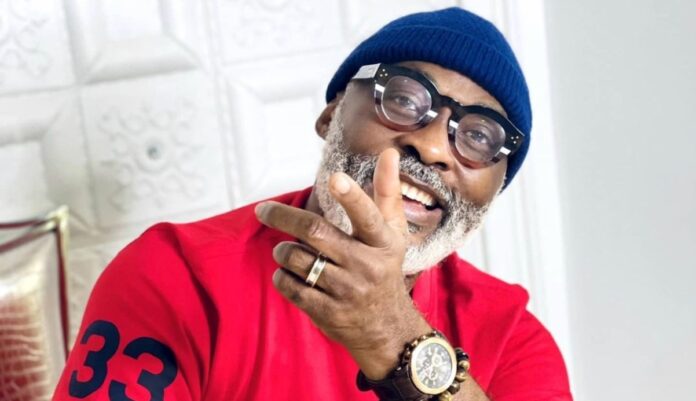
RMD also disclosed that as an only child, he was very close to his mother, who equally instilled values in him.
By Kehinde Okeowo
Nollywood actor Richard Mofe-Damijo, better known as RMD, has revealed how he imbibed different values which later shaped him into a very disciplined individual.
The veteran thespian reflected on these values instilled in him by two literary icons and his mother while speaking at a recent public event.
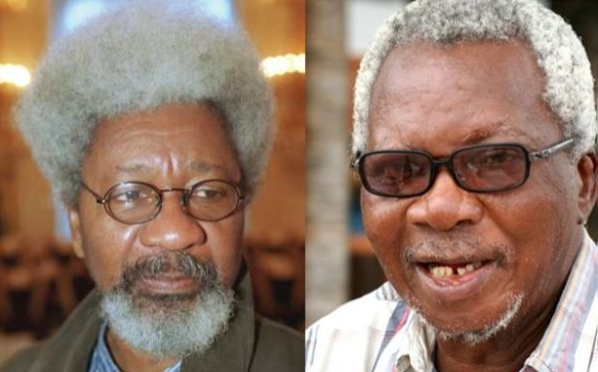
According to RMD, being an only son, he was attached to his mum, whose words constantly put him under check whenever he was about to go wrong.
Speaking at the event, Damijo said: “Growing up, I was deeply attached to my mother. I do not know if it was because I was an only child, but she constantly reminded me of where I came from and the responsibility that came with it. She drilled one statement into me: ‘Don’t forget whose child you are.’
“That stayed with me. She nurtured me and taught me that, at different points in our lives, we represent different people, families, and institutions.”
He further added that working alongside legendary literary icons, Professors Wole Soyinka and J.P. Clark, early in his career deeply instilled the core values of punctuality, responsibility, and professional discipline in him.
He recounted encountering Prof. Clark in 1984 as a resident actor at the J.K. Randle Centre, and subsequently working under Soyinka’s direction, noting that both experiences taught him never to be late and to always remain structured and focused.
Recalling the experiences, RMD said: “I was also fortunate to have been well trained in the schools I attended and by the people I had the opportunity to work with. They taught me the importance of discipline, punctuality, and responsibility.
“Timeliness is important to me. If someone tells you to be somewhere at 8 o’clock, you should get there by 7:30. That way, when they encounter you, you are already prompt and ready to take off.
“I was privileged to work with people who embodied those values. In 1984, I encountered Professor J.P. Clark as a resident actor at the J.K. Randle Centre. I also had the opportunity to encounter Wole Soyinka as a director.
“If you have encountered Soyinka, you would understand what I mean. If he says 4 pm and you get there at 3:30 pm, he is already there. Those are the kinds of people I have had the opportunity to work with, and I imbibed that culture. I hope that those who encounter me will also be conscious of what they can learn from me.”
On Nigerian independence, he added: “I have always tried to live by one principle. I overcompensate by trying to make sure that I am proper in everything that I do. At different stages of our lives, we represent something bigger than ourselves. The question is, what is it that you carry inside you, and who do you represent?
“I served government for eight years, and during that period, I realised that government has tremendous potential for good. You see that you have the ability to change things for good, but the system is sometimes built in such a way that when good people come into it, if their values are not deeply rooted, the system can suck them in.
“When I came into government, I was determined to fight to change the attitude that some people brought into the system. That experience taught me something important: if you can’t fight the system, get out and go build somewhere else.”