PETROAN says Dangote Refinery made decision without discussion with other stakeholders
By Jeph Ajobaju, Chief Copy Editor
************************
“Dangote is the pride of Nigeria and Africa, but we need his success to lift others – not shut them out. We want many strong players, not just one strongman.
“Some of our members have 300, 500, even 900 trucks. These are investments made over decades. If Dangote handles everything from refining to retail, these assets will become obsolete.
“If we become dependent on one source, prices could skyrocket later. We’ve seen that happen in other sectors.
“We still have up to August 15. Between now and then, stakeholders must meet and agree on a sustainable way forward. We want Dangote’s success – but not at the cost of an entire industry” – Billy Gillis-Harry, PETROAN National President.
************************
Dangote Refinery meddling in fuel distribution will create overwhelming dominance, juggernaut monopoly as well as widespread job losses in the petroleum value chain, and eventually raise pump price, the Petroleum Products Retail Outlets Owners Association of Nigeria (PETROAN) has warned.
PETROAN National President Billy Gillis-Harry described the gambit as “a national concern” and urged regulators to step in before the sector is overrun by the dominance of a single player.
“This is not just a PETROAN issue. It’s a Nigerian concern. Right now, the number of retail outlets in the country are doing business and satisfying the energy requirements of Nigerians,” he said, per The Nation.
“If one company as massive as Dangote Petroleum Refining Company is going to refine, store, transport, and retail products, it will wipe out other businesses and result in massive job losses.
“We recommended that refining should be left to refineries, storage to depots, logistics to transporters, marketing to marketers, and retail to retailers. That value chain must be protected.”
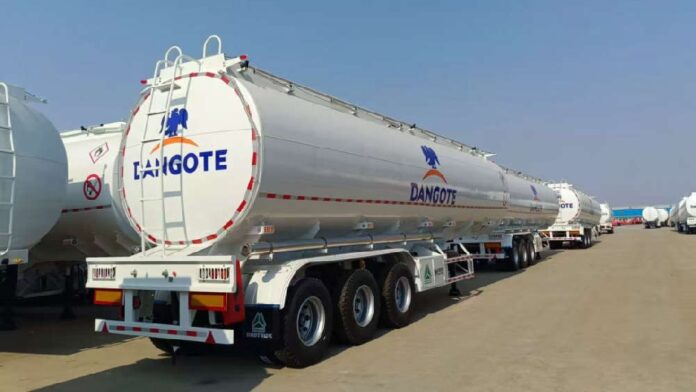
The Dangote Group last weekend announced plans to deploy 4,000 fuel distribution trucks and establish over 100 compressed natural gas (CNG) stations across Nigeria as part of its downstream expansion.
Dangote Group President Aliko Dangote said the move is line with the Federal Government’s energy transition goals, but it has sparked concern among independent marketers and other stakeholders.
Gillis-Harry warned that while the expansion may appear beneficial on the surface, its long-term impact could destabilise the market.
“It’s going to take off transporters, retail outlet owners, and marketers from business. That affects all the jobs created by these operators in the subsector.”
He cited decades-old legal frameworks, including the Petroleum Equalisation Fund established by Decree No. 9 of 1975 and amended in 1989, and urged regulators to act.
“There are rules. No one company should interpret and operationalise what regulators are meant to do.
“To my knowledge, there was no discussion with stakeholders. We have communication networks across PETROAN, DAPMAN, IPMAN, NUPENG, NARTO, and others. This announcement came through the media, not through any roundtable.
“Dangote is the pride of Nigeria and Africa, but we need his success to lift others – not shut them out. We want many strong players, not just one strongman.
“Some of our members have 300, 500, even 900 trucks. These are investments made over decades. If Dangote handles everything from refining to retail, these assets will become obsolete.
“If we become dependent on one source, prices could skyrocket later. We’ve seen that happen in other sectors.
“We still have up to August 15. Between now and then, stakeholders must meet and agree on a sustainable way forward. We want Dangote’s success – but not at the cost of an entire industry.”
Read also: