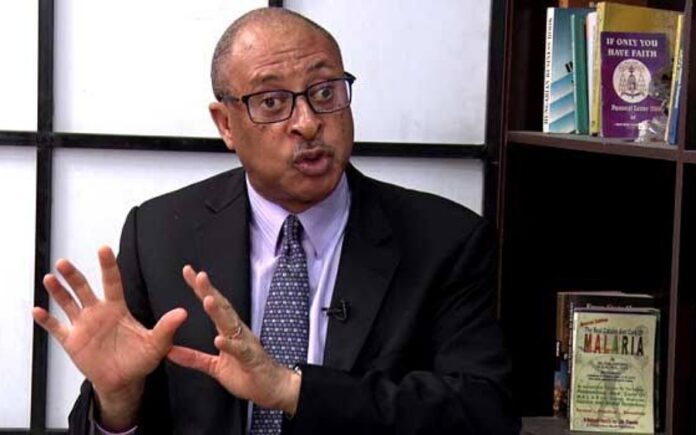
Pat Utomi defends shadow govt initiative, says Nigeria is hurting
By Jeffrey Agbo
Convener of the newly unveiled Big Tent Coalition Shadow Government, Professor Pat Utomi, has said the initiative was born out of national consciousness, not ambition or bitterness.
The 69-year-old said in a statement on Friday that the shadow cabinet is not an attempt to seize power or undermine the state, but rather “a citizens’ platform for responsible democratic opposition.”
His statement followed criticism including those from the All Progressives Congress (APC) and the Federal Government, who have dismissed the initiative as unconstitutional, rebellious or mere political theatre.
“Let me state this plainly: The Shadow Government is not a rebellion. It is not a claim to executive authority. It is not a parallel structure to the state,” Utomi stated.
“Rather, it is a citizens’ platform for responsible democratic opposition—an initiative rooted firmly in the Nigerian Constitution.”
Utomi further said, “To label this a ‘drama’ is to miss the point: the real theatre is what millions of Nigerians are forced to perform each day just to survive.”
He explained that the formation of the Big Tent Shadow Government stems from deep national concern.
READ MORE: May Day: Only workers can save themselves, says Pat Utomi
“We launched this initiative not out of bitterness, ambition, or theatrical impulse—but because our country is hurting. Millions are hungry. Prices are rising. Businesses are closing. Security is deteriorating. And hope is thinning,” he said.
Utomi emphasised that the platform’s purpose is to offer policy alternatives, encourage civic engagement and help restore accountability—areas he believes are increasingly lacking under the current administration.
“This is not a political party. It is not an electoral platform. It is a national conscience project—a space for voices that refuse to be silent in the face of national decline,” he affirmed.
Addressing government authorities and security agencies, Utomi stressed that the effort is not confrontational but constructive: “This initiative is not designed to undermine your authority. It is designed to awaken our shared responsibility. We come not with violence or confrontation, but with ideas, dialogue, and discipline.”
He called on Nigerians to actively participate rather than remain bystanders, framing the movement as a moral obligation in a time of national uncertainty.