Stakeholders call for collaboration in addressing Anambra’s environmental challenges
By Uzor Odigbo
Stakeholders, policymakers, climate advocates and actors in the waste and recycling value chain have called for stronger collaboration to transform Anambra State’s environmental challenges into opportunities for sustainable development.
The call was made at the Anambra Climate Resilience & Erosion Greening Roundtable, held virtually under the theme “From Gully Sites to Green Assets.” The event was organised by the Anambra Waste Recyclers Association (AWRA) in collaboration with SWEEP Foundation NG and the Anambra State Ministry of Environment.
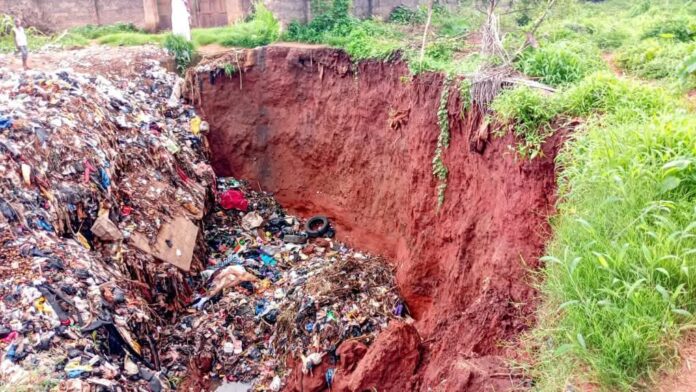
The roundtable examined the intersection between erosion control, climate resilience, waste management, recycling, and the emerging green economy, as the state continues to grapple with gully erosion, flooding, indiscriminate waste disposal, land degradation, and the broader effects of climate change, challenges organisers said threaten communities and infrastructure while creating economic and social vulnerabilities.
Speaking at the event, Anambra State Commissioner for Environment, Dr Clem Aguiyi, stressed the need for coordinated action and stronger collaboration among public institutions, communities, and the private sector. He invited the Special Adviser to the President on Climate Change to visit Anambra for an on-the-ground assessment of the state’s gully erosion situation.
The Special Adviser, Yusuf Kelani, gave a national perspective on climate action and opportunities within Nigeria’s green economy landscape, and said subnational governments needed to position themselves strategically within the evolving climate-resilience value chain. He said his team was planning a visit to Anambra as part of a wider nationwide consultation on climate change mitigation and adaptation.
Amb. Obuesi Phillips, Executive Director of SWEEP Foundation NG and lead consultant on climate change, sustainability, and circular economy, focused on converting environmental challenges into productive economic assets. Describing Anambra as Nigeria’s “erosion capital,” he said the state deserved more than photo opportunities and passing commentary, and called for broader collaboration between federal and state governments to tackle its ecological challenges directly. He said waste recovery, recycling, resource efficiency, green entrepreneurship, and environmental restoration held significant potential for job creation.
A key outcome of the roundtable was a call to formally recognise waste pickers, recyclers, and aggregators as critical actors in environmental management, given their contribution to resource recovery. Participants said the sector needed stronger institutional recognition, capacity building, access to finance, appropriate technology, market linkages, and safer working conditions.
Speakers agreed that no single institution could resolve the state’s environmental challenges alone, describing government’s role as providing policy direction and enabling infrastructure, the private sector’s as investment and technology, and civil society’s as advocacy and community mobilisation, with local communities central to implementation.
Stakeholders were urged to translate the roundtable’s outcomes into measurable programmes, including community-based erosion restoration initiatives, recycling hubs, green enterprise development, climate-awareness campaigns, and stronger mechanisms linking environmental actors to funding and investment.