Onaiyekan, INEC chairman call for credible ballot ahead of 2027
Cardinal John Onaiyekan, Archbishop Emeritus of Abuja, and the Chairman of the Independent National Electoral Commission (INEC), Prof. Joash Amupitan, have called for stronger media vigilance, credible elections and greater institutional responsibility to protect Nigeria’s democracy ahead of the 2027 general elections.
They spoke separately at the 24th All Nigeria Editors Conference (ANEC 2026), organised by the Nigerian Guild of Editors (NGE) in Enugu, on the theme: “The Ballot, the Media and the Task of Keeping Democracy Alive.”
Onaiyekan, who delivered the keynote address, said Nigeria’s democratic experience remained a work in progress, stressing that democracy must ultimately serve the people and promote accountable governance.
The cleric said his reflections on democracy were informed by his experience as an 82-year-old Nigerian and as a religious leader who had witnessed the country’s political journey over the years.
He examined different forms of government, including theocracy and monarchy, before focusing on democracy and the place of elections and the media in sustaining democratic governance.
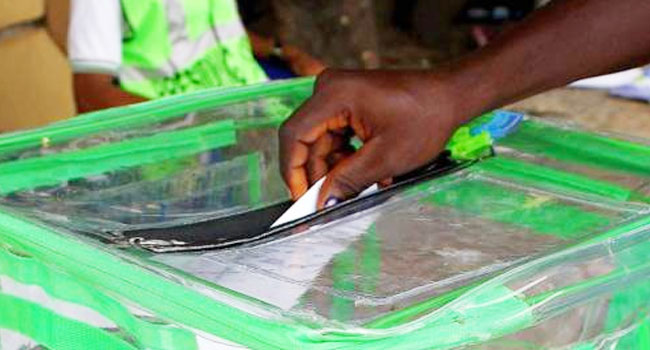
Onaiyekan said the ballot was central to democratic participation, but stressed that elections alone could not guarantee good governance unless supported by institutions and citizens committed to democratic values.
He also highlighted the responsibility of the media in providing citizens with reliable information and scrutinising those entrusted with public office.
In his opening remarks, Amupitan said the ballot represented the citizens’ choice and that the credibility of the electoral process depended not only on election administrators but also on the quality of information available to voters.
He said the media had a constitutional responsibility under Section 22 of the 1999 Constitution, as amended, to hold government accountable to the people.
According to him, the media and the electoral management body have complementary responsibilities in protecting Nigeria’s democracy.
He said while INEC was responsible for safeguarding the electoral process, the media had a duty to ensure that information surrounding elections was accurately verified before being disseminated.
A major focus of Amupitan’s address was the growing threat posed by artificial intelligence, deepfakes and synthetic disinformation to Nigeria’s electoral process.
He warned that advances in generative AI had made it increasingly possible to create convincing fake videos, cloned voices, forged documents and manipulated election results.
He gave examples of potential election-related deepfakes, including fabricated videos of electoral officials announcing false results, cloned audio recordings purportedly issued by INEC officials, forged documents announcing changes to election arrangements and manipulated result sheets circulated online.
Amupitan said the danger went beyond individual falsehoods, arguing that widespread synthetic disinformation could undermine public confidence in genuine information.
He urged editors to strengthen fact-checking and verification systems, particularly during the election period.
He advised news organisations to incorporate digital verification tools, deepfake detection technology and forensic analysis into their news-gathering processes.
The INEC chairman also urged the media to resist the pressure to publish first at the expense of accuracy.
He said inaccurate or premature publication of election-related information could fuel public tension and undermine confidence in official results.
Amupitan disclosed that INEC had begun deploying artificial intelligence tools in its results-management processes to identify discrepancies and administrative errors before final validation.
He stressed, however, that automated systems would remain subject to human oversight and legal verification.
According to him, INEC has also established an Artificial Intelligence Division within its ICT Department and developed an AI roadmap and governance framework based on human oversight, transparency and accountability, data protection, cybersecurity and public trust.
He said the Commission was also strengthening its technological and cybersecurity capacity through engagements with international technology and electoral organisations.
On staff welfare, Amupitan said INEC had established a Consolidated Election Management Body Salary Structure (CEMBSS), effective January 1, 2026, while an improved salary and welfare package for commission members, Resident Electoral Commissioners and staff was at an advanced stage.
He added that the Commission had increased overhead allocations to its state offices by 150 per cent from July 1, 2026.
The INEC chairman argued that improved welfare was necessary to strengthen institutional integrity and reduce vulnerability to inducements and other forms of compromise.
Amupitan also outlined INEC’s preparations for the 2027 general elections.
He said the Commission had commenced a nationwide six-zone interactive meeting and readiness assessment tour, beginning in Lagos on September 7.
He cited the August 15, 2026 Osun State governorship election as part of the Commission’s operational preparations, saying 3,556 of the state’s 3,763 polling units opened for accreditation and voting by 8:30 a.m.
He said INEC deployed 5,130 BVAS devices for the election, including 1,328 backup devices, while original result sheets were scanned and uploaded to the IReV portal.
Amupitan, however, acknowledged that the scale of the 2027 elections would be significantly greater, with elections scheduled across the 36 states and the Federal Capital Territory.
He said the Presidential and National Assembly elections were scheduled for January 16, 2027, while the Governorship and State Houses of Assembly elections were scheduled for February 6, 2027.
The INEC chairman urged editors to strengthen their gatekeeping role, particularly in the face of social media platforms that reward speed, sensationalism and virality.
He called for greater collaboration between INEC and the media in countering election-related misinformation and educating citizens about synthetic content.
He also urged media organisations to avoid giving premature legitimacy to unofficial election figures circulated by political actors and other sources.
Amupitan said statutory election-result declarations should be left to the appropriate electoral authorities, while the media should focus on verification and responsible reporting.