



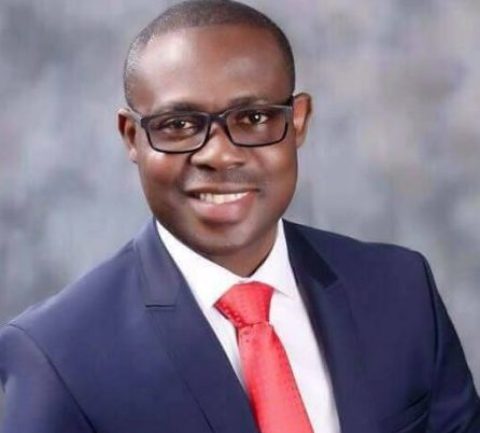
With a background rooted in service and a passion for youth development, Hon. Mathias Baba Tsado, the Peoples Democratic Party (PDP) candidate for the Bida/Gbako/Katcha Federal Constituency, is stepping into the 2027 race with a promise to deliver a complete turnaround in representation. In this interview, he discloses his plans which includes to engage youths in modernised agriculture and agribusiness instead of them relying on political tokenism, which he says his opponents have perfected.
Excerpts…
What is motivating you to seek the House of Representatives position for your constituency?
First of all, my life and the history of my life have always been about service to the people. This will not be the first time I will be contesting an election. I have been involved in political activities right from my university days, and the idea has always been about offering better services and giving the people what they desire.
Now, as far as my federal constituency is concerned, as we speak, we have at least one of the worst records of unemployment, especially among young people. I have a flair for the youth, particularly because I believe that the potential of the youth is not being utilised. For political leaders in the country over the years, particularly in my federal constituency, they have always offered handouts. And I believe that this is not the way to go. We must be able to empower the next generation, we must be able to engage the youth, and we must be able to provide a platform for these young people to thrive.
You have a group of young people whose energies are not being utilised in a productive manner. I’m sure you know that Niger State has the largest landmass in the country. We have very productive land for farming. But instead of this land being turned to farming and agribusiness, everybody is engaged in activities that are only motivating rural-urban migration. So, you have young people all migrating into the cities, into the towns, because they believe that the life being offered to them in the rural areas is not what they want to live.
So, one of the things that is motivating me is to be able to provide the young people with a kind of life that would give them the opportunity to explore and put their God-given talents to work. I don’t know if you have heard of any person from my constituency, Bida/Gbako/Katcha, who is a football superstar or a movie superstar? These are areas that I believe our young people can do very well in. But because nobody is encouraging talent hunts and talent development, all these talents just end up being buried.
So, I want to come up with an innovative way to create skill-acquisition institutions where young people’s talents will be discovered. Those who are good at football, those who are good at acting, those who are good at music, will have the opportunity to explore their talents and make life better for themselves. Those who are good at software development—these are areas the world is moving towards. We are going in the direction of AI, IT and all that, and nobody seems to be investing in our youth in these areas.
Now, the motivation to go into office is largely not about personal interest, but about the desire to serve the people and ensure that we are able to deploy modern ways of leadership; leadership that is about solving problems, not just self-aggrandisement, as we have seen over the years in our politics. So, largely, I would say that because the people who have been given the opportunity have failed in helping the young people and helping the people of the constituency to have a better life, I think this is one of the things that is motivating me to come in and offer something different from what we have seen.
And I’m particularly excited because of the overwhelming response I’ve gotten from the youth to this project. They have seen it as a project that is for them, something that is not motivated by just one old politician who wants to come and bamboozle them or tell them stories, but somebody who is genuinely coming with the desire to offer them something different from what we have seen. So, basically, I’ll say this is one of my motivations.
Okay. So, you have actually set the tone for my next question, which is: what unique thing will you be bringing on board? You talked about empowerment and the discovery of talent. Would that be the unique thing that you want to bring on board, or are there other things?
Yes, there are more. It’s going to be a leadership that is completely different from what we have seen over the years. I believe that our people need a complete turnaround in terms of the kind of leadership that has been offered. Leadership, first of all, that is about the people, that is centred around the needs of the people. It is one of the things that I believe is important for me.
I have gone to the area and I’ve done a couple of needs assessments. I’ve checked what the needs are and what the cries of our people are, even though many of them still believe that politicians are good at making promises and all that. But I can assure you, and I can assure Nigerians, that we’ll be coming in with something completely different from what we have seen. We are coming in with what I call an “agric revolution,” some kind of area where young people are excited about being involved in the agricultural value chain. I was very, very happy to see some of the things that I’ve copied from places, states like Mississippi in America, where young people are engaged in agribusiness. Agriculture is not just a cultural thing; it’s not that this is our way of life and all that. No. Agriculture is a big business anywhere in the world. So, one of the things that I want to be able to do is to translate what we currently have, the culture, into a business where young people will dress up in white in the morning and they are farmers, because they don’t need to go to the farm to dirty themselves, but they have modern tools that are being deployed to work for them. And those who are not even interested in going to the farm themselves could put their funds into an agribusiness system where you can own a farm without going to see the farm or even knowing the farm, but your funds are given to a trustworthy organisation that carries out the farming for you. And when the farm season is over, they are able to give you your produce, and you can sell them or do whatever you want to do with them.
And then also, one of the things that I want to be able to do is that we should be able to establish agro-processing zones or agro-processing centres in the three local governments (Bida/Gbako/Katcha), particularly in the two agrarian local governments that I have in my constituency, which are Gbako and Katcha. Bida is largely a city centre, so basically, one of the things that we’ll focus on in Bida is to set up industries for other activities, like skill-acquisition institutions and other things. But the areas where good food is being produced and agro-produce are being farmed, we will set up agro-processing zones or agro-processing centres where these things will be processed into finished or semi-finished goods that will have off-takers taking them from the processing zones to the international market.
So, largely, I believe that we’ll come with this approach, that we are able to translate agriculture into a massive money-spinner for the people, particularly for the young people, and also be able to set up talent-hunt centres for us to be able to identify young people who are good in certain areas: those who are good at football, those who are good in movies, those who are good in all kinds of areas. We should be able to develop our people into a human-capital hub where other organisations, banks or hotels could come in to look for our young people and recruit them to work for them in different organisations all over the world.
And then, one very important area is ICT. ICT is one area that is lagging. One of the things that has become a menace in my area is the issue of cybercrime. Now, I want to be able to translate that into a very productive business centre, so those young people who are involved in the yahoo-yahoo stuff can become more productive, doing online businesses, tech development and digital marketing. So, there are several areas that I believe I’m coming with that are novel compared to what the people have seen.
So, if you are to pick a priority project once elected as a lawmaker, what would that be now, based on what you’ve already reeled out? Which one will be your major project?
It will be to first of all set up the agro-processing zones, because one of the biggest problems our people have is that their produce are not—in fact, last year, I remember engaging some farmers at the grassroots, and they were telling me that they had goods that they could not sell because there was no market. So, one of the major things that I I’ll be able to do is to set up an agro-processing zone where these goods will be processed into finished goods or semi-finished goods that will be distributed to the larger market.
But what about the PDP, your party? Because at the national level, it is not visible, so how much of an impact do you think you can make under that platform in your state?
Well, PDP is a national political party that has been around for so many years and has served the people. I remember having a discussion with our people during one of my visits to the constituency, and it was almost a nostalgic feeling from the people that they could hear somebody talking about PDP. So, there is this almost natural connection between our people and PDP. There is that link, there is that belief that during the era of PDP, our people, our lives were better, the people were faring better, and things were—life was generally more affordable than now. So, people don’t really care so much about what is happening at the national level of the party; they are more interested in the fact that we are coming to them at the grassroots level. Like everybody always says, politics is largely local, so we are focusing on drilling down our ideology to the people, telling them that we can offer them something better, we can offer them a better lifestyle, we can offer them a more affordable lifestyle.
I know that one of the biggest problems that our people are facing today is poverty. So, whatever it is that we’ll need to do as a group of people, as a political party, is to be able to promise the people, with a clear implementation plan, how we will be able to make life better for them. And it’s very easy for us to promise that because we have done it before. So, our people are more excited about the idea of us running at the local level than they are concerned about the national politics.
What will be your projection in the governorship contest in Niger State? Because the current governor, Bago, you mentioned some agricultural innovations that you intend to put forward, but the current governor, Bago, is rated as one of the performers in terms of agriculture. And then you have the PDP candidate, a former FIRS chief. How much of an impact do you think he can make against Bago?
The promises that were reeled out by the current governor, unfortunately, he has been tested and I believe that he has been found wanting. How do you say you are a farmer governor in a state where over 600 people will be picked up in the same day? Farmers, the majority of them in Zone C and Zone B, cannot go to their farms now, as we speak.
But that’s a national security problem.
So, the thing about this is, you know Nigerian politicians are used to claiming that those kinds of things are not their fault, but if you are collecting security votes, you should be responsible for the security of the state. So, largely, I would say that the governor, in his promises to offer the people the kind of agricultural revolution that we are speaking about today, has failed in that regard.
And because, you see, our people are largely agrarian in their businesses, they are more farmers than anything else. So, if you touch that area, if you touch that aspect of their life, you are not able to offer them anything. But if you can give them that guarantee that they can go to their farms…Let me tell you, I grew up as a young boy from my village through farming and all that. So, largely, my parents, our parents, raised us through farming, and, you know, they were very proud of the things that they did because they believed that it was what was handed over to them by their parents, our grandfathers, our forefathers. But because of the current situation, even the people that are supposed to be producing or supposed to be going to the farms now cannot go to the farm again. So, I think largely, and then also, let me mention, because in terms of infrastructure and all the things that the governor was supposed to provide for the people, he has failed.
He came in without a proper plan. He went and borrowed over one trillion naira. And ever since he took that loan, he has not been able to commission a single project in the state. So, largely, people are fed up with the governor and his character, his attitude, the way he has handled the governorship position. I don’t know if you have seen the video of the governor threatening people who want to leave the APC and saying that he is going to expose them because they have corruption files. If the people have corruption files in your office, why should you close the files simply because they are in APC?
So, generally, at the moment, our people are not in the best of moods as regards the kind of governance they are getting from the governor.
So, you think Muhammad Nami will do any better?
Yes, I strongly believe so. I’ve met with His Excellency, the governorship candidate of the PDP. First of all, his demeanour as an individual is something that gives you an idea of a personality who would be calculative in his approach. One of the problems that the governor has is that he could not sit down to do a project analysis to know project requirements. In fact, whether he did a needs assessment or project reviews, project ideas, he didn’t do any of the project analysis. He just went into wanting to build overhead bridges, wanting to build roads, and then made a mess of the entire capital city of Niger State, which is Minna.
So, I believe that our people have seen the governor’s capacity and, for that reason, I think they are looking for an alternative, which I believe Muhammad Nami, the one they call Butan Shayi has an upper hand in this contest. I’m very, very certain that once the election is held, our people will speak loudly against the governor.


