



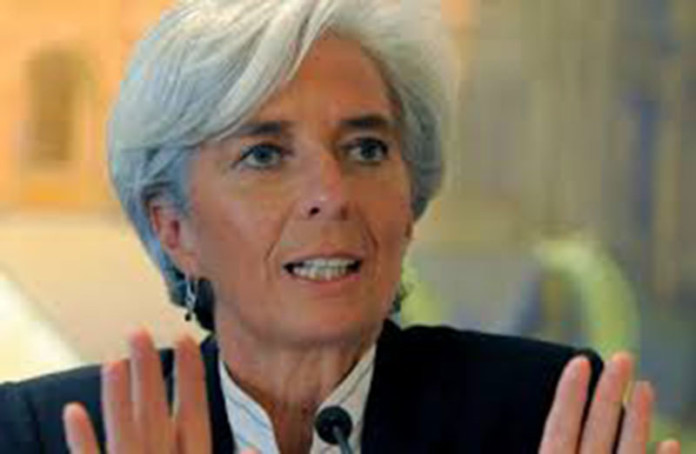
As Nigeria continues to battle the impact of declining prices on its crude oil export revenue base, Managing Director of International Monetary Fund (IMF), Ms Christine Lagarde, has advised Nigerian authorities to consider removing fuel subsidies and raising value-added taxes to boost its revenue.
For, research by IMF showed that more than 40 per cent of fuel price subsidies in developing countries accrue to the richest 20 per cent of households, while only 7 per cent of the benefits go to the poorest 20 per cent, while fossil fuels burning harm the planet with climate change and hardly help the poor.
Lagarde met with legislators in Abuja on Wednesday and told the lawmakers that the subsidy on fuel favours the rich more than the poor and commended the Federal Government for already beginning the move to eliminate resources allocated to fuel subsidies in the 2016 budget and to allow for more targeted spending, including on innovative social programmes for the most needy.
“Indeed, fuel subsidies are hard to defend. Not only do they harm the planet, but they rarely help the poor. IMF research shows that more than 40 per cent of fuel price subsidies in developing countries accrue to the richest 20 per cent of households, while only 7 per cent of the benefits go to the poorest 20 per cent,” she said.
The IMF chief said Nigeria has some tough choices to make and time is of essence, adding that the government needs to take immediate action and effect a fundamental change in the way it operates.
She said the new reality of low oil prices and low oil revenues means that the fiscal challenge facing government is no longer about how to share the proceeds of Nigeria’s oil wealth, but how Nigeria can deliver to its people the public services they deserve — be it in education, health or infrastructure.
According to her, the first step is to broaden the tax base and reduce leakages by improving compliance and enhancing collection efficiency while at the same time, bolstering public finances further to meet the huge expenditure needs.
“For example, the current VAT rate is among the lowest in the world and well below the rates in other ECOWAS members, so some increase should be considered,” Lagarde said.
Lagarde further advised Nigeria to consider strengthening its external position as a priority policy given the structure of the economy and the massive fall in oil prices, which is expected to continue.
“To be clear,” she said, “the goal of achieving external competitiveness requires a package of policies, including business-friendly monetary, flexible exchange rate and disciplined fiscal policies, as well as implementing structural reforms.
“Additional exchange rate flexibility—both up or down—can help soften the impact of external shocks, make output and employment less volatile, and help to build external reserves. It can also help to avoid the need for costly foreign exchange restrictions, which should, in any case, remain temporary.
“And, going forward, improved competitiveness from improved exchange rate flexibility and other reforms will facilitate the needed diversification of the exports base and, ultimately, growth.”
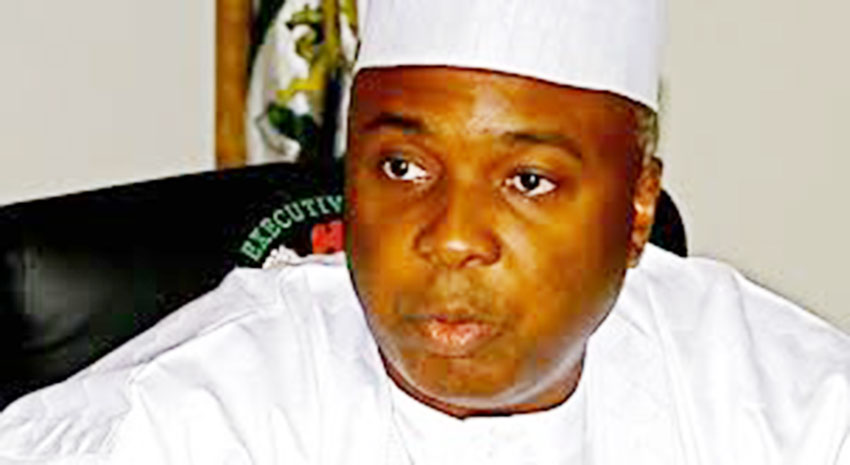
In his welcome remarks, Senate President Bukola Saraki said the effect of the low oil prices on government revenue was challenging the government to think out of the box in funding the repair of infrastructure, boosting employment and securing the country’s borders and people.
He, however, stressed that Nigeria’s economic fundamentals remained robust and the economy resilient to absorb the current oil price shock, insisting that the situation was bringing out the entrepreneurial spirit in Nigerians.
“Our private sector is also rising to the challenge. We assure you, we will use this occasion to build a new economy diversified away from the perennial effects of oil price shocks,” he asserted.
Saraki said the National Assembly is committed to working closely with the Executive arm to address the economic challenges facing the country.
“We will support the Executive with legislation, where necessary, to give confidence to investors. We are assiduously working towards blocking identified legal loopholes on revenue leakages and expanding our tax base.
“We are giving priority to legislation aimed at providing a more conducive business environment in general and reducing the cost of doing business in Nigeria; and we are, more than ever before, working at improving our oversight systems to expose corruption wherever it may be, and providing better legal framework to entrench the rule of law and end impunity,” he stated.
-Leadership


