



By Jeph Ajobaju, Chief Copy Editor
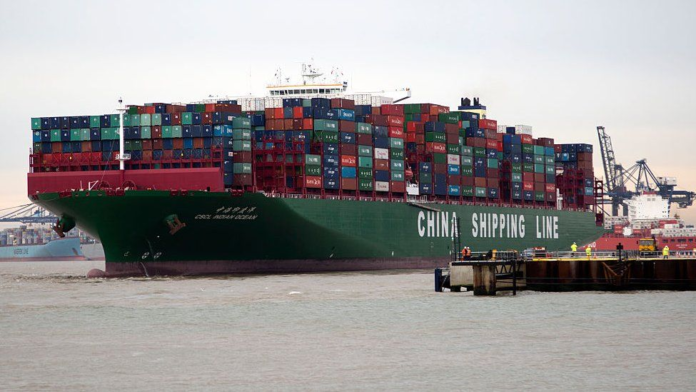
China is the biggest single importer to the United Kingdom for the first time in two decades, a feat that overtakes Germany, a member of the European Union (EU) which also is Britain’s largest trading partner.
China’s economy has grown 18.3 per cent post-pandemic while the British economy shrank 2.9 per cent in January.
The imbalance is reflected in the latest data from the UK Office of National Statistics (ONS) which shows that goods imported from China rose 66 per cent from Q1 2018 to £16.9 billion ($24 billion) in Q1 2021.
Imports from Germany fell by a quarter to £12.5 billion in the same period.
Per the BBC, the change came as trade with the EU was disrupted by Brexit and the pandemic boosted demand for Chinese goods.
The ONS report aimed to assess the impacts of Brexit and the coronavirus on the UK’s trade in goods.
It found evidence that trade had been disrupted at the start of the new relationship between the UK and the EU.
The ONS said German imports to the UK had fallen since April 2019, amid uncertainty over the details of Britain’s exit from the EU.
Germany’s motor industry also felt the impact of the pandemic as both vehicle production and global exports were hit.
In the UK, the BBC adds, quoting the ONS, demand for new vehicles slumped as car showrooms were shut due to lockdown measures.
Exports of goods to Ireland saw the greatest proportionate fall of the UK’s top five exporting partners after the EU transition period.
Since modern records began in 1997, Germany had been the UK’s biggest source of imports, except for a six month period at the end of 2000 and the start of the following year when the United States briefly took the top spot.
Despite a 23.1 per cent fall in total trade with EU countries as a whole in the period, the EU remains the UK’s biggest trading partner, the report found.
The figures also showed there was a jump in imports from China of textiles used for face masks and other personal protective equipment, as well as stronger demand for electrical devices.
China was the first major economy to see its global trade grow last year as it became the first big country to emerge from the pandemic.
UK economy still sluggish despite jobs boost
There were more than 657,000 job vacancies in the UK between February April, up about 48,400 on the previous quarter.
Job vacancies hit their highest level since the start of the pandemic with the easing of lockdown leading employers to start recruiting, according to data collated by the ONS.
However, Gross Domestic Product (GDP) dipped 1.5 per cent in Q1 2021, a better than expected performance helped by a surge in activity in March as coronavirus restrictions were eased slightly.
The lifting of the remaining restrictions is expected to unlock a huge boost in growth this summer, CNN writes.
But the broadcaster notes that multiple lockdowns and a trade shock caused by Brexit have left UK GDP 8.7 per cent smaller than it was pre-pandemic, meaning the country has a bigger mountain to climb than many other major economies.
Economic output in Italy, another country hit hard by the pandemic, is 6.9 per cent lower than before the pandemic.
The German and French economies are 4.9 per cent and 4.4 per cent smaller, respectively, while the United States is nearly back to pre-pandemic levels.
The question now is how quickly the UK economy bounces back as its hugely successful vaccination program continues and coronavirus restrictions are relaxed further.
“The burst of growth in March shows that the recovery has been gathering momentum more quickly than we had thought,” Ruth Gregory, senior UK economist at Capital Economics told CNN.
The economy may return to its February 2020 level even before the end of the year, she added.
Brexit continues to hurt
British exports to the EU continued to recover in March, nearly reaching the level that immediately preceded a historic collapse after Britain completed its exit from the bloc on January 1.
However, there is evidence that new border controls continue to affect trade. Imports from Europe remained sluggish in Q1 2021, the ONS said, and were outstripped by non-EU imports for the first time on record.
“There’s still a small chunk of firms still struggling with the changes,” said James Smith, an economist at ING.
“The bottom line is that there will continue to be a slow-burning impact of new trade frictions on the UK economy, even if the immediate teething problems have passed.”
Trade with EU drops 40%
Data released by the ONS in March had also shown that UK goods exports to the EU fell 40.7 per cent in January while imports tumbled 28.8 per cent.
Buffeted by Brexit uncertainty and by coronavirus, the UK economy had shrunk 9.9 per cent in 2020, the largest GDP dip in three centuries.
Covid-19 pandemic effectively wiped out all growth in the UK over the last seven years, returning the economy close to the size it was in 2013.
The 9.9 per cent slump was less severe than expected but still surpassed the 9.7 per cent collapse experienced during the Great Depression in 1921, making it the worst annual drop since 1709, according to a Bank of England database.
The ONS figures, reported by the BBC, showed the biggest drop in exports since records began in 1997, and are the first since new trading rules between the UK and the EU came into force.
The ONS said temporary factors were likely to be behind much of the falls.
Meanwhile, new data showed the UK economy shrank by 2.9 per cent in January amid the third lockdown.
The economy is 9 per cent smaller than it was before the start of the coronavirus pandemic.
Non-EU trade grows 1.7%
Both imports from and exports to the EU fell “markedly” in January, the ONS said. The value of goods exported from the UK to the EU fell by £5.6 billion in January 2021, while imports from the EU dropped by £6.6 billion.
The ONS said the fall in goods coming into the country was largely seen in machinery and transport equipment, and chemicals from the EU.
Car imports, as well as medicinal and pharmaceutical products, were particularly affected.
Accountancy firm KPMG pointed to Brexit as the likely culprit for the plunge in trade between the UK and the EU. In contrast, the UK’s trade with non-EU countries grew by 1.7 per cent in January.
British business complains Brexit is not working
British business people have complained that Brexit is not working and want Prime Minister Boris Johnson to fix it.
When Johnson announced his Brexit trade deal on December 24, he said it would enable UK companies “to do even more business” with the EU.
Britain would be “prosperous and dynamic and contented” after completing its exit from the EU, he declared, free to strike trade deals around the world while continuing to export seamlessly to the EU market of 450 million consumers.
But Brexit is proving to be disastrous for many British exporters, which have rejected Johnson’s description of the issues as “teething problems” and are now asking the government to take urgent action to prevent further losses.
“We are calling on both the UK and EU to get back around the table and produce solutions that reduce trade barriers and give exporters a fighting chance,” British Chambers of Commerce co-executive director Hannah Essex said in March.
“The difficulties exporters are facing are not just ‘teething problems.’ They are structural issues that, if they continue to go unaddressed, could lead to long term, potentially irreversible weakness in the UK export sector,” she added.
Fixing the deal
In March, a group of lawmakers, business leaders and economists announced an independent commission to scrutinise Britain’s trade deals with Europe and the rest of the world.
The UK Trade and Business Commission, which counts Virgin chairman Peter Norris among its organisers, will make recommendations to government on how to improve these deals.
“We will be looking in detail at the impact of these deals, particularly upon the small businesses that are bearing the brunt of new red tape at our borders,” Conservative Member of Parliament Roger Gale, who sits on the commission, said in a statement.
“This is about setting ideology aside and finding a pragmatic, evidence-based way forward,” he added.
The situation is particularly urgent for food producers, which have seen exports all but wiped out by the new trading arrangements.
As of January 1, all plant and animal products entering the EU require an export health certificate (EHC) that must be stamped by a government-certified vet.


