RULAAC calls for justice for victims, an end to police impunity and genuine implementation of police reforms
By Okechukwu Nwanguma
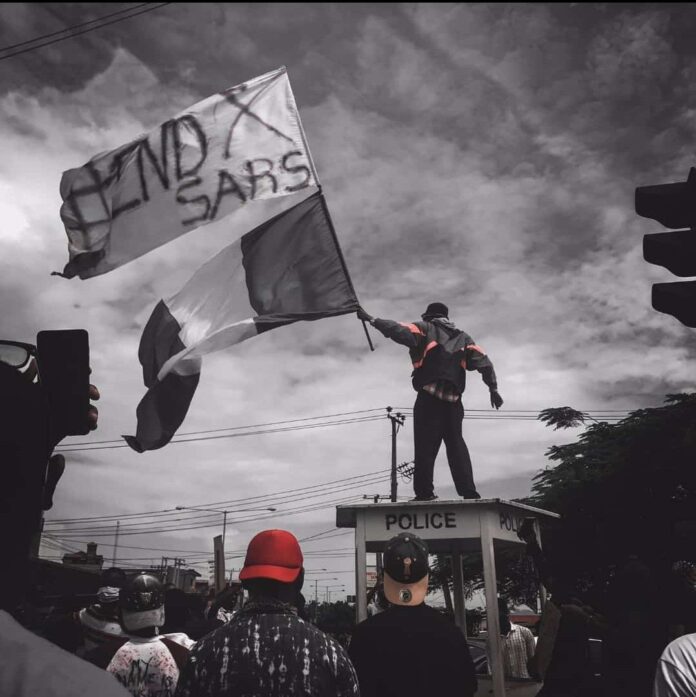
Six years ago, young Nigerians took to the streets in a historic uprising against police brutality, torture, extortion, arbitrary arrest, enforced disappearance and extrajudicial killing. The October 2020 #EndSARS protests became one of the most significant expressions of citizens’ resistance to state abuse and impunity in Nigeria’s recent history.
The protesters demanded the disbandment of the notorious Special Anti-Robbery Squad (SARS), justice for victims, accountability for abusive officers, improved police welfare and fundamental reform of policing.
Six years later, the Rule of Law and Accountability Advocacy Centre (RULAAC) joins Nigerians in remembering those who lost their lives, recognising the courage of survivors and protesters, and assessing the promises made, the limited progress achieved and the reforms that remain unfinished.
Although SARS was formally disbanded and some institutional measures were introduced, the culture of impunity, weak supervision and disregard for citizens’ rights that gave rise to #EndSARS has not been fundamentally transformed.
Across Nigeria, allegations of torture, unlawful detention, extortion, extrajudicial killing and enforced disappearance continue to emerge from conventional police formations and specialised tactical units.
The central question six years after #EndSARS is therefore not whether reforms were announced, but whether policing has become more lawful, professional, humane and accountable. The available evidence shows that the gap between promise and practice remains dangerously wide.
#EndSARS Was the Consequence of Years of Ignored Warnings
The October 2020 uprising did not emerge in isolation. It was the culmination of years of documented police abuses, public frustration and failed institutional responses.
For decades, civil society organisations, journalists, lawyers, victims and their families exposed serious violations committed by SARS and other police formations.
Before establishing RULAAC, I served as National Coordinator of the Network on Police Reform in Nigeria (NOPRIN) and previously headed the Police Research Project of the Civil Liberties Organisation. Through these platforms, we documented police abuses, supported victims, submitted petitions, pursued litigation and engaged police authorities and oversight institutions on the need for structural reform.
Successive Inspectors-General of Police announced restrictions, restructuring and reforms of SARS. Yet the abuses persisted because these directives were rarely followed by transparent investigations, effective supervision or meaningful consequences for implicated officers.
On 4 October 2020, shortly before the nationwide protests gathered momentum, the then Inspector-General of Police, Mohammed Adamu, announced another restriction on the operations of SARS and other tactical units, including prohibitions on routine patrols, stop-and-search duties and roadblocks.
Nigerians had heard similar promises before.
Reports surrounding an alleged SARS-related incident in Ughelli, Delta State, helped ignite the protests. But the movement spread nationwide because millions of young Nigerians recognised their own experiences in the accounts being shared.
Young people had been profiled because of their hairstyles, clothing, phones, laptops, vehicles or perceived lifestyles. Many had experienced or witnessed unlawful searches, arbitrary detention, intimidation and demands for money.
Social media enabled victims to share their experiences and mobilise collective resistance. The protesters were demanding more than the dissolution of one police unit. They were challenging a system in which officers could abuse citizens without meaningful accountability.
The lesson remains clear: when legitimate grievances are repeatedly ignored and accountability institutions fail, public frustration will eventually find expression outside established channels.
Government Concessions, Unfulfilled Promises and the Question of Justice
The government’s initial response demonstrated the power of organised civic action.
SARS was formally disbanded, the protesters’ five demands were acknowledged, and judicial panels of inquiry were established in several states to investigate complaints of police brutality.
The panels provided important opportunities for victims and families to testify publicly about violations previously ignored or denied. Some victims received compensation, while recommendations were made for prosecution, disciplinary action and institutional reform.
However, implementation has been fragmented, opaque and inadequate.
Many recommendations remain outstanding, particularly those relating to criminal accountability, institutional reform, rehabilitation and comprehensive redress for victims.
Compensation is important, but it cannot substitute for truth, justice and accountability. When public funds are used to compensate victims while responsible officers escape investigation and sanction, taxpayers bear the financial burden while impunity survives.
The government has also failed to provide a sufficiently transparent account of what happened to former SARS personnel:
- How many were investigated?
- How many underwent psychological assessment and retraining?
- How many were disciplined, dismissed or prosecuted?
- Where were they redeployed?
- Were officers implicated in serious violations allowed to continue serving in other police formations?
These questions remain relevant because redeployment is not accountability, and changing the name of a police unit is not institutional reform.
The events at the Lekki Toll Gate on 20 October 2020 remain a defining symbol of the breakdown of trust between citizens and the state. Unresolved questions concerning the use of force against protesters, responsibility for violations and accountability continue to cast a shadow over the government’s response.
Nigeria owes victims and their families more than remembrance. It owes them truth, justice, effective remedies and guarantees of non-recurrence.
The Police Act 2020: Progressive Legislation, Weak Implementation
The Nigeria Police Act 2020 was enacted shortly before the October protests. Although it was not a product of #EndSARS, the uprising demonstrated the urgency of implementing its progressive provisions.
Together with the Anti-Torture Act 2017, the Administration of Criminal Justice Act 2015 and corresponding state laws, the Police Act provides safeguards against arbitrary arrest, unlawful detention, torture and other abuses.
Yet the gap between the law and everyday police practice remains disturbing.
RULAAC’s monitoring and documentation reveal recurring patterns of:
- arrest before investigation;
- police intervention in civil disputes and debt-recovery matters;
- prolonged detention without lawful justification;
- denial of access to lawyers and relatives;
- coercive interrogation, torture and extortion;
- arrest of relatives or associates in place of suspects;
- unlawful payments demanded as conditions for bail or release; and
- misuse of police powers to enforce private financial claims.
These practices persist despite clear legal prohibitions and repeated directives from police authorities.
Our documentation of custodial practices has also exposed serious weaknesses in detention records, medical screening, preservation of evidence, access to legal assistance and independent monitoring.
The consequences extend beyond physical injury. Survivors frequently experience lasting psychological trauma, emotional distress, disrupted livelihoods, damaged family relationships and loss of confidence in public institutions.
The problem was never simply SARS as a police unit. It is rooted in deeper institutional failures involving operational culture, incentives, supervision, command responsibility and accountability.
Nigeria does not need another cycle of reform announcements. It needs consistent enforcement of existing laws and measurable changes in how police officers exercise their powers.
Survivors Remind Us That #EndSARS Is Not History
Behind the statistics, official reports and reform promises are human beings whose lives have been profoundly affected by police abuse.
Torture and unlawful detention do not end when victims regain their freedom. Many survivors continue to live with physical injuries, psychological trauma, economic hardship and the consequences of injustice.
One survivor, Ngozichukwu, has recounted an ordeal involving her abduction, transfer to Abuja and severe torture at a facility associated with the Intelligence Response Team.
According to her testimony, she was taken overnight to Abuja and subjected to further torture by officers associated with the team formerly led by Abba Kyari. She describes fractured wrists, deep cuts, starvation, denial of medical treatment and prolonged detention in degrading conditions.
She states that she was targeted because she contributed a small amount of money towards the medical treatment of persons injured during the #EndSARS period in the Southeast. Her account raises grave concerns about the use of police powers to punish a person for providing humanitarian assistance to victims of violence.
Ngozichukwu subsequently instituted a fundamental-rights enforcement action and obtained judgment against the police. The court upheld her claim and awarded her compensation for the violations she suffered. Yet the police have neither complied with the judgment nor paid the compensation awarded to her.
This continuing non-compliance illustrates a wider failure of police accountability. A victim may survive torture, overcome the barriers to seeking legal redress and obtain a favourable judgment, only to face further injustice when the police refuse or neglect to obey the court’s orders.
A police institution constitutionally charged with enforcing the law cannot place itself above the law. Compliance with court judgments is not optional. The continued failure to satisfy the judgment denies Ngozichukwu the effective remedy granted by the court, prolongs the harm caused to her and further erodes public confidence in the justice system.
RULAAC calls on the Inspector-General of Police and all other responsible authorities to ensure immediate and full compliance with the judgment, including payment of the compensation awarded and implementation of any other orders made by the court.
Another survivor, Adaeze Akwaja, has described severe torture involving personnel associated with Tiger Base and the former Abba Kyari team. Information available to RULAAC indicates that she continues to suffer serious health complications arising from the alleged abuse.
Her allegations require prompt and independent investigation, appropriate medical documentation and effective remedies.
RULAAC salutes survivors who, despite their suffering, have found the courage to speak publicly, support other victims and become advocates for human dignity. Some have carried their advocacy to international platforms, amplifying the voices of torture survivors and advancing the causes of rehabilitation, justice and accountability.
Their courage deserves recognition. But admiration for their resilience must never replace the justice they are owed. Survivors should not have to become campaigners before the state recognises and protects their rights.
Tiger Base and the Persistence of Abusive Tactical Policing
Continuing allegations against specialised police formations, including Tiger Base in Owerri, raise serious questions about whether the lessons of #EndSARS have been learned.
RULAAC has documented and pursued complaints involving alleged torture, extortion, unlawful detention, enforced disappearance and deaths associated with police custody in Imo State.
Of particular significance is the coroner’s inquest into the death of Japheth Njoku.
In findings issued on 30 September 2026, the coroner identified serious misconduct connected with his detention at Tiger Base, including torture, overcrowding, extortion and denial of bail, and recommended accountability measures against implicated personnel.
The findings demonstrate the importance of independent judicial scrutiny of deaths in custody and the duty of prosecutorial and disciplinary authorities to act promptly on credible judicial findings.
RULAAC demands full implementation of the coroner’s recommendations, including further investigation, prosecution where supported by evidence, and appropriate disciplinary action, with full respect for due process.
More broadly, the continued operation of tactical formations without transparent oversight, reliable custody records and effective complaint mechanisms creates conditions in which abuse can flourish.
No police formation is above the law.
The Missing, the Detained and the Families Still Searching
Six years after #EndSARS, families across Nigeria continue to search for relatives who allegedly disappeared following arrest or detention by security personnel.
The Southeast Human Rights Bureau, for which RULAAC provides secretariat support, has recently documented disturbing accounts of persons allegedly arrested, transferred to distant detention facilities, held incommunicado or denied access to their families and lawyers.
Some families report that security agencies denied holding their relatives despite information suggesting that the individuals had been taken into custody. Others have received no definitive information about whether their loved ones remain alive.
These accounts raise grave questions about custody documentation, command responsibility and the state’s obligation to account for every person deprived of liberty.
No family should be forced to search indefinitely through police stations, military facilities, detention centres and mortuaries for a relative taken away by state agents.
Nigeria urgently needs reliable custody registration, mandatory notification of arrest and transfer, independent detention monitoring and effective investigation of alleged enforced disappearances.
The rights to life, personal liberty, human dignity and access to justice cannot depend on the discretion of individual security officers.
Police Accountability Remains Fragmented and Ineffective
Nigeria has several institutions with responsibilities for police accountability.
The Nigeria Police Force maintains internal disciplinary and complaint mechanisms. The Police Service Commission exercises constitutional and statutory authority over the appointment, promotion, dismissal and disciplinary control of police personnel other than the Inspector-General of Police. The National Human Rights Commission investigates human rights complaints, while the courts provide avenues for legal redress.
Yet these mechanisms have not developed into a coherent, independent and effective accountability system.
Complaints are sometimes delayed, ignored or referred back to police formations whose personnel are implicated. Victims frequently receive little or no information about investigative outcomes. Disciplinary decisions are rarely published, and even favourable court judgments can be difficult to enforce.
Ngozichukwu’s case demonstrates that obtaining judgment is not necessarily the end of a victim’s struggle. When a law-enforcement institution refuses or neglects to obey a valid court order, it undermines judicial authority, denies victims an effective remedy and reinforces the same culture of impunity that police reform is intended to dismantle.
Although social-media exposure and sustained civil society intervention have occasionally compelled police authorities to act, accountability must not depend on publicity, status or personal influence.
A credible system must protect the poor, unknown and powerless as effectively as those capable of attracting national attention.
Strengthening civilian oversight, ensuring investigative independence, protecting complainants and witnesses, publishing disciplinary outcomes and enforcing court judgments are essential to rebuilding public confidence.
Police Welfare and Accountability Must Advance Together
Sustainable police reform must address the conditions under which officers work.
Many police personnel face inadequate remuneration, poor accommodation, insufficient operational resources, occupational hazards, limited insurance coverage and uncertain retirement benefits.
RULAAC’s engagements with police personnel have also highlighted excessive working hours, repeated exposure to traumatic incidents, occupational stress and inadequate psychosocial support.
These conditions undermine morale, professionalism and operational effectiveness. Nigeria cannot reasonably demand professional policing while neglecting officers’ welfare, training, equipment and psychological well-being.
However, poor working conditions cannot justify torture, extortion, unlawful detention or extrajudicial killing.
Welfare reform must proceed alongside stronger supervision, transparent operational funding, professional training and effective disciplinary accountability.
Police officers deserve dignity, fair treatment and decent working conditions. Citizens deserve safety, respect and protection from abuse. These objectives are complementary, not contradictory.
Six Years After #EndSARS: RULAAC’s Demands
RULAAC calls on President Bola Ahmed Tinubu, the Inspector-General of Police, the Police Service Commission, the National Assembly, the National Human Rights Commission, state governments and relevant prosecutorial authorities to demonstrate measurable commitment to the unfinished police-reform agenda.
We demand:
- Full implementation of existing laws: Enforce the Police Act 2020, Anti-Torture Act 2017 and applicable criminal justice laws, particularly the safeguards against unlawful arrest, torture, unjustified detention and misuse of police powers.
- Implementation of judicial-panel recommendations: Publish all outstanding reports and provide a transparent account of compensation, disciplinary action, prosecution and institutional reform arising from the #EndSARS judicial panels.
- Accountability for former SARS personnel: Conduct and publish an audit of the screening, redeployment, disciplinary records and prosecution outcomes involving former SARS officers, subject to lawful privacy and due-process protections.
- Independent investigation of grave violations: Ensure that allegations of torture, extrajudicial killing, enforced disappearance and deaths in custody are promptly and impartially investigated, with prosecution wherever the evidence establishes criminal responsibility.
- Stronger civilian oversight: Strengthen the independence, capacity and effectiveness of the Police Service Commission and establish a credible mechanism for investigating serious complaints against police personnel independently of the implicated formations.
- Reliable custody documentation and monitoring: Establish a central electronic custody register; require notification of every arrest and transfer; provide independent access to detention facilities; install functional CCTV systems; and require audiovisual recording of interrogations, with enforceable safeguards for preserving evidence.
- Protection of detainees’ rights: Guarantee prompt access to lawyers and relatives, independent medical examination and effective judicial oversight of detention.
- Review of tactical police formations: Subject specialised units to independent reviews of their mandates, operational methods, detention practices, command supervision, complaint histories and compliance with human rights standards.
- Police welfare and professional development: Improve remuneration, housing, healthcare, insurance, pensions, operational funding, recruitment, training and psychological support, while strengthening financial transparency and accountability.
- Justice, enforcement of judgments and rehabilitation for victims: Provide effective remedies, including compensation, medical treatment, psychosocial support, rehabilitation and protection against intimidation or reprisals. The Nigeria Police Force and other security agencies must promptly comply with court judgments obtained by victims of human rights violations, including the judgment awarding compensation to Ngozichukwu.
- Transparency in police discipline: Publish regular statistics on complaints, investigations, disciplinary proceedings, dismissals and prosecutions, while protecting legally confidential personal information.
- A coordinated national police-reform framework: Establish a time-bound implementation programme with defined responsibilities, measurable targets, independent monitoring and regular public reporting, involving the police, oversight institutions, civil society, victims and communities.
These demands are neither new nor unreasonable. They reflect longstanding obligations under Nigeria’s Constitution, domestic laws and international human rights commitments.
What has been lacking is sustained political will and institutional commitment to implementation.
The Lesson of #EndSARS: Reform Delayed Becomes a Crisis
The enduring lesson of #EndSARS is that governments cannot indefinitely ignore legitimate grievances without consequences.
For years, citizens submitted petitions, documented abuses, approached oversight institutions, pursued litigation and appealed for reform. Too often, these efforts were met with denial, delay, superficial administrative action or institutional indifference.
When established accountability channels repeatedly failed, the streets became the avenue of last resort.
The courage of the young Nigerians who participated in #EndSARS should therefore be remembered not merely as an episode of protest, but as a powerful assertion of constitutional rights, citizenship and democratic accountability.
The right to peaceful assembly and protest is fundamental to democracy. Peaceful protesters must never be treated as enemies of the state.
Public confidence cannot be restored through public-relations campaigns or repeated assurances. Trust is built when citizens experience lawful and respectful policing; complaints are investigated impartially; officers who violate the law face consequences; court judgments are obeyed; and victims obtain justice.
Six years after #EndSARS, Nigeria has another opportunity to demonstrate that it has learned from October 2020. That opportunity must not be wasted.
Conclusion: The Struggle Continues Until Accountability Becomes the Norm
As Nigeria marks the sixth anniversary of #EndSARS, RULAAC honours the memory of those who lost their lives, stands in solidarity with survivors and families, and salutes the courage of the young Nigerians who demanded a police institution that protects rather than brutalises the people.
We also recognise reform-minded police officers who continue to serve professionally under difficult conditions and who understand that public confidence is indispensable to effective policing.
Our message is clear:
EndSARS was not simply a demand to abolish a police unit. It was a demand to end a culture of impunity.
The true measure of reform is not the number of committees established, directives issued, officers redeployed or public-relations campaigns launched. It is whether citizens are safer, police officers obey the law, court judgments are respected, victims obtain justice, perpetrators face consequences and families of the missing receive answers.
Until these conditions are achieved, the grievances that gave birth to #EndSARS will remain unresolved.
The names of police units may have changed and the promises may have multiplied, but the fundamental demand remains the same:
End police brutality. End impunity. Deliver justice. Reform the police.
Six years after #EndSARS, accountability must no longer remain a promise. It must become the everyday practice of policing in Nigeria.
Okechukwu Nwanguma is the Executive Director of the Rule of Law and Accountability Advocacy Centre (RULAAC)