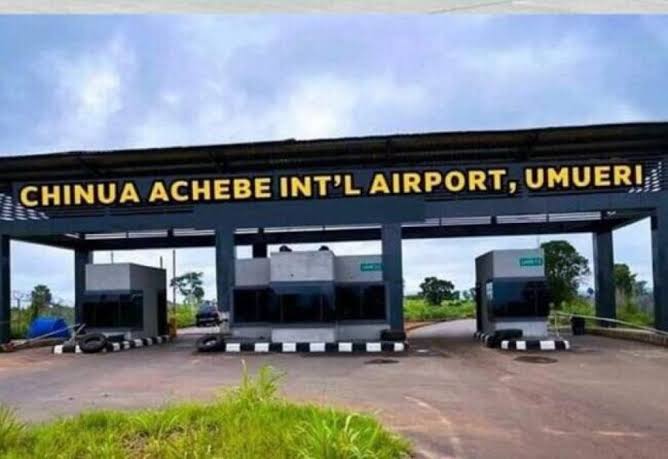
A top administration official of the Anambra State Government recently reportedly accused Air Peace and United Nigeria Airlines of engaging in a duopoly at Umueri and suggested that this explains the high cost of tickets. This is not the first time the allegation has been made. But now that it has reportedly come from a high-level government official, it deserves a response grounded in facts, economics and the realities of airline operations.
By Fred Chukwuelobe
Before accusing Air Peace and United Nigeria Airlines of monopolising the skies over Anambra, perhaps we should ask why other airlines are not flying to Chinua Achebe Airport, Umueri, why passenger traffic remains low for most of the year, and what the state government has done to make the airport commercially attractive.
The allegations of duopoly and high-ticket fares have been made and sustained by some people who are either not adequately informed of the workings of the aviation industry or have not asked questions and sought knowledge. It is usually hyped during the so-called ember months when flights into the South-East are usually full, but substantially less occupied on the return journey.
The two biggest airlines operating in and out of the Airport are usually at the receiving end of these accusations. I have chosen to respond because a top administration official of the Anambra State Government recently reportedly accused Air Peace and United Nigeria Airlines of engaging in a duopoly at Umueri and suggested that this explains the high cost of tickets.
This is not the first time the allegation has been made. But now that it has reportedly come from a high-level government official, it deserves a response grounded in facts, economics and the realities of airline operations.

There is a difference between having only two airlines operating at an airport and having a duopoly in which the operators collude to restrict competition or keep prices artificially high. The presence of two airlines does not, by itself, establish wrongdoing. If there is evidence of price-fixing or other anti-competitive conduct, let it be produced and investigated. But we cannot simply accuse two airlines of wrongdoing because they are the only ones flying into an airport.
The question we should be asking is: why are other airlines not flying to Umueri?
The airport is open to other qualified airlines willing to operate there, subject to the necessary regulatory and operational requirements. Air Peace and United Nigeria Airlines do not own the airport. They do not determine which other airlines can fly there. They are neither the airport authority nor the Nigerian Civil Aviation Authority (NCAA). They are operators, just like any other airline. If other airlines have not considered Umueri commercially attractive, is that the fault of the two airlines that have continued to operate there?
READ ALSO:
NCAA’s Delay Report: Facts behind airline disruptions
Airlines are businesses. They do not deploy aircraft because they are moved by sentiment or because a state government wants them to operate a route. They consider passenger numbers, load factors, operating costs and potential revenue. Aircraft are expensive assets to acquire and maintain. No airline will knowingly deploy its aircraft to a route that cannot justify the cost of operating it.
And this is where the argument about Umueri becomes interesting, and why the two airlines should be commended for helping sustain the airport.
The reality, as I understand it, is that for most of the year, the airlines do not have full inbound and outbound flights at Umueri. The airport does not enjoy the kind of consistent passenger traffic that would naturally encourage several airlines to compete for the same passengers.
It is usually on weekends and during December, when Anambra indigenes return home for Christmas, burials, weddings, title-taking ceremonies and other social engagements, that flights into the South-East are full. Even then, return flights during the festive season are often substantially less occupied.
What happens from January to November? What happens on Mondays, Tuesdays and Wednesdays when passenger traffic is reportedly low? You cannot expect airlines to deploy more aircraft to a route where there are insufficient passengers to justify the additional capacity. The airlines are not running charities. They are in business.
If we want more airlines to fly into Umueri, we must first ask what we have done to make the route commercially attractive to them. That brings me to the Anambra State Government. Has anybody considered the role that insecurity has played in scaring people from the state?
An airport does not thrive simply because somebody has built a runway and a terminal. It thrives because there is economic activity that generates passenger traffic. People travel to places where they have business to do, investments to make, conferences to attend, contracts to execute, families to visit and events to participate in.
What has the Anambra State Government done to attract investments that will bring people into the state throughout the year? Apart from political party activities at the International Conference Centre (ICC), what other activities are held in the state that attract substantial numbers of visitors?
What major conferences, exhibitions, business conventions, investment summits and other events are taking place in Anambra? What is the state doing to encourage investors to establish businesses and create opportunities that will require regular travel?
Where do people come to Anambra to tender for government contracts? What is the ease of doing business in the state? What makes a businessman in Lagos, Abuja or Port Harcourt want to fly into Umueri on a Monday morning and return on Wednesday? These are the questions we should be asking instead of accusing the two airlines that have continued to provide air services to the state.
Anambra cannot expect a thriving aviation sector without addressing the economic activities that generate passenger traffic. Government must create the conditions that attract people into the state. It cannot leave the airport struggling with low passenger numbers and then blame the airlines for not bringing down their fares.
One of the things that has always puzzled me is the attitude of the state government towards burials and other social activities that bring people home to Anambra. Whether we like it or not, burials, weddings, traditional ceremonies, title-taking events and other social engagements are part of the economic life of our people. They bring people home, fill hotels, restaurants and event centres, and create business for transport operators, caterers, traders and other service providers. Importantly for this discussion, they generate passenger traffic.
This is not to suggest that every burial must be extravagant or that government should encourage people to spend beyond their means. The point is that these activities have economic consequences, and a government interested in growing its economy must understand them. When the governor spends time demonising burials and other social activities that bring people into Anambra, what alternative activities has his government created to replace the traffic and economic activity they generate?
If people are increasingly holding their major social events outside Anambra, where do we expect the passenger traffic to come from? So many prominent people of the state now hold social-cultural events outside of the state due to insecurity. And where did the governor hold his daughter’s wedding? Did it take place in Anambra State?
I ask these questions because we must be honest with ourselves. If people are taking their major social events outside the state because of insecurity, while the government demonises the very activities that bring people home instead of addressing the underlying problems, what exactly are we doing to make Anambra a destination for visitors?
You cannot discourage activities that bring people into a state and, at the same time, complain that the airport is allegedly being run as a duopoly and that ticket prices are high. Could the more fundamental problem be that the airport is simply not attracting enough passengers?
During December, people fly into Anambra because they have reasons to come home. They have burials to attend, weddings to celebrate, families to visit and traditional ceremonies to participate in. Once those activities are over, passenger traffic drops.
What is the government doing to generate traffic in February, March, April, May or September? What brings people into Anambra when there are no major social events or festive celebrations? These are the questions that should occupy the attention of a government that wants to make its airport viable.
There is also the question of the airport’s operational infrastructure. It has been alleged that stolen landing-related instruments were not replaced for about three years, effectively restricting the airport to daylight operations. It is only recently, according to reports, that the relevant instrument landing facilities were restored, making night operations possible again.
An airport’s attractiveness to airlines is not determined by passenger traffic alone. Its operating hours, facilities, safety requirements and reliability also matter. Airlines plan their schedules around the movement of aircraft, crews and passengers. Operational restrictions can affect the commercial appeal of a destination.
Why did it take the government three years to address the alleged loss of these instruments? What steps were taken to restore the relevant facilities? What has been done to improve the airport’s operational capacity? These are legitimate questions. If the government wants more airlines to fly into Umueri and ticket fares to become more competitive, it must show what it has done to make the airport attractive to them. We cannot neglect the conditions that may affect an airport’s operations and then turn around to accuse the airlines of duopoly.
It also needs to be emphasised that Air Peace and United Nigeria Airlines have helped sustain air services to Anambra under difficult circumstances. At a time when insecurity, particularly kidnapping on the highways leading into the South-East, was a major concern, many people became apprehensive about travelling by road. Some road transport operators reduced or altered their services, making movement into and out of the region more difficult. Air Peace and United Nigeria Airlines continued to provide an alternative.
Their decision to continue operating the route helped sustain air connectivity for Anambra people, business people and visitors who needed an alternative to road transportation. Many of us considered that a patriotic contribution, even as the airlines had to contend with the commercial realities of their operations. Should we now turn around and demonise them because ticket prices are high during periods of strong demand?
This is not to suggest that the airlines should be above criticism. Passengers have every right to complain about high fares, poor service or inconvenient schedules. If there is evidence of collusion or price-fixing, the relevant authorities should investigate it.
But we must distinguish between a legitimate complaint about ticket prices and an allegation of anti-competitive conduct for which evidence has not been produced. The fact that two airlines operate at Umueri does not prove that they are responsible for the absence of other operators. Neither does it prove that they have agreed to keep fares high.
Consider Enugu, Owerri, Port Harcourt, Benin and Asaba. Airlines decide which routes to operate based on passenger demand, costs, available capacity and the prospects of generating revenue.
If an airline believes that a route is commercially attractive, it has an incentive to explore it. If it does not, it may deploy its aircraft elsewhere. This is the reality confronting Umueri, and the two Anambra entrepreneurs behind these airlines are helping to keep the airport alive.
I bet you that if an Ebonyi man owned an airline, he would be keen to deploy his aircraft to Dave Umahi Airport, even if the route were not commercially viable, simply to help his state. He might be willing to make sacrifices for that reason. But such a decision would be an act of commitment, not a substitute for sound commercial economics.
The same applies to Anambra. Other airlines are not necessarily staying away because they have anything against the state. They may simply not consider the route sufficiently attractive under existing conditions. That is the reality we must confront.
Rather than continually search for allegations with which to justify our criticisms of Air Peace and United Nigeria Airlines, we should ask what is preventing other airlines from joining them. Is it passenger traffic? Is it the cost of operations? Is it the airport’s facilities and operating hours? Is it the absence of sufficient year-round demand? Let the government and the relevant aviation authorities provide the data. That would be a more productive way of addressing the problem.
This brings me to another question: is the construction of another airport by the state government intended, among other things, to break the alleged duopoly and bring ticket prices down? If that is part of the government’s thinking, then it must answer some basic questions. Will another airport automatically attract more airlines? Will it create additional passengers, or will it simply divide the existing traffic between two airports? What evidence is there that the new airport will generate sufficient demand to support additional operators?
An airport is not viable simply because it has been built. It is viable when there are enough passengers and economic activities to sustain its operations. If the problem at Umueri is that passenger traffic is low for most of the year, how does building another airport solve that problem? Will the same people who are not travelling through Umueri suddenly begin to fly because another airport has been constructed?
Government must explain the economic logic behind such an investment if attracting more airlines and reducing fares are among its objectives. There is a difference between building an airport and building an economy that can sustain one.
I ask again: are these two airlines preventing other airlines from flying to Umueri? Are they the airport authority? Are they the NCAA or the Federal Airports Authority of Nigeria (FAAN)? Do they have the power to bar other qualified airlines from operating there? They do not.
If anybody has evidence of anti-competitive behaviour, let the evidence be presented and the appropriate authorities investigate. But if the problem is low passenger traffic, inadequate infrastructure, operational limitations or the failure to attract investments and events that generate travel, then let us address those problems. We cannot solve an economic problem by simply giving it a convenient name.
The government has a responsibility to make Anambra attractive to investors, businesses, tourists and visitors. It must create opportunities that bring people into the state throughout the year, support the infrastructure that facilitates movement and encourage activities that generate commerce.
The airlines, on their part, must provide efficient services, maintain fair business practices and respond to legitimate passenger concerns. Nobody is asking that they be exempted from scrutiny. But scrutiny must be based on facts. The alleged duopoly at Chinua Achebe Airport, Umueri, requires more than rhetoric. It requires evidence.
Air Peace and United Nigeria Airlines have continued to serve Anambra when other operators have apparently not found sufficient commercial incentive to do so. Rather than treating their presence as the problem, we should ask how to make the airport more attractive to other airlines.
If people have reasons to come to Anambra, they will come. If businesses have reasons to invest in Anambra, they will come. If the state hosts major events, conferences and conventions, people will travel to attend them. All these activities can contribute to passenger traffic and make the airport more attractive to airlines.
Let us applaud Air Peace and United Nigeria Airlines for the role they have played, hold them accountable where necessary, and demand that the government do its own part. The problem is not solved by shouting duopoly. The real question is what Anambra has done to make Umueri attractive to more airlines.
Competition is desirable. Affordable fares are desirable. But neither will be achieved by merely accusing the two airlines that have remained. We must address the economics of the route, the passenger traffic that sustains it and the policies that determine whether Anambra is a destination people have reasons to visit throughout the year.
Chukwuelobe, fnipr, journalist, public affairs analyst, writes from Lagos