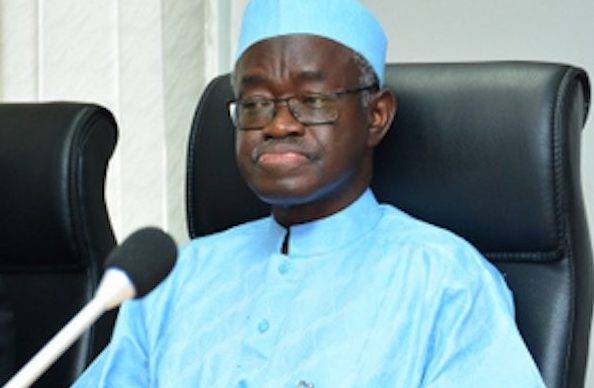
Yakubu Mohammed was truly a gentleman of the press
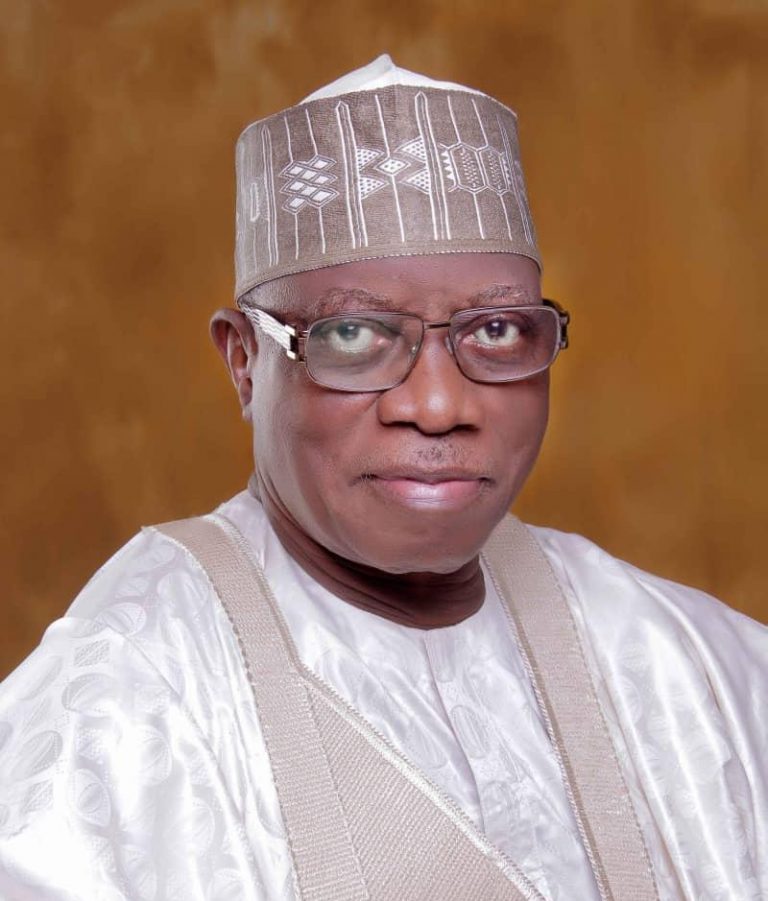
By Mohammed Haruna
The defunct New Nigerian first appeared on the streets on January 1, 1966. Two weeks later Nigeria experienced its first military coup which shook the country to its very foundation. Sir Ahmadu Bello, the Northern Premier who had launched the newspaper as his region’s mouthpiece, was assassinated in his residence in Kaduna in the early hours of January 15.
He was assassinated along with the country’s first and only Prime Minister, Sir Abubakar Tafawa Balewa, the number two man in the ruling Northern Peoples Congress (NPC). His own assassination took place in Lagos, then Nigeria’s capital.
The two were, of course not the only casualties. The rather flambouyant Minister of Finance, Chief Festus Okotieboh, the Premier of Western Region, Chief Samuel Ladoke Akintola, and virtually all the Northern military top brass were also killed. But clearly the Sardauna was the greatest casualty.
Perhaps because of its proximity to the Premier’s residence, the New Nigerian was able to give the most accurate and factual account of his killing the following day. And before long the newspaper acquired a great reputation for the high standard and reliability of its reporting, the quality of its production and, above all, the eloquence and fearlessness of its editorials.
You can hardly have a better testimonial to the greatness of the newspaper at the time than the words of the first Premier of Western Region and, subsequently, the Leader of the country’s leading opposition party, Chief Obafemi Awolowo.
Seven years after its first appearance, the New Nigerian became the first newspaper in the country to be printed simultaneously at two locations, first in Kaduna and then at Ijora, Lagos, from February 28, 1973 with what was then the country’s most modern printing press. It was to Chief Awolowo that the newspaper’s management gave the honour of formally opening the plant.
“The New Nigerian from day to day”, the Chief said in the course of his speech, “consistently deals with contemporary issues as they arise with candour, constructiveness and detachment unexcelled in the annals of Nigerian Journalism.”
“There is,” he added, “not the slightest trace of government or official influence in the news, views and editorials” which the newspaper published.
It was at this newspaper that my colleague, friend and brother, the late Yakubu Mohammed, in whose memory we are gathered here this morning, cut his journalistic teeth professionally. He and I joined the newspaper on the same day in 1976 after our youth service the year before. However, even though we started work on the same day, it was obvious that he was head, if not shoulders as well, above me.
First, he had the advantage of being a student of Mass Communications while I read Politics, he at the University of Lagos (UNILAG), and I at Ahmadu Bello University (ABU), Zaria. Second, even as a journalism student, he had demonstrated great journalistic potential if only by the exclusive headline news in New Nigerian that carried his byline, most notably the expulsion in May 1974 of about 200 UNILAG students, some of them in their final year, for certificate forgery to gain admission, and the drama in February 1975 in which UNILAG students held several policemen hostage as a bargaining chip for the release of their own colleagues who had been detained by the police following a student riot in Ibadan.
Third, Yakubu had his primary assignment as a corper at the newspaper at its own request. Both of us had been regular contributors of news and views on campus affairs as undergraduates, he from UNILAG and I from ABU.
Not surprisingly, my friend became the first to be promoted Associate Editor (South) among the lot of us who had joined the newspaper at about the same time as university graduates, the late Rufa’i Ibrahim, Sully Abu, Clem Baiye, Mvendaga Jibo, Sule Iyaji, Musa Shafi’i and myself. In time he soon rose to become its Managing Editor and head of its operations in Lagos and next in line to the Editor.
Then his troubles began. By this time, the late Malam Turi Muhammadu who had mentored all of us, first as Editor and then as Managing Director, had been succeeded by the late Malam Tukur Usman, himself a veteran of the newspaper. It soon became apparent that Malam Tukur was hardly as fond of Yakubu – or for that matter, the rest of us – as Malam Turi. In any case, he seemed to have a different idea from those of his illustrious predecessors – Malams Adamu Ciroma, Mamman Daura and Turi – on how to run the newspaper.
Soon enough it became obvious that some of us – Yakubu especially – were no longer wanted in the newspaper. However, unlike me, Yakubu eventually decided to jump instead of waiting to be pushed. He had been offered the position of pioneer Deputy Editor by Chief MKO Abiola at the newspaper he had decided to float and he was aware of Yakubu’s travails at the New Nigerian. Yakubu accepted the Chief’s offer. He, the late Dele Giwa and Ray Ekpu both of whom had joined Abiola’s Concord from Daily Times soon became the superstars of the new newspaper. Quickly, it overtook Daily Times as the country’s widest circulating newspaper.
Envy soon set in. For some inexplicable reason, the publisher allowed himself to be convinced by other senior staff that all three superstars were living it off at his expense. Worse still in the eyes of these envious staff, all three were not even Yoruba in a newspaper owned by a Yoruba.
Pretty soon, it became obvious to the three that their days at the Concord were numbered. Once again, Yakubu decided to jump instead of wait to be pushed, and in doing so, managed to persuade Dele and Ray to jump with him. This time, however, it was truly a leap of faith; their decision was to start and own the first weekly newsmagazine in the country similar to the American Time or Newsweek when all they had to their names was their reputation as three of the country’s best journalists and columnists.
As we all know, their gamble paid off, at least for a long while; Newswatch quickly became the platinum standard of Nigeria’s journalism and although it lasted all of only 26 years, it remains the country’s longest running weekly newsmagazine, winning prestigious awards at home and abroad.
As a friend and brother, Yakubu, I can reveal today, wanted me to be part of this history; long before he invited the late Dan Agbese, who was then editing the New Nigerian, to join the three of them, he had invited me, knowing as he did, that I too was facing my own share of frustrations at the newspaper. Fortunately or unfortunately, I was too much in love with the newspaper, and more importantly, I was too much in love with Kaduna as my second home town – Bida in Niger State being the first – to accept his offer.
Yakubu was not only a true friend in need, for me he is one of the most humble and modest human beings one can come across. It is a mark of his humility and modesty that, for example, even though Newswatch was his idea, he decided to take the back seat and let his older and more experienced partners run the show.
Such a gentleman was he that he was simply incapable of envy and malice against anyone.
Needless to say, his death on January 13 this year came to be as a big shock, especially as we had even exchanged texts just a few hours before he passed on.
May Allah forgive his short comings, reward his good deeds and grant him Aljanna firdaus. May He also grant those of us he has left behind, especially the members of his family, the strength to bear his great loss. Amin.
- Tribute by Mohammed Haruna, journalist, former managing director of New Nigerian newspaper, Chief Press Secretary to former Head of State General Abdulsalami Abubakar, INEC Commissioner, in honour of his late friend, Yakubu Mohammed, on April 30, 2026.