By Ishaya Ibrahim
An online survey has identified gender related hate speech as responsible for limiting women’s participation in Nigeria’s politics.
The survey was conducted by the West Africa Network for Peace-building (WANEP), International Press Centre (IPC), and Humanity Family Foundation for Peace and Development (HUFFPED) with support from the Peace Tech Lab.
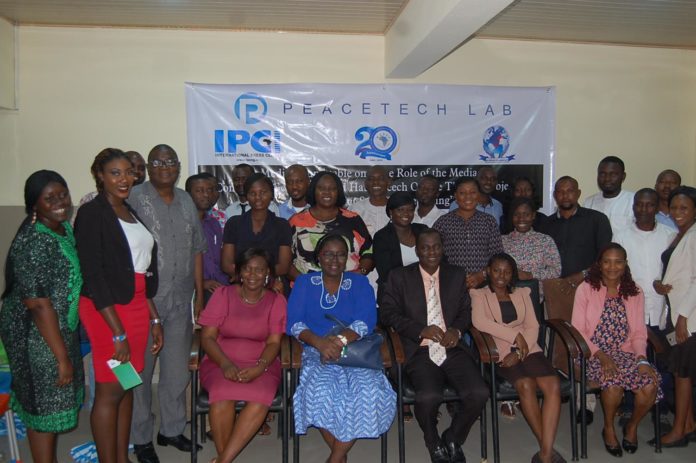
The outcome of the survey was the subject of a media round table – the role of the media in combating gender related hate speech online through objective and conflict sensitive reporting on August 29 in Lagos.
The result of the survey shows that 54 percent of the respondents polled said the social media portray women in negative light.
The respondents gave examples of the kind of “negative portrayal” of women in the social media – economically weak, culturally confined to the kitchen, born to support man’s vision, sexual toys, and less educated.
In his presentation, Online Editor of The Nation Newspaper, Lekan Otufodunrin said choice of words remains fundamental in maintaining professionalism in journalistic writing. He said such words must be devoid of sentimental undertone in any form.
“The language used in information dissemination is capable of either exacerbating an already boiling issue or bring about balance in an articulated and constructive manner that promotes the core ethic of the profession,” he said.
Henry Adenigba, Executive Director (Programs) HUFFPED said the the media should strengthen self-regulatory mechanisms and codes of conduct to condemn and combat sexist hate-speech.
In his remark, IPC director, Lanre Arogundade said the online media has led to the growing occurrences of sexist hate speech during elections, and therefore has opened the doors to new forms of oppression and violence against women politicians.
He said a research by Amnesty International revealed the alarming impact that abuse and harassment on social media are having on women, with women around the world reporting stress, anxiety, or panic attacks as a result of these harmful online experiences and in so doing, restricting the already limited public space afforded to women politicians.
Yinka Shokunbi, editor, Health Style Plus online, said it is not every woman that must vote for a woman aspirant, but the question remains how to identify those capable among the lots.
Editor of THISDAY, Bolaji Adebiyi, said one of the limitations women have in politics is that while their male counterparts make conscious effort to access the media, the women shy away from it.
Media consultant, Tony Iyare, added that women must be strategic in bidding for power.
“There are more women than men. What are you doing with that number? If you have that number and go to sleep, you will not matter. So, you’ve got to fight. You’ve got to plot and you’ve got to scheme for it,” he said.