



There is a proverb the Igbo publicly render with relish and pride: Uwa bu Afia (Ahia) – the world is a marketplace. We say it to explain our pursuit of communal and personal value, our enterprise, our presence in every corner of the globe where commerce thrives. From Ariaria, in Abia state to Alaba, in Lagos state; from Onitsha Main Market in Anambra state to the trading grounds of Guangzhou, in China as well as Houston, in Texas, USA, the Igbo proves repeatedly that his life is invested in creating and sustaining the marketplace of wares and ideas.
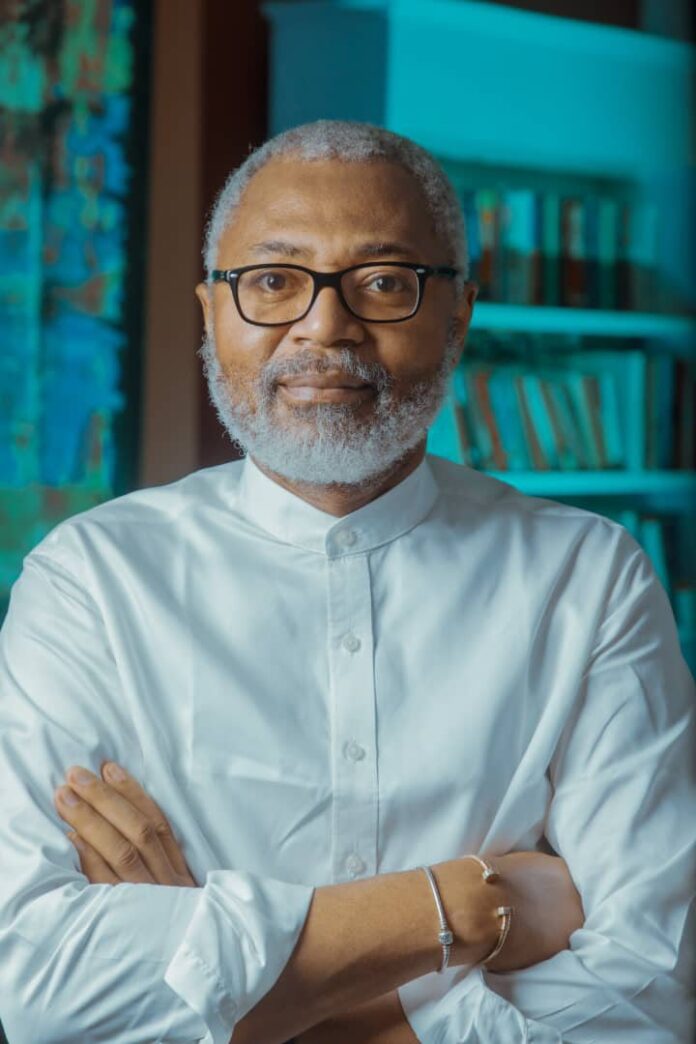
By Emeka Mba
There is a proverb the Igbo publicly render with relish and pride: Uwa bu Afia (Ahia) – the world is a marketplace. We say it to explain our pursuit of communal and personal value, our enterprise, our presence in every corner of the globe where commerce thrives. From Ariaria, in Abia state to Alaba, in Lagos state; from Onitsha Main Market in Anambra state to the trading grounds of Guangzhou, in China as well as Houston, in Texas, USA, the Igbo proves repeatedly that his life is invested in creating and sustaining the marketplace of wares and ideas.
But here is the uncomfortable question we must now ask ourselves: if the world is truly a marketplace, why have we confined ourselves to only one of its stalls? We were not always so confined. And that is where this story must begin.
When Igbo traded in ideas
In the years before Nigeria’s civil war, under the Premiership of Sir Michael Okpara, the Igbo-dominated Eastern Region easily achieved the status of one of the fastest-growing economies in the world — not among its Nigerian compatriot regions, but across the world. That growth was not an accident of oil or luck. It was anchored in governance, and driven by policy. It was a meticulous work of planning, exhibition resourcefulness and enterprise.
READ ALSO:
Digital economy boost: NCC leases Digital Industrial Park, Learning Centre to Enugu State
Okpara oversaw the creation of a laboratory of well-thought-out plans executed with a shared vision. Farm settlements and plantation schemes turned agriculture from subsistence into global scale industry. Industrial estates rose in Aba, today’s Abia state, Emene, today’s Enugu state and Port Harcourt in today’s Rivers state. The region built factories – cement at Nkalagu, brewery at Umuahia, spun textiles, and exported palm produce, and ploughed the proceeds into schools and hospitals. Behind it all sat something we have since lost: a government, a business class, and a people who believed they were building one future together — and who treated a regional development plan not as a political pamphlet but as a sacred covenant.
That is the true meaning of “uwa bu afia.” The marketplace Okpara mastered was the marketplace of ideas — planning, institutions, shared ambition — and the goods, the factories, the prosperity followed. Then the civil war came. And with it, a different lesson.
The survival trap
The civil war did not only destroy Okpara’s factories; it rewired our psychology. A people handed 20 pounds and told to start life afresh, understandably, that survival became largely an individual project. Trust the family. Trust the shop. Trust what you can carry. Everything else — government, institutions, the long-term, the collective — became somebody else’s business.
It is true.That survival instinct saved us. It also trapped us.
It gave us the izu afia mindset: if it cannot be bought and sold this season, it may not be real. Profit first, profit only. It gave us the defeatist shrug — ka anyi hapu ya, let’s leave it — with which we abandon every collective project the moment it demands patience and rigour. It gave us the tradition of the philanthropy of bags of rice at festival seasons: generous in gesture, suspect in substance, unable to guarantee change to a child’s future. And it has left even our most celebrated institution, the ịgba boyi apprenticeship scheme — rightly admired around the world — reproducing traders when it could also be producing engineers, technicians, coders, and builders of companies that outlive their founders.
The deepest damage, five and a half decades later, is no longer physical. It is that too many of our own people no longer believe in the future of their own region. We invest in economic enterprises everywhere else except home. We build our best non-entrepreneurial houses in villages we visit randomly and live our real lives elsewhere subject to abusive external influence. That is not strategy. That is resignation wearing the costume of pragmatism. Ọdirọzị funny anymore.
Trading ideas for development — again
This is the conversation the inaugural Afia Annual Lecture and Awards (AALA), holding on 26 November 2026 at the International Conference Centre, Enugu, has been convened to force into the open. Its theme — Uwa Bu Afia: Trading Ideas for Development — is both a reminder and a challenge: we have done this before, and we must do it again. The raw material for renewal is already among us — the same energy, discipline, and risk appetite that built our markets. What must change is what we trade.
Consider Alex Onyia, whose STEM education work is putting real technological capacity into the hands of a new generation of children from the Eastern region. That is the Okpara spirit reborn: taking our native genius for the marketplace and applying it to the commodities that actually compound — knowledge, skills, institutions. One child who learns to build software is worth more to the region’s future than a thousand bags of rice shared at a town hall.
Imagine that spirit multiplied. The apprenticeship system reimagined for the digital age — ịgba boyi for software, film, and precision agriculture. Our legendary trader-networks financing venture capital, not only container loads. Our town unions endowing research and technical schools with the same fervour with which they build cathedrals and mansions. None of this requires abandoning commerce. It requires enlarging our definition of it — back to the size Okpara gave it.
Why a lecture, and why now!
Some will ask: can talk change anything? Okpara’s Eastern miracle answers the question. It did not begin with factories; it began with a plan, a vision argued over, agreed upon, and shared. Mindset precedes money. Narrative precedes infrastructure. Every transformation in history began as a shift in the story a people told about themselves.
AALA is designed as the annual town square for that new enlightenment, new awareness and the evolvement of the new story: a platform where the East’s (and Igbo’s) best minds — at home and in the Diaspora — gather not to mourn what was lost, but to imagine and create new possibilities, recreate trade blueprints for what must be built; where we honour not merely the wealthiest among us, but those whose ideas are compounding for the next generation.
The marketplace has moved. The question before Ndigbo, and indeed before all Nigerians is whether we will move with it — or keep perfecting our mastery of a stall the world is leaving behind.
Uwa bu afia. The world is a marketplace. Our fathers once traded in ideas and built the fastest-growing economy in the world. It is time the East returned to that stall.
Emeka Mba, former Director-General of the National Broadcasting Commission and the National Film and Video Censors Board, is the Founder and CEO of Afia Media, convener of the Afia Annual Lecture and Awards, holding 26 November 2026 in Enugu.


