



Suspects recount circumstances surrounding UNIJOS student’s death
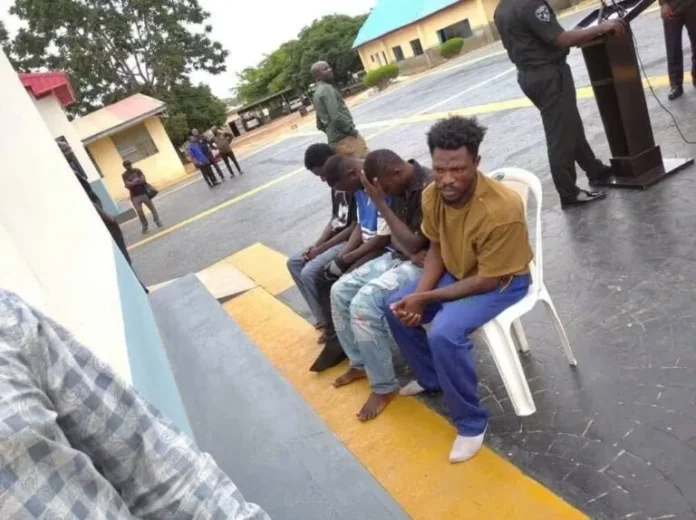
Police in Plateau State have arrested four suspects in connection with the killing of Ibrahim Mabaye, a 200-level Political Science student of the University of Jos.
The suspects, paraded at the State Police Command on Monday, narrated how they tortured Mabaye to death over allegations that he stole a phone.
The incident occurred on Sunday at an off-campus apartment behind City of David, along Ring Road in Jos North Local Government Area.
A viral video of the incident has sparked widespread outrage. In the footage, Mabaye was seen being beaten with planks and canes before he died.
Giving his account, 30-year-old Emmanuel Newyear said the trouble started when his cousin reported a missing phone.
“On the 26th of this month, my cousin came to my place saying his phone was missing. We called the deceased and he came to the apartment,” Newyear said.
“He first said the phone was at Naraguta hostel beside a tree, but we didn’t find it. He later said it was at Rayfield. We went there too and still didn’t see it. When we returned, people had gathered at the compound.”
“I slapped him inside the room and later brought him outside. I was the one that hit him with a plank three times. I did it so he could tell me where the phone was. I know him through my cousin,” he added.
Another suspect, Teslor Joshua, admitted to holding Mabaye’s hands while others tied him with rope.
Rinji Daniel, owner of the missing phone, also recounted how the incident started.
“We came back from an event and Ibee said he would pass the night in my room. He later said he was going out to take a call but didn’t return on time. Around 4 a.m., I noticed my phone and my brother’s power bank were missing,” Daniel said.
“I called his number but he cut the call. That was when we reported to my cousin. That’s how the whole thing started.”
The Plateau State Police Command said investigations are ongoing and the suspects will be charged to court.
The killing has drawn condemnation from students, civil society groups, and residents who described the act as “jungle justice.”


