State Police and the perils of executive-led constitutional change in an election season
By Okechukwu Nwanguma
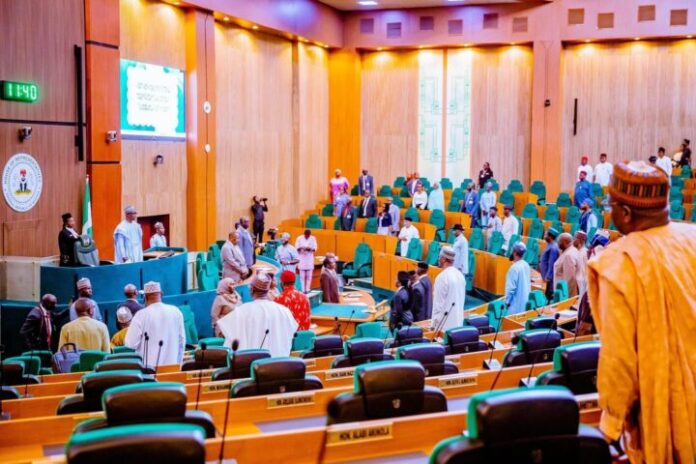
The House of Representatives’ decision to rescind its earlier approval of the State Police constitutional amendment and immediately commence consideration of a revised Executive Bill transmitted by President Bola Tinubu should concern every Nigerian who believes in constitutional democracy.
There is nothing inherently wrong with the President sponsoring an Executive Bill. The Constitution permits the Executive to initiate legislation. What is troubling is the growing impression that the National Assembly has become more inclined to fast-track Executive proposals than to subject them to the rigorous scrutiny that democracy demands.
The legislature is not an extension of the Executive. It is a co-equal arm of government, established to deliberate independently, represent the people, and hold the Executive accountable. When bills of profound constitutional significance appear to move through the legislative process with unusual speed and little public engagement, questions naturally arise about the health of our democratic institutions.
The justification for rescinding the earlier State Police Bill is revealing. According to the House, “new facts” and “fresh issues” had emerged that required a comprehensive review of the proposed framework. If these new issues are significant enough to reverse an earlier legislative decision, why are they not significant enough to warrant fresh public hearings?
Indeed, what are these “new facts”? Nigerians deserve to know. Constitutional amendments should not be negotiated behind closed doors or between the Executive and legislative leadership alone. They should be debated openly, with citizens given the opportunity to interrogate the proposals and offer their perspectives.
The establishment of state police is not an ordinary legislative matter. It represents one of the most far-reaching alterations to Nigeria’s security architecture since the return to democratic rule in 1999. It would redistribute coercive powers between the federal and state governments, redefine operational responsibilities, and create new policing institutions with immense authority over citizens’ lives and liberties.
Such a transformation requires more than parliamentary procedure. It requires democratic legitimacy.
That legitimacy can only come from broad consultation with state governments, security agencies, legal experts, civil society organisations, traditional institutions, professional associations, the media, and ordinary Nigerians. Public hearings should not be treated as procedural inconveniences but as indispensable democratic safeguards.
The timing of this legislative push also deserves careful reflection.
Nigeria is approaching another election cycle. Across democratic societies, reforms that expand or restructure policing powers immediately before elections naturally attract heightened public scrutiny. This is not because reform is undesirable. Rather, it is because policing powers are uniquely susceptible to political misuse where institutional safeguards are weak.
Nigeria’s experience offers sufficient reasons for caution.
At the federal level, successive governments have been accused of deploying security agencies selectively against political opponents while overlooking abuses by allies. At the state level, many governors have demonstrated authoritarian tendencies in their dealings with political opponents, traditional institutions, local government administration, peaceful protesters, journalists, and civil society organisations. Creating state police without first establishing robust and genuinely independent oversight mechanisms could simply multiply existing problems rather than solve them.
This is not an argument against security reform. Nigeria urgently needs security sector reform. The Nigeria Police Force requires better funding, improved welfare, modern equipment, professional training, merit-based promotions, stronger accountability systems, and genuine operational decentralisation. The Police Act 2020 already provides a framework for many of these reforms, yet implementation has remained inconsistent.
The question, therefore, is not whether Nigeria should reform policing. The question is whether creating state police, under the present political conditions and through an expedited legislative process, addresses the country’s security challenges or merely creates new constitutional and political risks.
A constitutional amendment of this magnitude should never be driven primarily by Executive urgency. Constitutional reform must be driven by national consensus.
The National Assembly must resist any perception that it exists principally to validate Executive preferences. Its constitutional duty is to scrutinise proposals independently, invite competing viewpoints, test assumptions, strengthen safeguards, and legislate in the public interest.
Democracy is not measured by how rapidly constitutional amendments are passed. It is measured by the quality of public participation, the independence of legislative deliberation, and the strength of the institutions created.
If the proposed State Police framework is indeed in Nigeria’s best interest, it should withstand the searching questions of citizens, experts, and stakeholders. If it cannot survive open debate, then it is not yet ready to become part of our Constitution.
The National Assembly owes Nigerians more than speedy legislation. It owes them transparency, accountability, and democratic deliberation. Constitutional amendments should emerge from the informed consent of the people—not from Executive impatience or legislative acquiescence.
That is the constitutional path. That is the democratic path. And that is the only path that can produce security reforms worthy of public trust.
Nwanguma is the Executive Director, Rule of Law and Accountability Advocacy Centre (RULAAC).