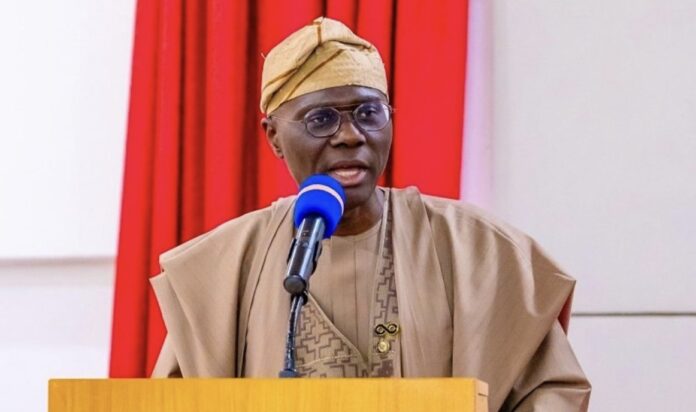
Sanwo-Olu argued that Nigerians would be able to achieve greater progress if they worked together towards a shared national objective.
By Kehinde Okeowo
Lagos State Governor, Babajide Olusola Sanwo-Olu, has insisted that for Nigeria to build a more peaceful, stronger, and prosperous country, citizens must set aside ethnic, religious, and other differences.
He made the call on Friday in Lagos during a special Jum’at service held to mark Nigeria’s 66th National Independence Day at the Secretariat Community Central Mosque, Alausa, Ikeja.
According to him, Nigeria possesses the human resources, expertise, and natural wealth required to achieve sustainable development and greater prosperity.
Sanwo-Olu, who was represented at the event by his deputy, Dr Kadri Obafemi Hamzat, identified national unity as a key factor in harnessing the country’s potential.
He further noted that divisions among Nigerians across political, religious, ethnic, and other lines will only continue to hinder the pursuit of common goals.
“Part of the challenge is that we are not united as a people. We see ourselves differently, so there is no coincidence of purpose,” the governor said.
ALSO READ: Hate speech, ethnic bigotry and Nigeria’s unity
Sanwo-Olu maintained that Nigerians would be able to achieve greater progress if they worked together towards a shared national objective.
“If we unite and come together, we have the talent, ability, and resources to lift this country. So, I am saying that unity is very important, and that’s the major challenge that we face,” he added.
Sanwo-Olu also attributed some of the country’s long-standing difficulties to divisions among its people, citing the Civil War as an example of the consequences of disunity.
The governor stressed that the task of building a better Nigeria should not be left to the government alone, calling on religious and traditional leaders, the private sector, and citizens to play active roles in national development.
He recalled the response to the COVID-19 pandemic, when government agencies, private organisations, religious institutions, and individuals collaborated to confront the crisis.
According to him, the spirit of collective action demonstrated during the pandemic should not be limited to emergencies, but should also be channelled towards addressing the country’s wider development challenges.