Russia–Ukraine war: Bloodiest European war since 1945
By Uche J. Udenka
The Shifting Dynamics of the Russia–Ukraine War: A frozen conflict and the economics of endless war.
The prospect of US granting Ukraine license to produce Patroit Missiles
More than four years after Russian forces crossed Ukraine’s borders in February 2022, the war has become the defining geopolitical conflict of the 21st century. What began as a lightning invasion intended to topple Kyiv within days has evolved into a brutal war of attrition that has redrawn Europe’s security architecture, shaken the global economy, accelerated military innovation, and exposed the limits of modern great-power warfare. The Russia-Ukraine war is no longer simply a contest between two neighbouring states. It has become a struggle over Europe’s future security, the credibility of international law, the durability of Western alliances, and the shape of the emerging multipolar world.
The human cost has become staggering
According to estimates by the Center for Strategic and International Studies (CSIS), combined Russian and Ukrainian military casualties have now exceeded 2 million. Russia alone is estimated to have suffered roughly 1.4 million military casualties, including between 400,000 and 450,000 deaths, while Ukraine has sustained between 525,000 and 625,000 casualties, with an estimated 125,000 to 150,000 fatalities. Russia has suffered enormous casualties, lost thousands of tanks and armored vehicles, and failed to achieve a decisive victory. However, it still controls significant portions of eastern and southern Ukraine. Yet the central question remains as contentious today as it was at the beginning: Is Russia losing the war? The answer is paradoxical. Russia is advancing on parts of the battlefield, but whether it is winning the war is another matter entirely.
A war that was never meant to last
President Vladimir Putin’s original objectives appeared straightforward: overthrow Ukraine’s government, neutralize its military, prevent NATO expansion, and restore Russian dominance over its neighbour. None of these strategic objectives has been fully realized. Ukraine remains independent. Its government survived. NATO has expanded rather than retreated. Finland and Sweden joined the alliance, adding more than 1,300 kilometers of NATO border with Russia. Far from weakening NATO, the invasion revitalized it politically and militarily. If those were Moscow’s principal political goals, then Russia has already paid an extraordinary price for limited strategic success. The United Nations has verified more than 16,000 civilian deaths in Ukraine, while cautioning that the real number is almost certainly much higher because many occupied areas remain inaccessible. Millions more have been wounded, displaced, or forced into exile.
Military history repeatedly demonstrates that occupying territory does not necessarily translate into political victory. The United States won nearly every major battle in Vietnam but lost the war politically. The Soviet Union dominated Afghanistan militarily for years before withdrawing. The lesson is clear: tactical gains do not automatically produce strategic success. These figures reveal a grim reality: there are no true victors in modern industrial warfare.
The political war beyond Ukraine
Ironically, Russia may be reshaping the international order even while struggling to achieve decisive victory in Ukraine. The conflict has transformed global politics. Russia has accelerated the emergence of a more fragmented international order. China has strengthened ties with Moscow without becoming a formal military ally. India has expanded purchases of discounted Russian energy. Meanwhile, Europe has reduced dependence on Russian gas faster than many believed possible. The Global South increasingly refuses to align completely with either Moscow or Washington, reflecting a changing multipolar world.
READ ALSO: Gaza: The world’s deadliest weapons laboratory
Russia’s military machine, stronger than expected. Western sanctions were designed to cripple Russia’s ability to wage war. Instead, Moscow adapted. Russia transformed its economy into a wartime production system. Defense spending surged, ammunition production increased dramatically, and factories now operate around the clock producing tanks, missiles, drones, and artillery shells. Trade routes shifted toward China, India, Türkiye and other non-Western markets. Discounted Russian oil continues to find buyers despite sanctions. This resilience surprised many Western economists who predicted economic collapse in 2022. Yet resilience should not be confused with strength. Russia’s economy is increasingly dependent on military spending. Inflation remains elevated, labour shortages are growing, foreign investment has declined sharply, and long-term technological innovation has suffered under sanctions.
Ukraine’s greatest strength is not military
Ukraine’s greatest weapon has never been its army alone. It has been international support. Since 2022, Ukraine has received hundreds of billions of dollars in military, financial and humanitarian assistance from the United States, the European Union and allied nations. Western intelligence, satellite surveillance, air-defense systems and precision weapons have prevented Russia from achieving overwhelming military superiority. Without this support, Ukraine’s ability to sustain the war would be severely weakened. Conversely, Russia’s strategy increasingly depends on exhausting Western political patience rather than defeating Ukraine outright.
Wars are not won by armies alone; they are won by economies. Russia has demonstrated remarkable economic endurance, but the costs are mounting. Military expenditure now consumes a large share of government resources. Civilian industries increasingly struggle to recruit workers as hundreds of thousands serve in the armed forces or defense industries. Economic growth is slowing while inflation continues to pressure households. Ukraine faces even greater economic devastation. Entire cities have been destroyed. Energy infrastructure has been repeatedly targeted. Millions remain displaced, while reconstruction costs are estimated in the hundreds of billions of dollars. This has become not merely a military contest but an economic endurance race.
Battlefield success does not equal strategic victory
Russia has made gradual territorial gains in eastern Ukraine. However, those gains have come at astonishing cost. According to CSIS analysis, many Russian offensives have advanced only 15 to 70 metres per day, making them among the slowest major offensives in modern military history despite enormous losses in manpower and equipment. So, is Russia losing?
The answer depends entirely on how success is measured. If victory meant capturing Kyiv within days, replacing Ukraine’s government, preventing NATO expansion and re-establishing Russian dominance, then Russia has clearly failed. If victory means holding occupied territory, sustaining military operations, and demonstrating greater endurance than Ukraine and its Western backers, then Russia continues to compete effectively. The uncomfortable truth is that neither side has achieved decisive victory. Ukraine has prevented national collapse and preserved its sovereignty. Russia has avoided military defeat and continues to occupy significant Ukrainian territory. Both nations have suffered catastrophic human and economic losses.
Winning battles, losing the peace
History will judge this conflict not only by maps and military advances, but by whether Russia achieved its original political ambitions, whether Ukraine preserved its sovereignty, and whether the enormous human cost produced a lasting peace.
One conclusion already seems unavoidable: even if Russia wins more ground, it may still lose the larger strategic contest. A war intended to restore Russian power has instead strengthened NATO, accelerated Europe’s military rearmament, deepened Russia’s economic dependence on non-Western partners, and left both Russia and Ukraine carrying scars that will endure for generations. The battlefield remains undecided—but the geopolitical consequences have already transformed the world.
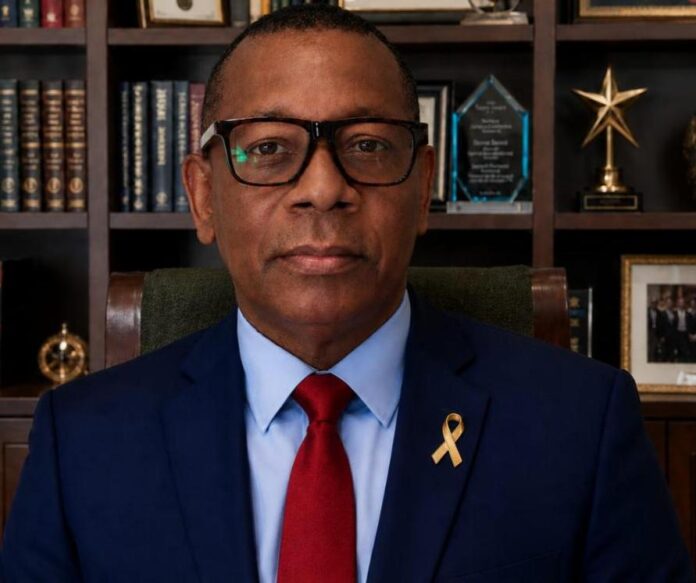
- Arc. Uche J. Udenka, social and political analyst – #AfricaVisionAdvancementTrust – is the C.E.O. Igbo Renaissance Awakening.