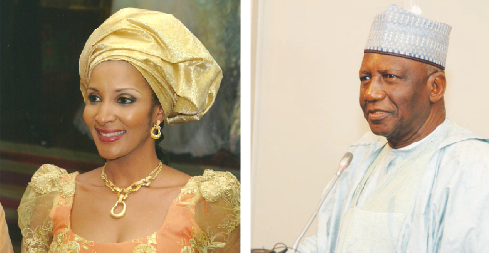
The recent recall of serving non-career ambassadors by the federal government reflects President Muhammadu Buhari’s eagerness to instal new brooms at Nigerian missions. Correspondent, SAM NWOKORO, periscopes likely reasons.
 Recently, Nigeria’s president, Muhammadu Buhari, recalled some serving Nigerian ambassadors abroad. The recall is seen as an attempt by the new president to restrategise Nigerian missions abroad, weed out those who have over the years accumulated some less than ambassadorial reputation, replace over-used ones that can easily blend with his foreign policy focus, and ultimately deliver.
What has been observed so far in the recall exercise is that those affected had been swimming in the pool of Peoples Democratic Party (PDP) politics. Some of those that were appointed right from the Olusegun Obasanjo era to the late Umaru Yar’Adua era down to the Goodluck Jonathan presidency were mostly affected in the recall exercise. As at press time, no official release has come forward regarding their possible replacement.
The newly-elected president was sworn in May 29, less than three months ago. He is yet to have a full list of ministers. One of the recalled include the current Nigerian envoy to the United States of America (U.S.A.) where the president is billed to visit tomorrow, Monday, July 20, to honour a state invitation initiated by President Barack Obama.
Preparation for the visit of the president was in top gear during the week, with sources close to Aso Rock saying the president selected reputable men with integrity to travel with to Washington today. The presidency seems not bothered that Nigeria may not have a substantive ambassador in Washington when the president arrives.
But it is said that Professor Adebowale Adefuye no longer enjoys the confidence of the current dispensation on account of some scandals he alleged to have been enmeshed in since he was appointed in 2009 as Nigeria’s ambassador to Washington. These include standing trial in a U.S. court for human rights abuse.
About 27 non-career ambassadors were affected in the shake-up. What was discernible in the list was that those affected were recalled probably on account of being too old to hold such post or were much involved in politics or did not make much impact while they served.
Those involved
In all, they are non-career ambassadors – those who have not been known as to have had serious stint in the diplomatic corps before their appointment. Most of these people were appointed in 2012 by the Jonathan administration. Here is a list of the recalled envoys.
Ojo Maduekwe, Nigeria’s Ambassador to Canada, was once Peoples Democratic Party (PDP) National Secretary. He was at different times Minister of Transport, Minister of Culture and Tourism and Minister of Foreign Affairs.
Professor Ade Adefuye (U.S.) was a former university lecturer, but has scandals hanging over his tenure as ambassador.
Professor Joy Ogwu, was Director-General of the Nigerian Institute of International Affairs. The former Foreign Minister has been the Permanent Representative of Nigeria to the United Nations in New York since 2008.
Toafic Arapaja (Jordan) was one time deputy Governor in Oyo State and a PDP chieftain.
Others include Haruna Garba Shehu (Kuwait), Bianca Ojukwu (Spain), Elizabeth Ketebu (Ireland), Okwudi Okafor (Burundi), Francis Okeke (Vatican), Nonye Rajis Okpara (Singapore), Mathias Okafor (Vietnam) and Dalhatu Tafida (United Kingdom).
Profiles and tenure
Here is a peep into their tenure and the probable reasons Abuja might have got fed up with them.
Tafida: Under Tafida, Nigeria’s relations with UK was not so eventful. The man is currently 73 years old, born in 1940. Talfida has been Nigeria’s High Commissioner to UK right from Musa Yar’Adua’s tenure. He played active role in mobilising support for Jonathan’s election in 2011 and was rewarded with re-appointment as ambassador in November 2012. He has been in government right from the Second Republic under Shehu Shagari and has served in more than 24 public offices, from health to rural development to virtually any piece of government office. He is a Grand Commander of the Order of the Niger (GCON). Under his tenure, Nigeria-British relations did not witness any improved dividend, though there were no major rifts. But he just has been too long in government.
Ogwu: The woman has actually given her best in terms of service to Nigeria’s diplomatic front. She has been the DG of Nigerian Institute of International Affairs (NIIA) between 2001 and 2006, former Minister of Foreign Affairs (2006-2007), and currently Nigeria’s Permanent Representative at the United Nations (UN). While there, she was member of the UN Secretary-General Advisory Board on Disarmament Matters, and was the first female member to head that board (2006-2007).
She was also member of Presidential Advisory Council on International Relations. It seems the woman has had a good stint in the diplomatic corps and there may possibly be no other reason for her recall than to have a new face at the UN. Nigeria was reckoned with at the UN secretariat based on her contribution to the world body in diverse committees.
Arapaja: The Nigerian ambassador to Jordan was chosen plainly as political compensation, having helped the Jonathan campaign election in 2011. He helped PDP in Oyo to win election there. His tenure in Jordan has been uneventful in economic terms.
Adefuye: Online reports about him say he has lived a crisis-riddled tenure in Washington as Nigerian ambassador: from his alleged involvement in visa rackets and sale of Nigeria’s house in Washington. A Nigerian attorney, Emeka Ugwuonye, in a scathing article on the recalled envoys published on-line alleged: “Ambassador Adefuye handled so poorly the e-passport programme whereby Nigerians in America were made to pay unlawful fees and may still never get their passports back, and those that got theirs suffered endless delays and humiliation. Passports that had not expired were forced to be renewed at exorbitant fees without any credit for the unexpired time on those passports.
“According to the reports we (his chambers) have read recently, Ambassador Adefuye has mishandled Nigerian Embassy bank accounts, in part resulting in the closure or blocking of two embassy accounts by U.S. banks.
“Under Adefuye’s watch, a former U.S. ambassador to Nigeria was denied visa, reminiscent of the stand-off between (the late Sani) Abacha regime and U.S. ambassador (to Nigeria), Walter Carrington.
“To crown it all, Ambassador Adefuye in November 2010 submitted Nigerian government to the jurisdiction of U.S. courts without consultation with the Nigerian Attorney-General. At the same time, he conspired with Farida Waziri and others to arrest and torture a U.S.-based lawyer, after suing the lawyer in Washington. And now Adefuye is the first Nigerian ambassador to be sued for torture in the U.S. Indeed, if there is anything good in the retention of Ambassador Adefuye, it is that he will remain available to answer to those charges for torture.”
At press time, there were reports indicating that the U.S. would not want Adefuye involved in Buhari’s visit to Washington.
A source familiar with what led to the recall of the ambassadors said it was triggered by the U.S.’s discomfort with Adefuye’s recent “undiplomatic conduct”. It said Adefuye adopted a belligerent tone in Nigeria’s bilateral relations with the U.S. in the twilight of the Jonathan administration especially in relation to the Boko Haram insurgency, adding that the Americans were not comfortable with him being involved in Buhari visit to Washington.
Contacted on the matter, Spokesman of the Ministry of Foreign Affairs, Ode Ogbole, said “I don’t know anything about that. We can’t react to what we don’t know.”
Bianca Ojukwu, Maduekwe et al: One common factor can be ascribed for the recall of these other ambassadors: their appointments were largely for political settlement. They were never career diplomats nor technocrats.
For most of them, that was their maiden posting. And their tenures there could not have contributed in any measurable manner to sourcing solutions for Nigeria’s developmental drives, especially in the area of investment or bringing in tangible capital into the economy.
Under their watch, most Nigerians languished in jails in those countries and their interventions could not be felt. Thus, the presidency may have considered it fitting to shop for their replacement.