



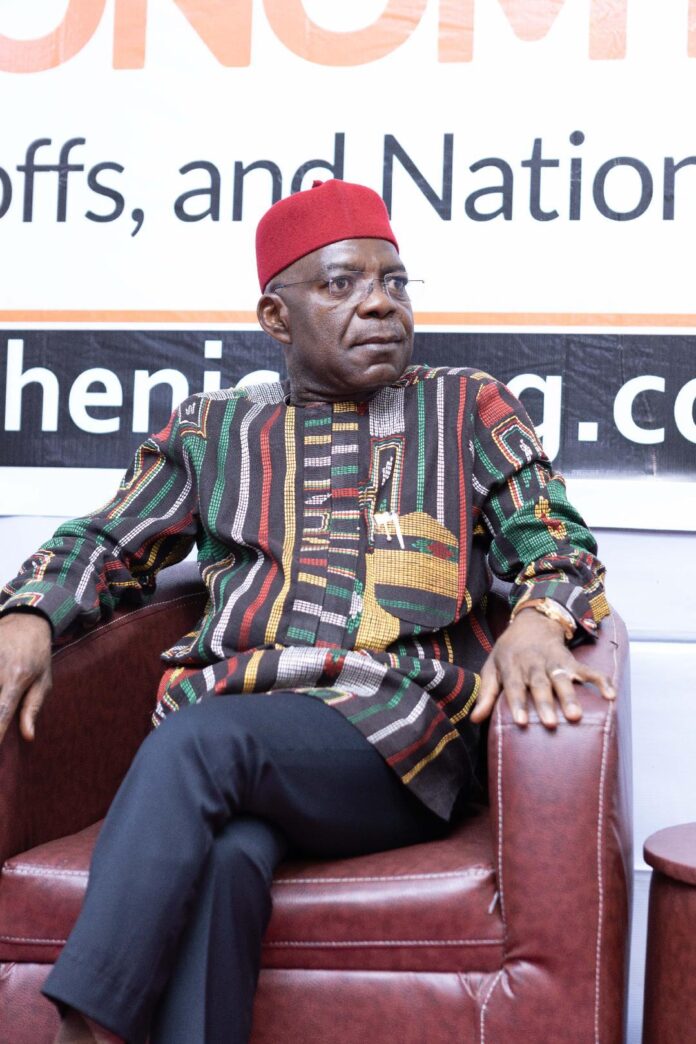
Otti, for his impressive good governance feat, merits second term
By Nduka Uzuakpundu
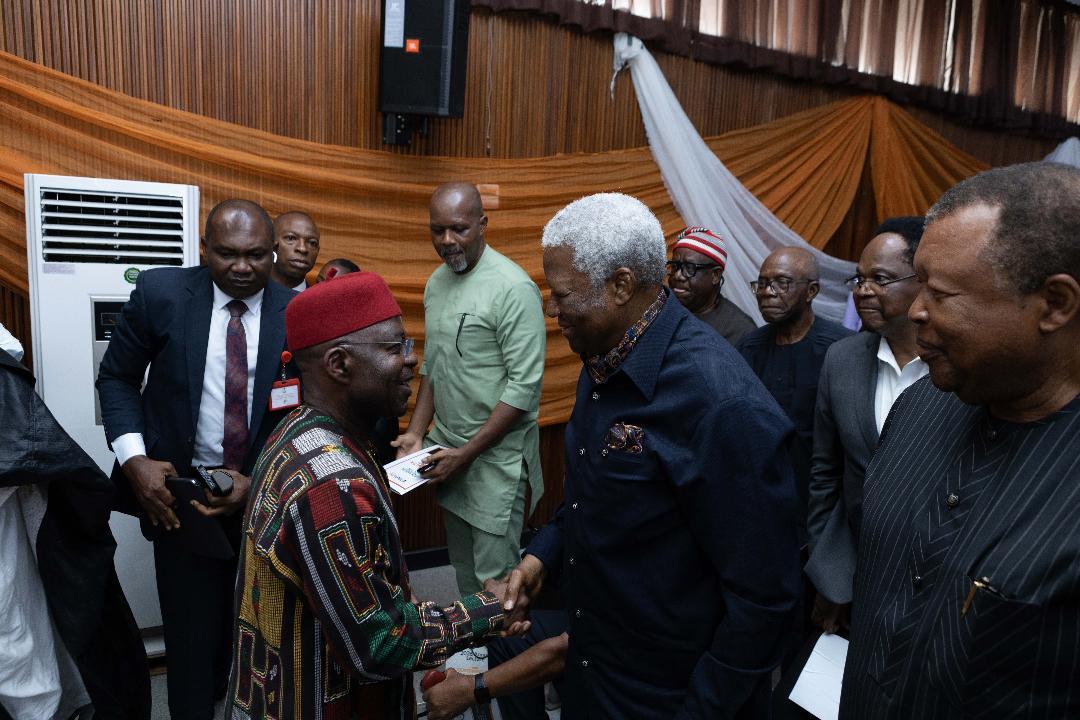
Former external affairs minister, General Ike Nwachukwu (rtd), spoke almost on behalf of everyone at the commodious, brimmimg, cool lecture theatre of the Nigerian Institute of International Affairs, Lagos, when he prophesied and prayed for another four-year term for Governor Alex Otti of Abia State come the next election in 2027.
The confidence with which he spoke – and the diction of his terse and direct speech – was that of someone who could tell good governance and people-oriented leadership – a la Otti – was informed by a pressing need to have, in Nigeria, a redefined political culture of spending public funds for the welfare of workers, pensioners, students, tax-payers, etc. for the advancement of purposive political administration.
The occasion was TheNiche’s 2026 Annual Lecture themed: “Governing the Economy – Choices, Trade-offs, and National Priorities.”
It was, perhaps, the first time, in recent years, when unapologetic, self-effacing Nwachukwu – a Shakespearean silver hair of a Cicero – spoke, persuasively, for a united Nigeria, true federalist system of government – as was the case during the First Republic; that no state in the country, today, is unviable, in that each had the human capacity to address its administrative needs; land mass, for large-scale agricultural projects that could break the understandable monopoly of Benue State as the country’s food warehouse; and good leadership that aspires to challenge the Otti fount that is bent on voters’ welfare and, so, build a better society.
READ ALSO: Otti spoke loud and clear at TheNiche lecture
It’s, perhaps, safe to argue that Nwachukwu’s jab at the programme – which was graced, amongst others, by His Royal Highness, Muhammadu Sanusi II, CON, the Emir of Kano, as chairman; Otti, OFR, as guest speaker; students of the University of Lagos, Akoka and Nigerian Institute of Journalism, Ogba, Lagos; the Obi of Onitsha – His Royal Highness, Igwe Nnaemeka Alfred Achebe – was, strategically, calculated as a take-home message, some twenty-five minutes to departure time.
Where it had been argued by some of the discussants, and Sanusi, that Nigeria should be collapsed into a federation of six geo-political zones, so as to curb wastes and embezzlement, Nwachukwu – in a stubborn exhibition of his military past, offered that the impressive performance, in the past thirty-five months, of the Otti administration provokes a robust controversy in the dialectics of good governance nationwide. Yes.
In his brief, healthy controversy with the discussants – Dr. Jumoke O. Ogunleye, an associate professor in the department of accounting, University of Lagos; Chief Anogwi Anyanwu, a fellow of the Institute of Chartered Accountants of Nigeria (ICAN); and Comrade Joe Ajaero, president of the Nigeria Labour Congress – Nwachukwu, it’s plausible to posit, spoke in defence of his tribe – the series of stratocracy, from the Gowon years up to the Abacha era – that have balkanized the Nigerian federation into thirty-six states. The military historian in him proudly believes that the 36-state structure would remain a permanent feature of the Nigerian federation – even though it’s an unconstitutional craft by the rifle!
The tacit query that was raised by Nwachukwu’s brief jab, one thinks, was: “If Otti could achieve so much in such a brief period of his first term, what stops other state governors from doing same?” Perhaps, still, in advancing – henceforward – the cause and health of the Fourth Republic, Otti offers the way forward. To be true, Otti has redesigned most of Abia State’s landscape with infrastructure, like the Umuahia bus terminal, a visible number of world-class roads, bridges, Michael Okpara Auditorium, Umuahia, Abia State workers’ secretariat, etc. Aba, one of the industrial hubs of the defunct Eastern Region, is fast returning to form. Investors are, as a result, being drawn by the provision of good roads, power and water supply, security, access to entrepreneurial credit, etc. Primary and secondary schools are either getting a face-lift or re-equipped with furniture and computer centres, all to make learning meaningful.
The audience nodded when Otti said that he had weeded out about 15,000 ghost workers from the government staff list. No less so, when he jabbed at the waste of doling out cynically stingy palliative to prospective voters on the eve of crucial elections. His position was that funds expended on such palliative should be pumped into long-term projects that would serve public good. For Nwachukwu, the Otti phenomenon has profited, immeasurably, from the tenacity of a former top banker, economist, a specialist in risk management, who was viciously robbed of victory in the 2015 gubernatorial race, as the candidate of the All Progressives Grand Alliance (APGA).
The Otti administration’s feat, so far, is an expression of gratitude to the voters in Abia State, who invested a chest of trust in him in 2023 as the standard-bearer of Labour Party. Its performance is a solid bridge between the crown and the village square; the ambitious kilometres of roads make for easy transit of goods, human and financial capitals. Those strategic transit projects are the attorneys of the Otti administration: that it valued their votes; that it would help the cause of youth employment, jab at poverty alleviation, ensure regular payment of workers’ wages on the 28th of each month. Pensioners, too.
Otti’s exceptional brilliance in good governance comes with a challenge: as one female student, in the audience asked, “How do you ensure continuity?” Otti’s response was terse: “Choices made can’t be reversed in Abia State. Abians would protect what they have.” Still, one thinks that there might be a need, for a cousin of an Otti-inspired, Labour Party-centred, god-fatherism, with a firm intent to push Abia State along the path already cleared and developed by Otti. Besides, a cousin of Zeus’ or Athene’s aegis, it’s hereby, offered, should be well afoot in Abia State for the good of the roads, railings, bridges and the ultra-modern bus terminal in Umuahia, say.
Otti should, via a state-wide campaign, do this to shield his infrastructural achievements from the decay as in most of the country’s urban centres. Abians should complain – vociferously – when they see rot creeping in. Plato was an advocate of the predominance of the philosopher king in the (people’s) Republic, the success and sustainability of Nigeria’s Fourth Republic would depend, to an ambitious extent, Nwachukwu thinks, on the wisdom and good governance performance of polished and seasoned bankers in Otti’s loop.
- Uzuakpundu is a Lagos-based journalist


