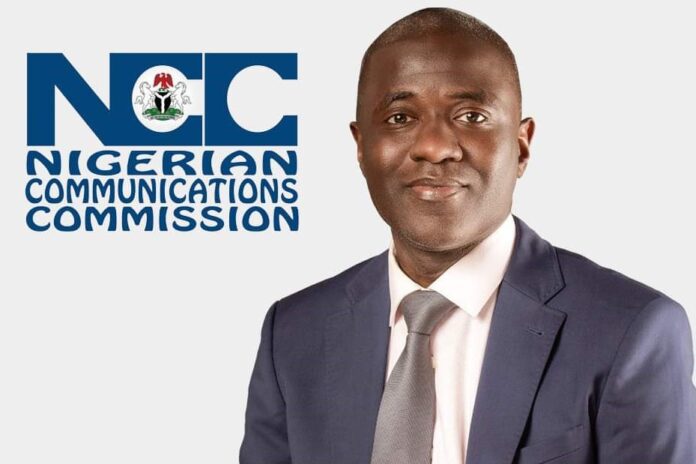
The Nigerian Communications Commission NCC has approved an administrative fee of N250,000 for firms seeking an Interim Service Authorisation ISA, license. The fee is a temporary permit that allows telecommunications service providers test new services before the full commercial rollout of the proposed services.
By Emma Ogbuehi
The Nigerian Communications Commission NCC has approved an administrative fee of N250,000 for firms seeking an Interim Service Authorisation ISA, license. The fee is a temporary permit that allows telecommunications service providers test new services before the full commercial rollout of the proposed services.
The new fee is part of the Commission’s General Authorisation Framework, which was released recently. The new regulatory frame is designed to boost innovation while protecting consumer interests within the country’s telecommunications sector.
It enables startups, technology-based firms, and existing operators or service providers planning to introduce novel services to conduct pilot tests in live market environments without first securing a full operational telecoms license.
READ ALSO:
NCC licenses six new internet service providers, expands satellite broadband
The authorisation is valid for an initial period of three months and may be renewed once, allowing testing for a maximum period of six months, after which no further extension would be granted.
Part of eligibility for the license is that the applicant firms must demonstrate that the proposed service is new or significantly different from existing ones. Such firms must also explain how current regulations limit the service, outline consumer protection measures, and submit monthly progress reports throughout the six-month testing period.
According to the Commission, the regulation allows the service providers to assess technical feasibility, market demand, and operational risks that will enable regulator evaluate service quality and consumer impact ahead of large-scale deployment.
“Applicants are required to pay the N250,000 administrative fee at the point of application. Successful applicants may also incur additional costs related to spectrum allocation and numbering resources, where applicable. These charges are separate from the ISA fee”, the NCC further said.
The Commission explained that the framework is part of its broader effort to modernise Nigeria’s licensing regime and introduce greater regulatory flexibility.
Under the new framework, operators granted an ISA license are also permitted to test their services under strict regulatory supervision. Part of the conditions include a maximum of 10,000 customers, operations limited to approved locations, and continuous monitoring by the Commission, among others.
While temporary regulatory relief may be granted, obligations related to data protection, security, and consumer rights remain fully enforceable.
The Commission however disclosed participation in the framework does not automatically guarantee the granting of a full telecommunications license, as any transition to commercial deployment will depend on regulatory assessment and the availability of an appropriate licensing category.
It is believed that the framework could stimulate innovation while reducing the risks associated with failed service launches.
By allowing operators to test before scaling, the NCC aims to encourage experimentation in areas such as spectrum sharing, Open RAN technologies, and alternative connectivity models, without compromising service quality, which also ensures a measure of protection for the consumers.
The Executive Vice Chairman/CEO of the Commission, Dr Aminu Maida, had said during the unveiling of the draft framework in July that emerging technologies often fall outside existing license categories, a development that makes regulatory adaptation necessary. According to Maida, the initiative is designed to strike a balance between fostering innovation and safeguarding consumer rights and the public interest.