Makoko anti-demolition protest: Magistrate’s absence delays trial until January 2027
By Ishaya Ibrahim
The trial of one of the Lagos State coordinators of the #EndBadGovernance Movement Hassan Taiwo Soweto, and musician Dele Frank over their participation in a protest against the Lagos State Government’s demolition of Makoko and other informal communities could not proceed on Monday, October 26, following the absence of the presiding magistrate, Mrs I. O. Alaka.
Soweto and Frank are facing a five-count charge over their participation in the January 28, 2026, protest against the forced eviction of residents of Makoko and other communities across Lagos State.
At the previous sitting on August 31, the police prosecution was absent, prompting the defence counsel, O. C. Olagunju, to warn that if the prosecution failed to appear at the next hearing, the defence would apply to have the charges struck out for lack of diligent prosecution.
On Monday, however, the court registrar announced to a packed courtroom that the magistrate was unavailable because she was engaged in another assignment. The case was subsequently adjourned until January 20, 2027.
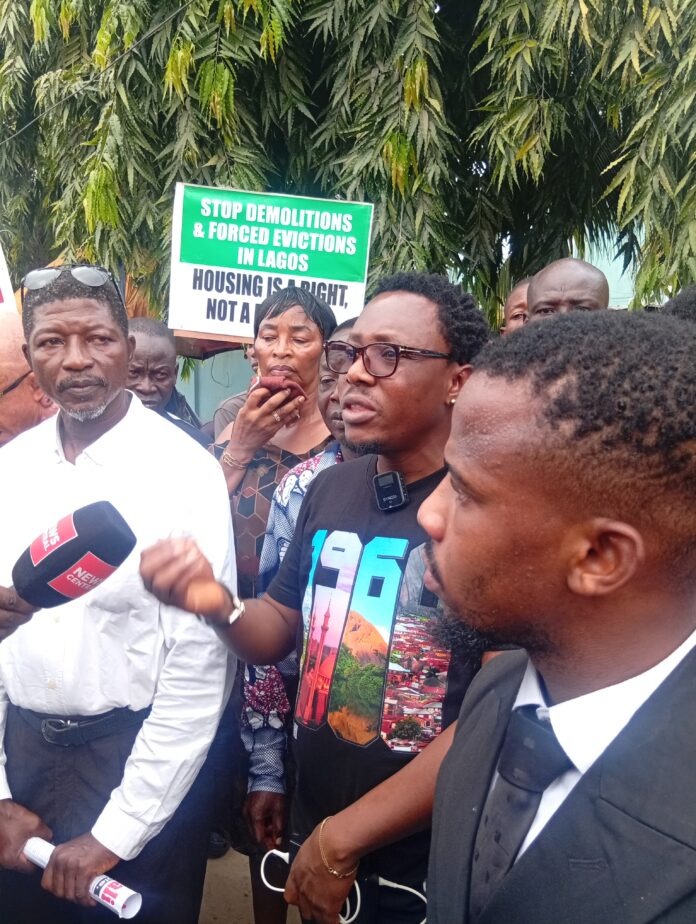
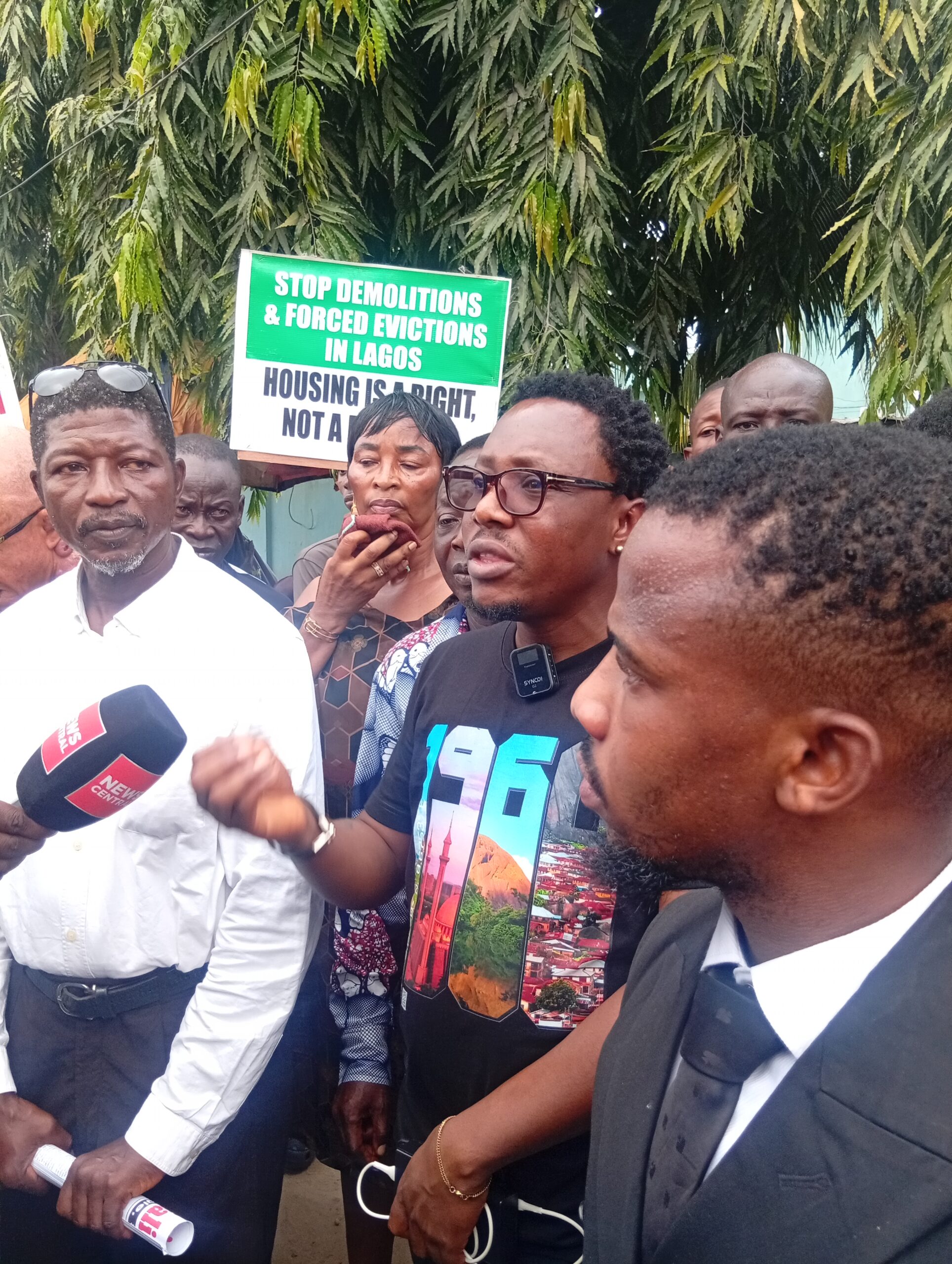
Residents of the affected communities were present at the court premises to express solidarity with Soweto and Frank.
Addressing the supporters, Soweto said he had no regrets participating in the protest, describing the trial as an attempt to intimidate residents resisting forced evictions.
“This trial was started by the Lagos State Police Command, not for any other reason but to stop the struggle of poor people in Lagos State against an attempt to deny them shelter and the place they call their home,” he said.
“It is not even about myself and Arole Fela [Frank]. We are just two individuals. The main aim of this trial is to intimidate poor people in these different communities. They want to use us as an example that when you stand up against the state, you are going to get dealt with.”
Soweto criticised the court for failing to notify lawyers and defendants in advance that the magistrate would be absent, arguing that the situation wasted the time and resources of people seeking justice.
“We would have expected that if the Nigerian judiciary had any respect for the citizens, that notification would have been sent out as early as possible this morning to lawyers so that we would not have to travel from far and near to come to the court,” he said.
He described the incident as another example of what he called the judiciary’s failure to serve ordinary citizens.
“They claim that the court is the last hope of the common man. When we went into the courtroom today, did you see any common man who had any hope in that courtroom?” he asked.
“Everybody in that courtroom had very terrible cases against them, either by the Commissioner of Police or civil cases regarding rent and all of that. They keep spending money on lawyers, and the court keeps wasting their time.”
Soweto, however, said the repeated setbacks would not deter him and other campaigners from opposing the planned demolitions.
“We are not going to allow that to discourage us,” he said.
He said the continued presence of Makoko residents at the hearings demonstrated their belief that they (defendants) were being prosecuted for supporting the rights of vulnerable communities.
“We are not criminals. We are liberators,” he said, adding that he and Frank were not themselves among those directly affected by the planned evictions but had chosen to support the residents’ struggle.
Soweto also criticised comments attributed to Lagos State Deputy Governor Obafemi Hamzat, who is the All Progressives Congress’s governorship flagbearer in the state, suggesting that young people should continue living with their parents as a way of addressing housing costs.
According to Soweto, the position reflected a lack of concern for the housing difficulties confronting ordinary Lagos residents.
“When you look at that kind of statement, it should be very clear that such an individual, if he gets to power, is likely going to implement policies that will continue the same problems that people in Makoko would face,” he said.
“It means that he is going to lead a government that has no care whatsoever for ordinary people.”
He argued that the government should address housing shortages by providing affordable homes and improving existing settlements rather than demolishing communities and displacing their residents.
“Lagos is for everyone. Lagos is for every Nigerian, whether you are rich or poor, whether you are Yoruba, Hausa or Igbo,” he said.
“A government that wants to care for the people and serve them must implement policies that allow people to live a dignified existence. What that means is that it must provide housing for people.”
Soweto said that where informal communities faced environmental or infrastructural challenges, the government should improve living conditions instead of using those problems to justify evictions.
“If there are problems, what a government should do is rectify those problems and modernise them. If the environment is unkempt, what the government should do is provide the means for it to be cleaned up,” he said.
“But not to use that as an excuse to evict people from their place of existence in order to give out that place to rich people because they have money to buy those places for billions of naira.”
He maintained that the campaign against forced evictions would continue despite the pending case, insisting that Makoko residents and people in other informal settlements had a right to housing and security.
“Regardless of the trial, that struggle must continue. Our demand remains the same: Makoko people must not be evicted,” he said.
“What we need in Makoko is for it to be rebuilt to ensure that the people have a dignified existence.”