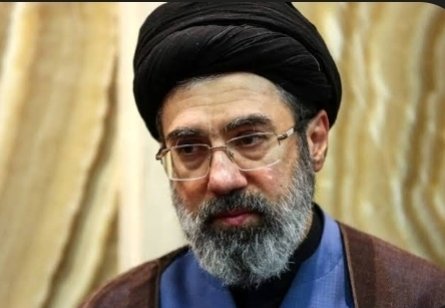
Iran’s potential next Supreme Leader Mojtaba Khamenei reportedly has ‘only days left to live’
There are strong indications that Mojtaba Khamenei, widely regarded as Iran’s potential next Supreme Leader may have only days left to live, according to a report citing doctors’ assessments.
“Doctors inform Mojtaba Khamenei, reportedly Iran’s next ayatollah, that he only has a few days left to live,” Associated Press said.
On March 3, the Iranian state media reported that Mojtaba Khamenei, son of Ayatollah Ali Khamenei and a leading contender to be Iran’s next Supreme Leader, is still alive, despite earlier reports claiming he died in a US-Iran attack.
Further, Mehr News insisted that he is in good health, fueling uncertainty over the country’s leadership succession.
“Mojtaba Khamenei, the Supreme Leader’s son, is in good health,” Mehr News stated.
Mojtaba Khamenei, son of the late Supreme Leader Ayatollah Ali Khamenei, has reportedly been chosen as Iran’s next Supreme Leader amid reports of influence by the Islamic Revolutionary Guard Corps (IRGC).
A report by Iranian opposition-linked outlet Iran International published Tuesday, March 3, claimed that Iran’s Assembly of Experts chose Mojtaba Khamenei under pressure from the IRGC.
Iran International reported, citing informed sources, that “The Assembly of Experts elected Ali Khamenei’s son Mojtaba as the next Supreme Leader.”
However, Iranian state authorities have not publicly confirmed this claim.
The New York Times, citing three Iranian officials, reported that senior clerics met online on Tuesday to discuss who would succeed Ayatollah Ali Khamenei after his death.
According to the officials, the Assembly of Experts held two online meetings, one in the morning and one in the evening. Mojtaba Khamenei was the clear front-runner in these discussions.
Process Of Electing A New Supreme Leader in Iran
According to an explainer by The Kenya Times, the process of electing a new supreme leader is clearly highlighted as follows:
The responsibility of selecting a new Supreme Leader falls to the Assembly of Experts, an 88-member clerical body elected every eight years and composed entirely of Shiite scholars.
They vet potential successors in strict secrecy and are required to act swiftly to prevent the vacancy from lasting long.
In doing so, the Assembly weighs a candidate’s expertise in Islamic jurisprudence, political and managerial capabilities, and the constitutional standards of piety, justice, and leadership required for the role.
Although the process is constitutional, it is not transparent.
Though never used before, the constitution allows the possibility of replacing a single Supreme Leader with a leadership council in the scenario that a single individual is not agreed upon.
Current potential candidates include Khamenei’s son Mojtaba, senior aide Asghar Hijazi, Ali Larijani, and Hassan Khomeini’s grandson of the Islamic Republic’s founder.
Who exactly is the Supreme Leader?
Iran’s supreme leader, Ayatollah Ali Khamenei, was killed in a joint U.S.-Israeli airstrike, abruptly ending his 37‑year grip on power, leaving Iran’s most powerful seat vacant.
The Supreme Leader, or Rahbar, is no mere figurehead, but the ultimate authority in Iran.
Established under the principle of velayat-e faqih, the 1979 Islamic Revolution’s guardianship of the Islamic jurist, this role fuses religious authority with political clout.
The office of the supreme leader holds authority over Iran’s military, judiciary, state broadcasting, and all major strategic decisions.
Iran’s presidents come and go through elections, but the Supreme Leader is above all of that, answerable only to God and a body called the Assembly of Experts.