



How did we get here? Consequences of a collective betrayal
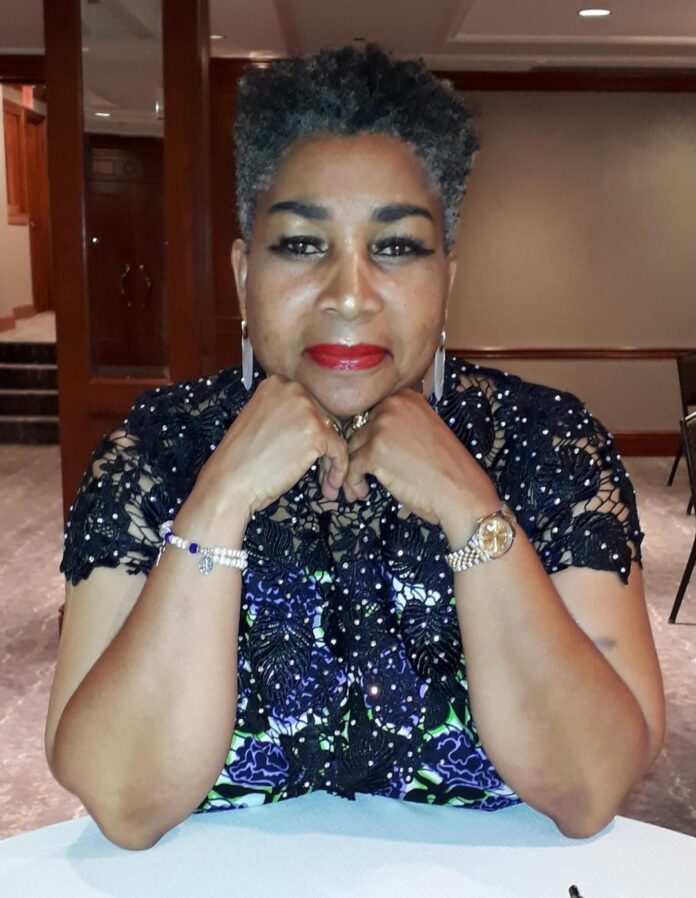
By Elsie-Bernadette Onubogu
While alone or in conversation with others, I find myself dealing with the question, “How did we get here, or who did this to us?” This question features at dinner tables, at the airport, across WhatsApp platforms, and almost anywhere you find a group of Nigerians.
Very often, I believe the question is merely rhetorical, almost hollow – not one for anticipatory action. This is partly because, most of us know how Nigeria got to the present dysfunctional state. Unfortunately, many choose to either live in denial, unperturbed, or just plain hypocrisy. Yes, hypocrisy, capturing Ralph Waldo Emerson’s thinking, i.e., “Every person (man) alone is sincere, at the entrance of a second person, hypocrisy begins.”
In conversation with my friend, one I refer to as, ‘the cerebral one,’ she said, the answer isn’t simple. The answer lies in a series of deep-rooted systemic and structural defects ignored over decades, which has steered the nation off course.
I totally agree with her that we certainly didn’t get here by accident. We got here by our collective betrayal of constitutional promises; abuse of fundamental human rights; abuse of power, collective betrayal of accountability and transparency, betrayal for personal gain, silencing dissent and opposition, and the non-performance of the social contract owed particularly to the most vulnerable. The social contract that ought to perfect our union. Frankly, both those in public office and private citizens have failed in our duties and responsibilities. We abandoned the trust and the sense of duty that is expected of us.
More than any other group, we have betrayed the poor and the most vulnerable — so deeply that today, hunger is etched on the face of many Nigerians – in a land once described as flowing with milk and honey. As the former United Nations Secretary General Perez de Cuellar highlighted, “a society is not judged so much by the achievements of its most affluent members, as much as it is judged by the provision which it is able to assure its weakest citizens.”
Sadly, the poor by their inaction and action also betrayed themselves. Rather than service, leadership is translated into control – creating unhealthy servitude. As one of Nigeria’s legal luminary cautioned, “servitude, whether limited, whereby one’s chattel are temporarily controlled by another, or absolute, whereby one’s chattel are permanently put at another’s disposal, is contrary to natural law, for God created all men free, and equal in their humanity.” (Chukwudifu Oputa, JSC, 1990).
Nigeria’s present ‘state’ has been a journey of accumulation, best captured as the sum total of issues we collectively chose to ignore; encouraged; aided; complicit to; complacent to, or simply played the ostrich. The issues range from drawing false moral equivalencies in defense of the indefensible, exchanging mediocrity for meritocracy, corruption, outright roguery, impunity, bad leadership, to docile followership.
Like many Nigerians, I have wrestled with this question, sometimes, skirted around it, but very often, allowed it to slip beneath the surface of my conscience, albeit, buried under a mixed feeling of resignation and complacency. Yet, I (we) can answer to the how.
Whether alone or in conversation with other Nigerians, the truth is, many of us witnessed the spiraling down, contributed to it, aided or abetted it, ignored it, initially giving it roots and branches to thrive, and ultimately normalizing it. So, when I hear this question, I know it is a cri de coeur over the disaster Nigeria has degenerated into. Yet, despite the disaster, it is not a cri that expects an anticipatory action or deserving of a direct response. Rather it must be classified as a cry of exasperation, triggered and fueled by frustration, disappointment, and the overwhelming weight of the situation.
We are here because we allowed dysfunction and indecency to creep in and take over the reins of everyday living. The spiraling into dysfunction has been gradual, sometimes passive, and other times, out of deliberate choices that clearly compromised standards with total disregard of essential guardrails that makes for effective functioning of a society. We got here because, the prevailing culture chose to celebrate indecency and shortcuts over hard work or substance.
A chronicle:
We got here because we failed to encourage critical thinking – extolling shortcuts. As we dismissed excellence, it meant, our attitudes and mindsets failed us, giving way to scandalous and dishonest lifestyle – aptly witnessed in the N100 million celebration of a show of sleaze and shame – Big Brother Nigeria – over the N5,000 celebration of a first-class computer engineering graduate.
We got here because of failed promises based on constitutional provisions and civic responsibilities – from elected officials and citizens alike. Majority of Nigerians feel abandoned, marginalized, losing trust in leaders and neighbours alike. No union no matter how perfect succeeds with distrust.
We got here because we specialized in excluding people, women, senior citizens, young people, communities including the oil-water infested communities, and the Almajiris. We weaponized poverty in order to control. .
We got here because, we allowed Church to become a marketplace for the highest bidder. A den of, and for thieves to sanitize ill-gotten wealth for ‘earthly salvation.’
We got here because we either ignored or trivialized the attitude of ‘wetin you carry, anything for us,’ and slowly normalized it.
We got here because we supported the greed that ‘adulterated’ drugs and food for humans to live and heal, but killed lives as being okay.
We got here because we sanctioned ‘tawdry and flash’ through ‘asoebi, spraying, and so-called committee of friends especially for the dead, the same ones we cared little about when they lived.
We got here because followership in Nigeria became synonymous with docility, adopting the ‘ostrich mentality,’ and or what is now referred to as the Stockholm syndrome. Followers fail to demand accountability. Lack of civic education meant civic rights are not exercised. NGOs fail in this regard, and those who ought to challenge the status quo often fail to, because they feel insulated or benefit from the dysfunction.
READ ALSO: Sycophancy: Nigeria’s poisonous apple
That idiotic anti-el-Rufai ‘protest’ in Owerri
We got here because we refused to ensure transparency and accountability as guardrails against corruption, nepotism and impunity. Consequently, public offices were easily converted into private and family enterprise, and impunity reigns supreme.
We got here because, we allowed the unhealed wounds of the civil war to fester. We chose to band aid the wounds, and to conceal, we banned teaching of history in schools.
We got here because the government ignored security, invited insecurity, and allowed it to blossom into organized syndicate – in some cases backed by the same government.
We got here because, in our bid to address inherent inequalities, we elected the concept of ‘federal character’ and allowed it to become either ‘nepotism, sycophancy losing competence. Righting past wrongs substituted merit with mediocrity.
We got here because we chose to convert governance to a game of power and control rather than purposeful vision. Institutions meant to protect became tools of control and sycophancy. The Media, Non-Governmental Organizations (NGOs) and the private sector are not spared. Ten per cent (10%) kickbacks morphed into converting public funds to private finance houses.
.
We got here because decades of call to diversify from oil dependence fell on deaf ears. Instead, we divided and appropriated oil bunkers to ‘connections,’ – leaving Nigeria on a pedestal of perpetual borrowing, consumption, importation and economic recklessness.
We got here because billions of Naira budgeted for social services and basic needs were converted. Education turned into erratic gatherings, laced with cash for grades, and or sexual gratification, our hospitals became mortuaries, roads turned into death, bandit and kidnapping traps, and homelessness became part of our shame. We failed the most basic contract between a nation and its people.
We got here because despite arable lands in Nigeria, we couldn’t prioritize feeding ourselves. Farming is abandoned and disdained. While most people are chasing ‘certificates and titles’, the so-called elites weaponized hunger and poverty.
We got here because corruption became normalized in our psyche as part of our culture. Not just tolerated, it thrives as a way of life, for many, the only way to forge ahead. Very few will dare speak up. If you can’t beat them, join them became the mantra.
We got here because we failed to generate the one engine that sets the tone for the economy, business and development. Query, how does a nation and its people develop in the dark?
We got here because ‘beneficiaries’ who disguise as politicians craftily weaponized ethnicity, religion, and poverty as tools of division.
Despite disappointments and failure to live up to campaign promises, people sell their votes for a bowl of eba and okro soup and a paltry sum of N5,000. That is, until the next election. :
We got here because the so-called elites, politicians, the old “guards” insist they and nobody else have the right or skill to develop Nigeria. Even in an age of innovation and technology, young people are frightened from engaging due to money politics and the indecency associated with politics. The brain drain and brain waste roped in what is termed ‘Japa’ will take years to repair. Sadly, when young people temporarily abandoned the hashtags, Instagram and other social media handles and dared to engage, they paid the ultimate price during ENDSARS.
We got here because we chose to place visionless people into positions of power. These people replaced service with sycophancy, loyalty over competence, encourage impunity, gradually setting us down the spiral slope of authoritarianism.
In the present situation, we got here because the nation’s watchdog against corruption, turned ‘consequence’ into an All-PurposeCentric baptism that washes away all stolen funds, and forgives every reprobate. Alas, consequence is of no effect.
Fellow Nigerians, make no mistake: we did not arrive here by accident, as some would have us believe. We got here through collective neglect, acquiescence, collective silence and neutrality in the face of moral crisis, and the choices we made and continue to make – a collective betrayal that has left untold consequences.
We got here because, as a people we elected sub-standard persons to serve in public spaces, allowed and encouraged indecency both in their utterances and interactions, ignored corruption, normalized impunity, and threw values, integrity and accountability to the dogs.
Consequently, our moral compass is shattered beyond recognition, and we have almost lost every modicum of decency. This is how we got where we are today.
So, the next time someone poses the question, ‘How did we get here, or who did this to us?’ do not hesitate to be honest with them.
Let them know that our collective inaction and the choices we made over the years and continue to make (a collective betrayal) brought us to this point. Tell them, we did this to ourselves.
- Elsie-Bernadette Onubogu, an independent consultant, international lawyer, public policy and mainstreaming expert, writes from the U.S.


