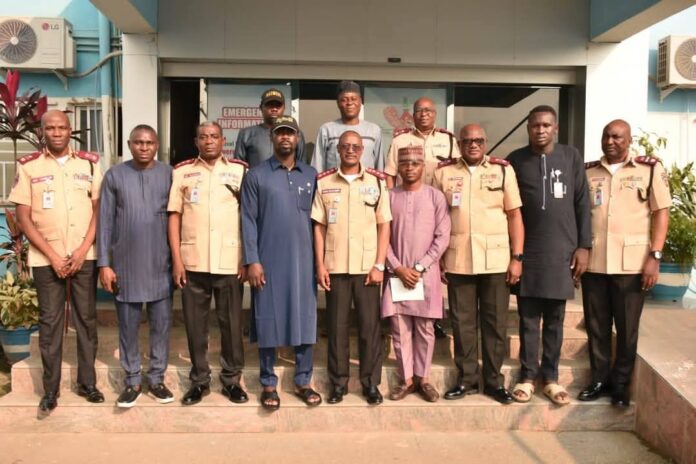
How Corps Marshal Shehu Mohammed averted NAN’s ultimatum, national apprehension through strategic engagement
By Sani Abdullahi (FRSC Deputy Corps Commander)
Nigerians’ experience with colonial administration was replete with suspicion, exploitation and violence, thereby creating a situation where even after the decolonization process and entrenchment of post colonial government, the feelings of alienation by people from government could not be removed. The nation’s history, can therefore, not be divorced from unrest, protest and demonstrations as a way of expressing people’s dissatisfaction and anger with any policies of government they disagreed with.
The Nigerian students as the natural inheritors and custodians of this heritage have therefore, continued on the path of demonstration and protests to express their grievances and anger to remain relevant in the nation’s socioeconomic and political activities. Unfortunately, sometimes some of these protests got hijacked either by hoodlums or became violent, leading to police intervention and unending suspicion and antagonism between the students and law enforcement agencies in the country.
Formally known as the National Union of Nigerian Students (NUNS) when it was formed in 1956, the umbrella student body is currently identified as the National Association of Nigerian Students (NANS) with Zonal branches and national President. The Association has membership spread across the various tertiary institutions and stands to protect the interest of the students as well as serving as the mouthpiece of the youth and common people.
During the military era, Nigerians witnessed their violent protests against certain government policies especially the popular 1978 “Ali Must Go” violent protest staged against government’s increase in fees. The Nigerian students also sometimes joined in protests against military rule.

As an institution built on the ingredients of social protestation and idealism of the youth, FRSC started its operations in the country after its establishment in 1988 by the federal military government with young and mostly fresh graduates who were untainted by the push and pull of the society. Some analysts have pointed out that FRSC represents the true face of a radical organization in Nigeria with its drive for positive changes in the society. For instance, at the beginning of its operations with its dominant civil values, members of the organization could not be properly identified and likened to any of the existing agencies: They neither appeared to be security agents; law enforcement personnel nor civil servants but something in between all.
The leadership of the Corps at the time were unmistakably civil in their approaches to law enforcement with obvious contempt for contempt for militant behaviors synonymous with regimentation. Thus, they ensured the policy of uniform restriction by staff which made use of uniform applicable to only the operations personnel who carried out enforcement and rescue, while staff of other departments could appear in civilian dresses to the office- That practice only changed in 1995 when the Management under General Hananiya reviewed the policy and made the use of uniform applicable to all the staff.
The young Nigerian students under the leadership of NANS who might not have known the radical background of the FRSC must have displayed some ignorance when they mistook the Corps for other law enforcement agencies in the country by issuing a threat against it in February this year. Their threat was in reaction to one of their vehicles that was impounded for operating with fake and irregular number plates during the special operations by the Corps targeting such offences. That threat of violent invasion of any FRSC commands that dared to impound their vehicles for the offences with ultimatum was so widely circulated by the media that the attention of Corps Marshal Shehu Mohammed was attracted to it.
As one that’s widely known for his skills in crisis management and fatherly disposition, Corps Marshal Shehu Mohammed did not waste time in extending invitation to the leadership of NANS for a meeting at the FRSC National Headquarters Abuja. Everyone could see as the members arrived the Corps Marshal’s conference hall in company of the Senior Special Assistant to the President on youth and student affairs, Mr Sunday Ashefon that they came with obvious feelings of people that were aggrieved and out to assert their anger and grievances against the operations of the FRSC. Ironically, by the time they were welcomed by the Corps Marshal through his opening remarks and went ahead to educate them on the nature of the operations; what FRSC stands for and has historically done for youth safety, security and, well-being, and how the protection of the integrity of the licensing system was in the interest of the youth who are the most vulnerable group to the menace of road traffic crashes and how friendly FRSC has always been to the Nigerian youth, they all became obviously disarmed, sober and convinced on the need to rather cooperate, instead of obstruct the operations of the FRSC.
That was how the solid relationship between the FRSC leadership and NANS under the leadership of Comrade Lucky Omonefe was cemented at that first meeting earlier this year. And that was why it became easier for the Corps Marshal to summon the new leadership of the Association to the FRSC National Headquarters Abuja again on Wednesday, 27 August, 2025 following the ultimatum issued by the South-South Zone of the student body against the operations of Dangote trucks and threat of invading FRSC for its alleged dereliction in the incessant cases of killing of students by drivers of trucks across the country. The invitation was honoured by the leadership despite their engagement in other activities of the Association within the period in reverence to the Corps Marshal they have now come to regard as their “father.”
The delegation which came to the FRSC National Headquarters Abuja comprised members of the new executive from institutions across the country and led by the immediate past President, Lucky Omonefe. Reading from the lips and facial expressions of the representative of the new President, comrade Salahudeen Lukman who delivered the President’s message, it was evident that they came boiling with anger on the killings of the students by truck drivers especially those operating Dangote trucks with the perceived motion that FRSC as the nemesis of drivers was not doing enough to tackle the killing habits of the drivers through appropriate sanctions against them and operators of the trucks.
However, by the time the Corps Marshal intervened to educate and pacify the obviously enraged members and went ahead to enumerate the measures taken by the Corps so far to deal with the challenges posed by the operations of trucks in the country, they all became relieved; more enlightened and convinced that they must have misunderstood the role of the FRSC in its commitment to mitigating the menace of truck drivers. Some of the measures taken by the Corps to create safer trucking operations in the country as enumerated by the Corps Marshal and some members of the top Management of the FRSC in attendance were: introduction of training and recertification programs for the drivers; sanctions against the reckless ones and constant engagement with the leadership of the trucking companies to keep the drivers on track and strict adherence to minimum safety standards by drivers as well as regular report on road conditions which facilitated some ongoing rehabilitation works across the country.
It also dawned on the members in the course of the interaction that most of the top Management staff of the Corps who spoke including the Corps Marshal were once active student union members and executive in their university days and stood firmly for the welfare and safety of students. According to Comrade Salahudeen who spoke on behalf of the delegation after the interactive session, members have been properly enlightened through the engagement, even though they came boiling with anger, and bias against the alleged complicity of the FRSC in the killings of the students. “We came here fumming with anger against the assumed complicity of the FRSC in the killing spree of our students by the truck drivers, but from the interactive session, we are now better informed,” he stated.
”We must appreciate the Corps Marshal for his patience, wisdom and maturity in calling for the meeting which has turned out to be most productive and enlightening, against the mindset that we came in with,” he added.
”Now, with the facts presented to us, we have become more convinced about what the FRSC has been doing and what it will do going forward which we wouldn’t have known without the meeting. That’s why we all agreed on the need to engage more with the FRSC at the various levels in all the campaigns against road carnage of which the youth and students constitute the highest number of victims,” the NANS President’s representative further stated.
Corps Marshal Shehu Mohammed in his remarks after the interactive session thanked the students for their understanding, trust and confidence in the leadership of the FRSC, saying after the free discussion and the facts presented, it became obvious that a lot can be achieved under atmosphere of trust, openness and transparency instead of suspicion and antagonism. The Corps Marshal further stated that FRSC will continue on the path of diplomacy instead of militancy in addressing complaints from stakeholders, stressing, “that was the spirit that informed the policy on strategic partnership which forms the centerpoint of my six policy thrusts,” he stated. He therefore promised that Management will continue to take appropriate measures to bring sanity to the nation’s highways including engaging more with the drivers through training and retraining programs and strict adherence to minimum safety standards.
The choice of dialogue, diplomacy and openness which Corps Marshal Shehu Mohammed made in resolving the crisis instead of unnecessary flexing of muscles no doubt, was how the NANS’threats against Dangote trucks in the South -South zone of the country and invasion of the FRSC offices were averted with each side pledging to do more to build trust and create greater road safety awareness in ensuring sanity on the highways. The feat, according to a senior officer of the FRSC was achieved, thanks to the wisdom displayed by the Corps Marshal who believes in dialogue and peaceful resolution of disputes instead of confrontation, saying flexing of muscles could only lead to wastages, destruction and undue national apprehension.
Abdullahi is the Deputy Corps Commander in charge of Strategy in the office of the Corps Marshal