



“Hold the government accountable” is not enough: What Nigerians must actually do
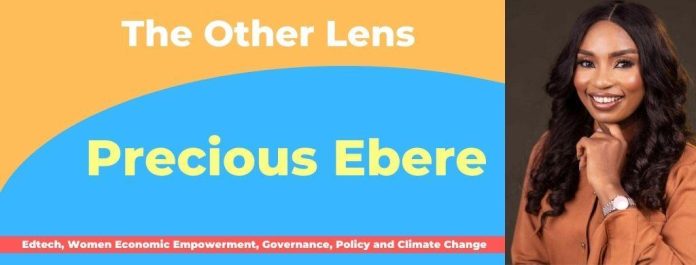
By Precious Ebere-Chinonso Obi
When Senate President Godswill Akpabio recently urged Nigerians to “hold their lawmakers accountable,” it sounded right. In theory, it always does.
Democracy thrives on citizen engagement. Representation is a “living covenant.” The National Assembly is a “workshop of solutions’’ but here is the uncomfortable truth: Most Nigerians do not know how to hold their lawmakers accountable, practically because accountability in Nigeria has too often been reduced to social media outrage, election season anger and occasional protests.
If we are to take Akpabio’s call seriously, then we must move from rhetoric to action. Many Nigerians cannot name their senator or House of Representatives member let alone know what they have done in office. Accountability is impossible without identification. Every Nigerian should be able to answer three simple questions: Who represents me at the National Assembly? What committees are they part of? What have they done in the last year?
Lawmakers speak often but accountability lies in actions, not speeches. Citizens should begin to track bills sponsored or supported, attendance at plenary sessions, contributions to debates and oversight activities in ministries and agencies.
The national budget currently before the Assembly is one of the most powerful tools for this. As Akpabio rightly noted, the budget is a “ledger of national purpose’’ but for citizens, it is also a scorecard.
Ask what projects are allocated to my community? Were they in last year’s budget? Were they actually implemented?
This is where accountability becomes real. Nigeria’s political culture has created distance between citizens and lawmakers but representation does not work from a distance. Every constituency office exists for a reason.
Citizens can write letters or emails to their representatives, visit constituency offices, attend town halls – or demand them where they do not exist – and organise community-level meetings to present collective concerns
One voice may be ignored, a coordinated group is harder to dismiss. In today’s Nigeria, arguments are often driven by emotion but policymakers respond more to evidence than outrage.
Instead of saying: “There is no development in our area, say our community was allocated ₦X for road construction in the 2025 budget, but the project has not started. Why?”
This shift from emotion to evidence is what transforms citizens into effective participants in governance. Accountability is more powerful when it is collective. Civil society groups, community associations, youth networks, and professional bodies must play a stronger role in aggregating citizen demands.
When citizens organise, issues gain visibility, pressure becomes sustained and engagement becomes structured. Democracy works better when citizens act together not just individually.
Nigeria often treats elections as the only moment of accountability but by the time elections come, the damage is often already done. True accountability happens between elections. It is in consistent monitoring, continuous engagement and sustained pressure. Waiting four years to respond to poor performance is not accountability, it is delay.
Today, technology makes accountability easier than ever, budgets are published, legislative records exist and conversations happen in real time but access to information is not enough.
Citizens must move from passive consumption of political news to active interrogation of governance.
Akpabio is right about one thing: representation is a covenant but covenants are not one-sided. Lawmakers have a duty to serve and citizens have a duty to engage, when either side fails, the system weakens.
The call to “hold lawmakers accountable” should not end as a headline, it should become a habit because the strength of any democracy is not measured by the promises of its leaders but by the participation of its people and if Nigerians truly begin to engage not occasionally, but consistently then accountability will no longer be something we demand.
- Precious Ebere-Chinonso Obi, CEO of Do Take Action, is an independent consultant on edtech, climate change, public policy, and women’s procurement empowerment


