Gowon’s memoir and the buried truth: Gowon’s memoir attempts to present him as a patriotic soldier burdened with the painful duty of preserving Nigeria during its darkest hour. He portrays himself as a man of sacrifice rather than ambition, duty rather than vengeance. Yet history is not judged merely by intentions; history is judged by consequences. The consequences of the Nigerian Civil War upon Ndigbo were catastrophic. Over three million Biafrans, most of them Igbo civilians, perished through starvation, bombardment, disease, and blockade. Entire communities were erased. Markets vanished. Homes became graveyards. Children died with swollen stomachs while the world watched in silence. The tragedy of Gowon’s memoir is not simply what it says, but what it refuses to confront. There is no genuine repentance. No moral reckoning. No deep acknowledgment of the enormity of Igbo suffering.
By Uche J. Udenka
A nation that refused to heal Ndigbo
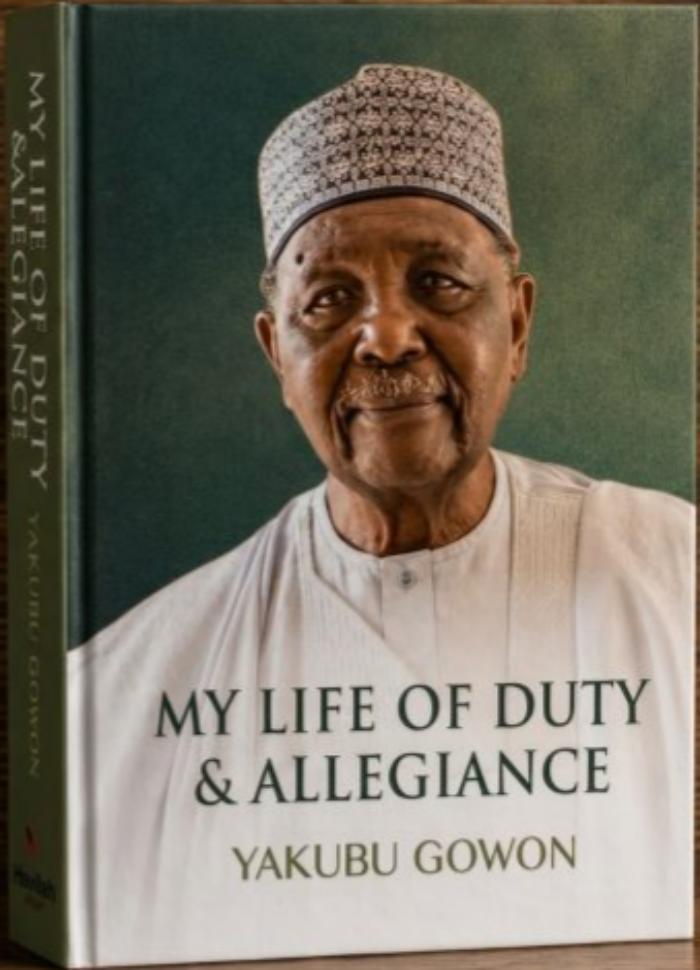
On Tuesday, May 19, 2026, Nigeria’s political aristocracy gathered in Abuja to celebrate the public presentation of General Yakubu Gowon’s memoir – My Life of Duty and Allegiance. It was an elite carnival draped in patriotism, drenched in ceremony, and decorated with the familiar language of national unity. Politicians, generals, businessmen, bishops, and beneficiaries of the Nigerian establishment assembled to honour a man presented once again as the reluctant saviour of Nigeria. Beyond the chandeliers, applause, and glowing tributes stood an uncomfortable truth: for millions of Ndigbo, this was not merely a book launch. It was a reopening of an unhealed wound.
A memoir without remorse
Gowon’s memoir attempts to present him as a patriotic soldier burdened with the painful duty of preserving Nigeria during its darkest hour. He portrays himself as a man of sacrifice rather than ambition, duty rather than vengeance. Yet history is not judged merely by intentions; history is judged by consequences. The consequences of the Nigerian Civil War upon Ndigbo were catastrophic. Over three million Biafrans, most of them Igbo civilians, perished through starvation, bombardment, disease, and blockade. Entire communities were erased. Markets vanished. Homes became graveyards. Children died with swollen stomachs while the world watched in silence. The tragedy of Gowon’s memoir is not simply what it says, but what it refuses to confront. There is no genuine repentance. No moral reckoning. No deep acknowledgment of the enormity of Igbo suffering.
Aburi Accord betrayal
The Aburi Accord was Nigeria’s last bridge before the abyss. In January 1967, in Aburi, Ghana, leaders agreed on a loose federation built on regional autonomy, mutual consent, and trust. For the East and Ndigbo, it was a promise of safety after massacres and fear. But General Yakubu Gowon returned home and rewrote the deal through Decree No. 8, preserving federal dominance and shattering the spirit of Aburi. The peace collapsed. War followed. Millions died. Starving Biafran children became the conscience of the world. Now, at 91, Gowon’s memoir blames Chukwuemeka Odumegwu Ojukwu alone for the tragedy. But history is heavier than one man’s autobiography. The dead deserve truth, not selective remembrance.
“No victor, no vanquished” – the greatest political illusion
Nigeria continues to celebrate Gowon’s famous declaration: “No victor, no vanquished.” But history itself has exposed that statement as one of the most polished deceptions in Nigerian political memory. If there was truly no victor and no vanquished, why were Ndigbo subjected to economic annihilation after the war? Why were bank accounts containing thousands of pounds reduced to a humiliating flat payment of just £20 regardless of prior savings?
The £20 policy: Economic execution in peacetime
The infamous £20 policy remains one of the cruellest state policies ever imposed on a defeated civilian population in modern African history. An Igbo trader who had £5,000 in the bank before the war received the same amount as a labourer with no savings: £20. Doctors, teachers, businessmen, civil servants, widows — all reduced overnight to financial refugees in their own country. This was not reconciliation. This was economic strangulation disguised as national policy. It destroyed generational wealth. It crippled Igbo recovery. It institutionalized poverty in a region already devastated by war. Yet, decades later, the Nigerian state has never offered reparations, restitution, or even a formal apology.
No reparations. No rehabilitation. No reintegration
The so-called Three Rs — Reconciliation, Reconstruction and Rehabilitation — became one of the greatest propaganda slogans in post-war Nigeria. Because where exactly was the reconstruction? Where was the rehabilitation? Where was the reconciliation?
More than fifty years after the war, the Southeast remains one of the most structurally neglected regions in Nigeria. Critical federal infrastructure bypasses the region repeatedly. Major seaports remain underdeveloped. Railway modernization projects routinely marginalize the Southeast. The River Niger dredging project remains endlessly promised but perpetually delayed. Federal road infrastructure in the region remains among the worst in the country despite the Southeast being one of Nigeria’s most commercially active zones. Even the National Gas Pipeline framework largely excluded the region for years. This is not accidental. Exclusion repeated consistently over decades becomes policy.
The politics of punishment
The Nigerian establishment continues to behave toward Ndigbo as though the Civil War never truly ended. The Southeast remains one of the most militarized civilian regions in Nigeria. Military checkpoints dominate highways. Armed raids, security crackdowns, and aggressive deployments have become normalized. Meanwhile, violent actors elsewhere are frequently approached with negotiation, amnesty, and rehabilitation programs. For Ndigbo, dissent is criminalized. Agitation is militarized. Memory itself is treated as treason.
Nigeria constantly demands loyalty from Ndigbo while refusing to confront the injustices that fractured that loyalty in the first place. A nation cannot preach unity while practicing exclusion. A federation cannot demand patriotism from people it persistently sidelines from power, infrastructure, appointments, and strategic national inclusion. The bitterness did not survive because Ndigbo love division. It survived because Nigeria never sincerely pursued justice.
The silence of the establishment
Perhaps most painful is the collective silence of Nigeria’s elite class.
At Gowon’s memoir launch, enormous financial donations reportedly flowed freely in celebration. Millions were pledged in a country where survivors of war still carry inherited trauma and economic scars. This is the contradiction of elite Nigeria: Lavish remembrance for the powerful. Permanent silence for the wounded. The political class applauds “national unity” while refusing national accountability.
Gowon’s greatest missed opportunity
At ninety years old, Gowon had perhaps his final opportunity to rise beyond statecraft into moral greatness. He could have acknowledged the pain. He could have apologized directly to Ndigbo. He could have admitted that the post-war policies inflicted severe injustice. He could have called for reparative national healing. Instead, Nigeria received another defence of power rather than a confession of conscience. That is why this memoir will remain incomplete. Not because Gowon failed to narrate events. Because he failed to confront their moral weight.
The central question today is no longer whether Nigeria defeated Biafra militarily. The real question is whether Nigeria has ever genuinely attempted to reintegrate Ndigbo politically, economically, and psychologically. A people cannot be starved, dispossessed, excluded, stereotyped, militarized, and politically marginalized for decades — and then be expected to sing endlessly about unity.
A prayer without repentance
Gowon has spent years praying publicly for Nigeria. Prayer without repentance cannot heal historical injustice. In both African tradition and Christian theology, true reconciliation demands confession, restitution, and cleansing. There can be no national healing while truth remains buried beneath patriotic slogans. There can be no enduring unity while injustice remains institutionalized. There can be no redemption for Nigeria until the nation finally confronts what was done to Ndigbo — not merely during the war, but after the war.
Because the bombs ended in 1970. But the exclusion never did.
- Arc. Uche J. Udenka, social and political analyst – #AfricaVisionAdvancementTrust – is the C.E.O. Igbo Renaissance Awakening.