



By Jeph Ajobaju, Chief Copy Editor
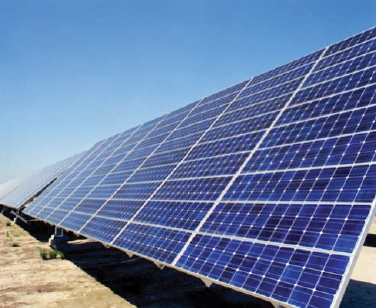
Coronavirus lockdown in Lagos has raised demand for solar panels as residents find ways around unstable public power supply for internet, computer, and mobile phone vital to making money from home.
Since the lockdown began on March 30, Lumos has sold around 150 power units for home-based office workers.
Since the start of April, Rensource has sold 600 Keepwork units. Each runs on a solar panel and can charge off the grid.
Nigeria needs more than 10 times its current electricity output to guarantee supply for its 200 million people – nearly half of whom have no access at all, Babatunde Fashola said in 2018 when he was power minister.
He stressed that Africa’s most populous nation, though rich in oil, will turn to renewable energy in a big way.
Meanwhile, back to 2020, in a hallway in Lagos, Gbemisola Olowokere taps contentedly on her laptop.
The 23-year-old says the corner, underneath a sliver of window, has functioned well as a makeshift office since the coronavirus pandemic forced her to work from home.
But things didn’t start well.
“I had major problems,” Olowokere told Reuters. “I have deadlines and things I need to submit … and I couldn’t, because I didn’t have power.”
Solution in a yellow box
Nigeria’s wobbly power infrastructure means fuel-powered generators provide at least four times as much electricity as the grid.
Most people have generators, but few run them through the day due to cost, noise and – a growing health risk since the respiratory disease started spreading – choking smoke.
Olowokere found her solution in a yellow box bought by her employer from solar company Lumos. Connected to a panel on her roof, it keeps her phone, laptop and WiFi running through the workday, as well as a music speaker.
Lumos is one of at least a dozen solar energy companies competing to help fill Nigeria’s power gap, and COVID-19 has made the need for their services more acute.
Since March 30, Lumos has sold around 150 power units for home-based office workers for 100,000 naira ($280) each, half what it charges for its newest batteries.
Rival Rensource’s Keepwork unit retails for N180,000. It runs on a solar panel small enough to be propped on a balcony, and can charge off the grid. Company founder Ademola Adesina said 600 have been sold since the start of April.
Arnergy Solar Limited, meanwhile, has installed solar panels at five medical facilities around Lagos State, and healthcare clients in other states have also purchased panels since the pandemic began, Vice President Azeez Onasoga told Reuters.
Nigeria’s power expansion plan
Nigeria has set a target of expanding electricity access to 75 per cent of the population by 2020 and 90 per cent by 2030.
It aims to generate 30 per cent of its total energy from renewable sources by 2030, a major commitment for an economy that depends heavily on fossil fuels.
Campaigners welcome the shift to renewables as an efficient way to bring power to rural communities and help clean up a country with some of the world’s worst urban pollution rates.
“Ready access to electricity will reduce youth unemployment and increase productivity,” Ifeoma Malo, Nigeria country director at the global campaign group, Power For All, told the Thomson Reuters Foundation.
“It will contribute greatly to reducing the carbon footprint of a growing energy demand by the urban population.”
ADB input into clean energy
The African Development Bank (ADB) is also playing a critical role in building clean energy capacities across the continent.
Its last investment in a coal project was 11 years ago.
ADB President Akinwunmi Adesina disclosed at the One Planet Summit in Nairobi in March 2019 that the bank will double its climate finance commitments for the period 2020-2025.
He said the bank will commit at least $25 billion towards climate finance.
In line with its ambitious New Deal on Energy for Africa, 95 per cent of all ADB investments in power generation over the 2016-18 period was in renewables.
The “Desert to Power” programme, a $10 billion initiative to build a 10 GW solar zone across the Sahel – the largest in the world – would provide electricity for 250 million people.
Together with partners such as the Green Climate Fund and the European Union, the bank has now financed the first project under this initiative, The Yeleen Rural Electrification Project in Burkina Faso.
Key ADB projects include the co-financing of the 510 MW Ouarzazate Solar Complex in Morocco, one of the largest solar complexes in the world.
“It is not good enough to simply ask countries to stay away from polluting technologies,” Adesina stressed. “We have to be proactive in exploring alternatives.
“We will therefore be launching the ‘green baseload’ facility under the Sustainable Energy Fund for Africa (SEFA 2.0) to provide concessional finance and technical assistance to support the penetration and scale-up of renewable energy, to provide affordable and reliable renewable energy baseload.”


