
Dear Trevor: Africa is calling – on influence, conscience and the courage to speak
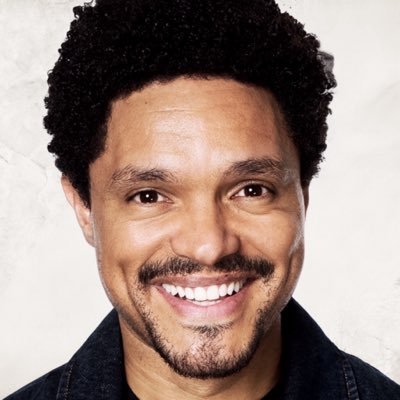
By Anthony Kila
Dear Trevor,
Sooner or later, every public figure eventually discovers that influence comes with an invoice. Here is how it works: Fame is the reward. Responsibility is the bill.
Most people spend their lives hoping someone will hear their voice. A fortunate few succeed beyond imagination. Their words travel across continents. Their jokes become conversations. Their opinions shape headlines. Their stories influence how millions understand the world. You are one of those fortunate few.
As a fan, I can speak for many when I say that long before Hollywood embraced your talent and late-night TV made you a household name, many of us valued something even more than your fame. We admired your skill at turning humour into insight. You demonstrated a rare and valuable talent: the ability to simplify complex topics without trivialising their substance. You made people laugh, yet you also encouraged them to think. You showed that wit can go hand in hand with wisdom. That is why I am writing to you.
I write to you not because you are a comedian, not because you are South African. But because you are one of the world’s most influential voices who happens to be African.
There comes a moment when every influential person must answer a question that cannot be delegated: What is your voice for? Is it merely to entertain, to explain, or to provoke? Or, when history demands it, to bear witness? I believe you have reached one of those moments.
South Africa is once again grappling with a painful contradiction. A nation that inspired the world by defeating apartheid now struggles to prevent organised hostility towards fellow Africans. Migrants are intimidated. Businesses are attacked. Communities live in fear. The immediate causes are familiar: unemployment, inequality, pressure on public services, weak border enforcement and widespread frustration.
These are real problems. No serious observer should dismiss them. Indeed, a responsible government has both the right and the duty to enforce its immigration laws. Sovereignty means little if a state cannot regulate who enters or resides within its territory. Every country has this responsibility, and South Africa is no exception. But there is another truth that deserves equal clarity.
There is no immigration policy in the world that authorises mobs. There is no constitutional democracy in which ordinary citizens may decide who belongs, who must leave, and whose property may be looted. The moment law yields to the crowd, everyone becomes vulnerable. That is why this moment demands more than political analysis. It demands moral clarity.
Trevor, you have often helped the world understand America. You explained race to those who had never experienced it. You interpreted Donald Trump for audiences that alternated between amusement and disbelief. You spoke about police violence, democracy, elections, identity, prejudice and power with intelligence and grace. Millions listened because you possessed credibility.
READ ALSO: Dear Trevor: Africa is calling – sovereignty, state failure and the civilisation we risk losing (1)
Credibility is among the most valuable forms of public capital. Unlike fame, it cannot be bought. Unlike celebrity, it cannot be manufactured. Credibility is earned gradually, growing slowly and patiently. One thoughtful conversation at a time.
By all accounts and by any standard one can imagine or cite, you have earned your credibility. That credibility now places an uncomfortable obligation before you. Africa needs your voice. Not because your opinion will solve the crisis, but because silence from trusted voices often becomes permission for less thoughtful voices to dominate the conversation.
History teaches us that public debates rarely remain empty for long. When reasonable voices hesitate, unreasonable ones rush in. When thoughtful people stay silent, louder voices become influential by default. Silence does not preserve neutrality. It redistributes influence.
After Nelson Mandela, perhaps the two most recognisable South Africans in the world now live in America. One is Elon Musk. The other is Trevor Noah. What an extraordinary contrast you represent. One became the world’s richest entrepreneur. The other became one of its most gifted storytellers. One shapes technology. The other shapes conversation. One influences markets. The other influences minds. One accumulated extraordinary wealth. The other accumulated extraordinary trust. Money changes behaviour, whilst stories change civilisation.
Mr. Musk has made his worldview unmistakably clear. Whether one applauds or opposes him, nobody questions where he stands. He speaks frequently on freedom of expression, Western civilisation, immigration, technology and politics. He has chosen his causes. Those affected by his position today, and history tomorrow, may judge him kindly or harshly, but none will accuse him of ambiguity.
Dear Trevor, your influence is different. It rests less on power than on affection. People do not simply listen to you. They like you. That may be the more powerful gift. Affection lowers defences. Humour opens minds. Trust makes difficult conversations possible. That is why your silence carries weight. It carries weight, not because silence is always wrong, but because there are moments when those capable of elevating a conversation should not abandon it.
Please understand me clearly. I am not asking you to defend illegal immigration. I am not asking you to condemn South Africans. Nor am I asking you to choose between your country and your continent. I am asking for something both simpler and more demanding: Defend civilisation.
My plea is that you defend the principle that governments enforce laws while citizens obey them. Defend the idea that frustration, however understandable, never justifies collective violence against defenceless people. Defend the belief that Africans should not fear other Africans merely because they have crossed an invisible line on a map.
This is not about politics. It is about conscience. Every generation inherits unfinished work. Mandela’s generation dismantled apartheid. Your generation may have to defend something equally fundamental: the idea that African solidarity means more than speeches delivered on Africa Day.
You and others may have to show that Pan-Africanism is measured not by slogans but by how we treat one another when times are difficult. The idea that our shared humanity must survive economic anxiety.
There are moments when comedians stop telling jokes. There are moments when storytellers become witnesses. There are moments when public figures realise that history is no longer asking whether they are entertaining. It is asking whether they are present.
Dear Trevor, Africa has celebrated your success. It has applauded your talent. It has defended your right to speak truth to power. Now, allow Africa to ask something of you in return. Help us speak truth to ourselves. The hardest conversations are rarely those we have with our enemies. They are the ones we have with our own people.
In the end, the question is not whether you agree with every government policy or every protest. It is whether you believe organised violence against fellow Africans has become serious enough to merit one of Africa’s clearest voices. I hope you do. Not because I need to know where Trevor Noah stands, but because Africa deserves to know.
To be continued
- Anthony Kila is the author of “Crucial Cs Around D: The Disciplines of Decision-Making and Leadership”. He is a Jean Monnet Professor of Strategy and Development at the Commonwealth Institute of Advanced and Professional Studies (CIAPS). He also serves as Pro-Chancellor and Chairman of the Governing Council of the Michael and Cecilia Ibru University (MCIU).