



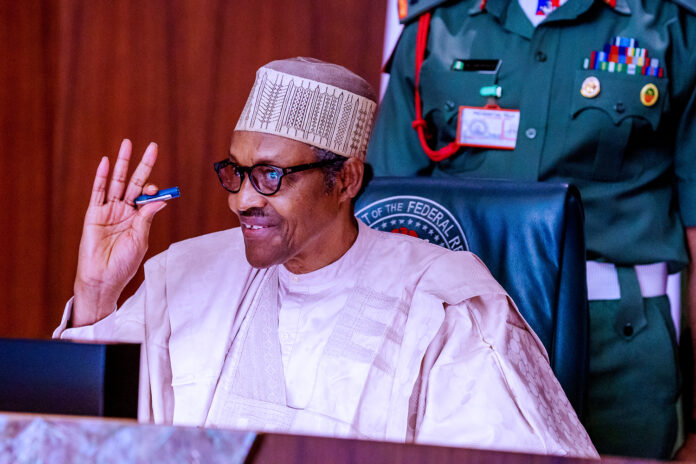
The late Buhari represented different things to many people. Some considered him a great leader with patriotic zeal. Some disagreed and rather saw him as one who elevated his narrow ethnic and religious interest above national considerations. He was however, largely believed to be highly disciplined, simple in his personae and did not enrich himself with state’s resources.
By Emeka Alex Duru
Sixteenth Century English playwright, poet and actor. William Shakespeare, was right in describing death as necessary end which will come when it will come. So, it visited former President Muhammadu Buhari, on Sunday, July 13, 2025.
It took a terse statement by Buhari’s erstwhile Media Adviser, Garba Shehu to confirm his passage. The release read;
“INNA LILLAHI WA INNA ILAIHIR RAJI’UN
The family of the former president has announced the passing on of the former president, Muhammadu Buhari, GCFR, this afternoon in a clinic in London. May Allah accept him in Aljannatul Firdaus, Amin”. Before the development, news reports had announced the hospitalization of the former President.
Since his exit, messages of condolence have been pouring in. Economic Community of West African States (ECOWAS) Chairman and Sierra Leone President, Julius Maada Bio lamented his death, describing it as a devastating loss.
“I am deeply saddened to hear about the passing of President Muhammadu Buhari, the former president of the Federal Republic of Nigeria. On behalf of the people of the Republic of Sierra Leone, I want to express our heartfelt condolences to his family, President Bola Ahmed Tinubu, and to the people of Nigeria during this incredibly difficult time”, he wrote.
The late Buhari represented different things to many people. Some considered him a great leader with patriotic zeal. Some disagreed and rather saw him as one who elevated his narrow ethnic and religious interest above national considerations. He was however, largely believed to be highly disciplined, simple in his personae and did not enrich himself with state’s resources.
The man, the contradictions
The jury is still out on whether the departed President lived by his proclamations. There was the impression that when it came to creating soundbites and stimulating patriotic sentiments, he had it but not the will to translate such to actions. The trend ran through in his first coming as military head of state (1984-1985) and civilian president (2015-2023).
READ ALSO:
UPDATED: Ex-President Buhari is dead
On May 29, 2015, at his inauguration at the Eagle Square in Abuja, Buhari got the attention of many Nigerians when he echoed the words of the French General and statesman Charles De Gaulle, “I belong to everyone and I belong to no one.” But his government was not believed to have kept to that promise. Many thought he elevated the Fulani ethnic group far and above other ethnic groups in the country. There were equally incidences of nepotism and favouritism in the political appointments he made.
His days as a soldier were not entirely different. Recall his appeal to Nigerians on January 1, 1984 when he and other military officers overthrew the civilian government of President Shehu Shagari. The National Party of Nigeria (NPN) – controlled Shagari government, at that time, had failed Nigerians in many respects. Apart from not delivering the axiomatic democracy dividends to the people, it had literally elevated corruption to the status of national philosophy.
It was in such despondent situation that the military guys struck and were hailed. Buhari who was made the head of state, admonished Nigerians, “This generation of Nigerians and indeed future generations have no other country than Nigeria. We shall remain here and salvage it together.” The plea touched the people and became for them, a mantra for patriotism and rebuilding the nation.
But few months into the administration, it became obvious that the head of state had no clear-cut programme and policies at fixing the country. He rather alienated himself from the people. The economy sunk deeper, inflation rose higher and basic food items, scarcer. The ill-advised currency change, which seemed targeted at some people, further put pressure on the system.
Buhari’s coming as a president in 2015 did not show any significant change. He ran on the agenda of fighting corruption, tackling insecurity and refloating the economy. On these three parameters, his administration failed woefully. With scandalous corruption perception index, parlous economy and pervasive insecurity, Nigeria under Buhari, was literally reduced to a laughing stock.
Security, insecurity at same time
Before the inauguration of Buhari administration in 2015, the nation had been at the receiving end of Boko Haram insurgency. While it embarked on its murderous onslaughts, the group severally launched a massive assault on the country’s corporate existence.
But with the coming of Buhari and the determination of the administration to engage the terrorists squarely, much gains were recorded. 14 councils in Borno State which had earlier been annexed by the Islamic sect, were regained by the Nigerian troops.
Incidentally, while the country enthused at the gains recorded in the North East, it blead profusely in the North Central. Between Sunday, June 24, 2018 and Tuesday, 26, for instance, the herdsmen had overrun three councils in Plateau State, leaving in their trail, blood and sorrow. The violence, which ran for three days, resulted to death toll variously put at between 135 and 200.
Elsewhere, the herdsmen had struck in Ukpabi-Nimbo community, Enugu State on Monday, April 25, 2016, leaving in their trail 50 persons dead and properties destroyed.
On Tuesday, April 24, 2018, the Fulani herdsmen took their wicked agenda to a Catholic Church in Benue State, murdering two Priests along with 15 of their parishioners in an early morning worship session. The Priests, Fr. Joseph Gor and Fr. Felix Tyolaha, along with their parishioners were killed in the course of the celebration of the Holy Mass. Earlier in the year, precisely, January 1, 2018, while the World ushered in the New Year, the marauders invaded five local government areas in the state, killing more than 70 people in one fell swoop.
2023 election and bungled legacy
Where perhaps Buhari failed Nigerians most was in failing to bequeath them a legacy of credible election that he had elaborately dramatized. The late President had promised free and fair elections with the passage of the 2022 Electoral Act and kept repeating so multiple times. At virtually every forum, he made it a duty to announce his resolve to bequeath to the country a legacy of transparent election and credible democracy.
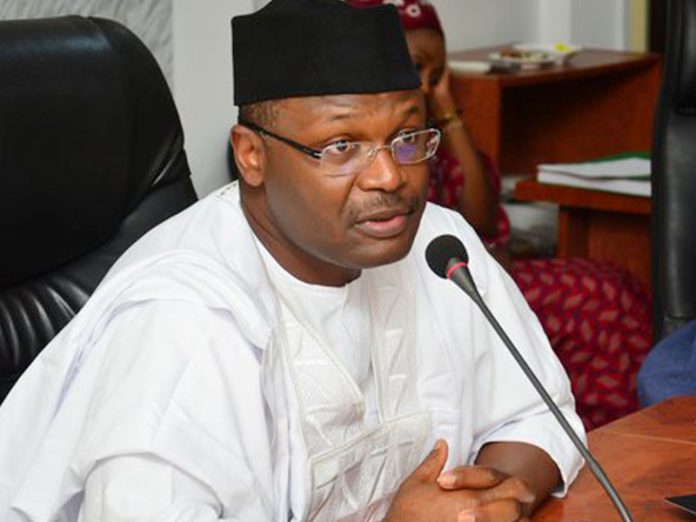
Following his step, the Chairman of the Independent National Electoral Commission (INEC) Prof Mahmood Yakubu pranced about, pledging free and fair elections. But with the charade that passed for the presidential election on Saturday, 25, 2023 it became glaring that neither Buhari, nor the INEC chair was prepared to keep to those promises.
All the pronouncements on deploying a fail-safe system anchored on electronic transmission of results and Bimodal Voters Accreditation System (BVAS) were broken. Many Nigerians who thronged out to vote could not do so because of BVAS failure and other infractions. Some that voted, alleged the results falsified.
The BVAS bait was one that many Nigerians fell for. It was carefully packaged and presented as one which would take care of obvious electoral glitches in the country. The impression of seriousness which Buhari expressed in emphasising his resolve to institute error-free election, also made the voters believe that the government was serious about the exercise. But from the processes and outcome, it was obvious that the citizens, who trusted on their leaders and were convinced by their avowals, were handed the wrong end of the stick. INEC seemed to have worked from an answer. That was what Buhari’s pledge of credible electoral process turned out to be.
The man, Muhammadu Buhari
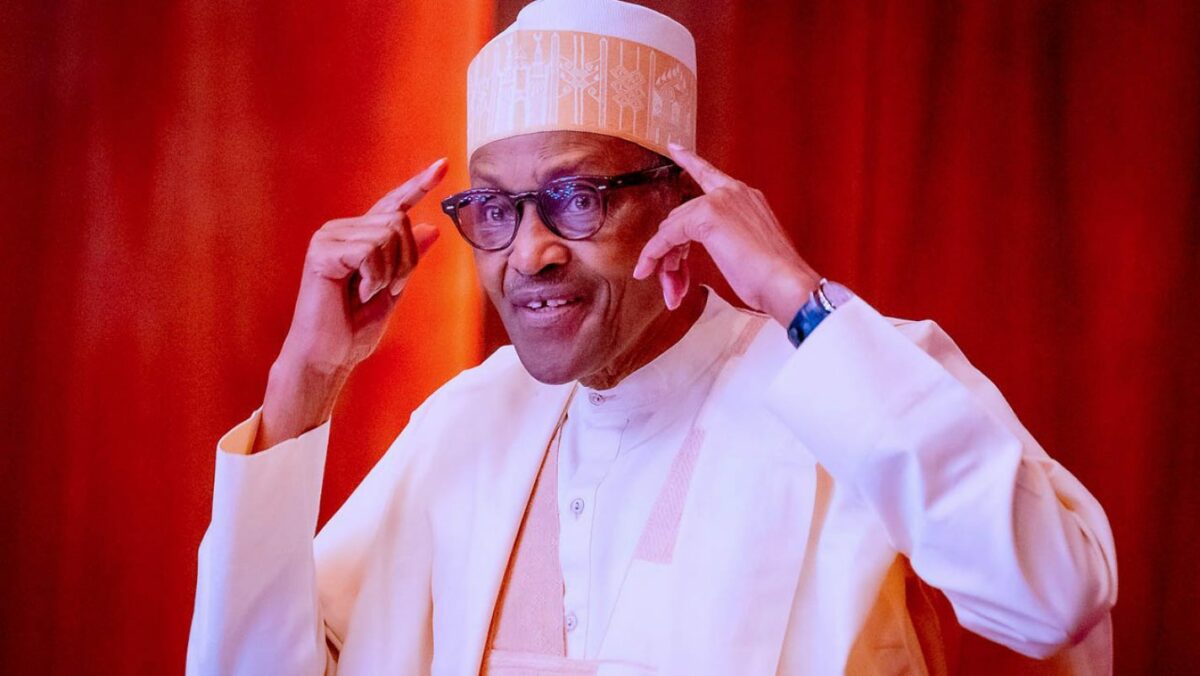
Buhari was born on December 17, 1942, in Daura, Katsina State. He was the twenty third child of Mallam Hardo Adamu, a Fula chieftain originally from Dumurkul in Mai’Adua and Zulaihat. He had his primary education in Daura and Mai’Adua, and graduated in 1953. He was admitted into Katsina Middle School (later renamed to Katsina Provincial Secondary School), where he had his secondary education from 1956 to 1961.
He later got admission into the Nigerian College of Arts, Science, and Technology in Zaria, which would take him many years to complete. In 1962, at the age of 19, Buhari was one of 70 boys selected for recruitment into the Nigerian Military Training College (NMTC). He graduated in January 1963, at the age of 20 and was commissioned a second lieutenant and appointed Platoon Commander of the Second Infantry Battalion in Abeokuta
Following the 1966 Nigerian coup d’état that killed the Premier of Northern Nigeria Ahmadu Bello, Buhari, alongside other officers from Northern Nigeria, took part in the July counter-coup which ousted General Aguiyi Ironsi, replacing him with General Yakubu Gowon.
Buhari later became one of the leaders of the military coup of December 1983 that overthrew the elected President Shehu Shagari, ending Nigeria’s Second Republic. In August 1985, the government of Buhari was removed in another coup headed by Major General Ibrahim Babangida.
After spending time in House arrest after the coup, Buhari was released. He was later appointed chairman of the Petroleum Trust Fund by the General Sani Abacha administration
In 1999, with the return of Democracy, Buhari joined partisan politics. He contested in every election since 2003 until he defeated an incumbent, President Goodluck Jonathan in 2015. His government was rated poor on the fight against corruption, a major plank upon which he was elected and the economy.
Remorse before passing on
The human in Buhari played out before his passage. At a point before his death, he asked for forgiveness from whoever he must have wronged. “Whoever thought that there has been some form of injustice on him we are all humans, there is no doubt I hurt some people, and I wish they would pardon me and those who think that I have hurt them, please pardon me”, he pleaded.


