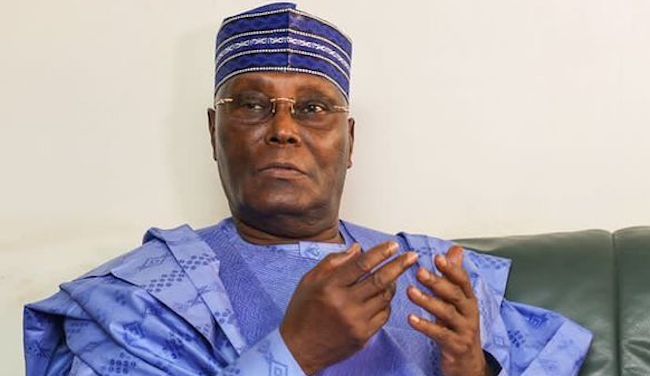
Atiku Abubakar: Atiku’s legacy is already etched into Nigeria’s democratic story. He helped shape the office of the vice presidency and has remained a central figure through multiple political transitions. But legacy is not built on endless attempts; it is often defined by knowing when the pursuit has reached its natural conclusion… The Waziri’s place in history is secure. He has remained one of the most recognisable political figures in Nigeria. But history is often kinder to those who understand timing, especially the timing of departure. Atiku Abubakar may still believe the presidency is within reach. The more pressing question is whether the country still believes it with him.
By Ogechi Okoro
For decades, Atiku Abubakar has stood like an iroko in Nigeria’s political forest – tall, visible, and impossible to ignore. His endurance is not in question. Few politicians have contested, recalibrated, and returned to the arena with the same consistency. In a country where relevance is fleeting, Atiku has made himself permanent. But even the tallest iroko does not stand forever.
Atiku’s years under Olusegun Obasanjo offered him the clearest path he would ever have to the presidency. That opportunity slipped, not quietly, but through a dramatic rupture that exposed the hard limits of power and loyalty within the Peoples Democratic Party (PDP). When Umaru Musa Yar’Adua emerged as the chosen successor, it was more than a political loss, it was a signal that Atiku’s moment, at least in that era, had passed. What followed has been a long season of pursuit.
From one election cycle to another, Atiku has remained on the ballot, carrying the weight of unfinished ambition. His movement across parties has been framed as strategy, but to many, it reads as restlessness, an insistence on relevance in a system that is steadily moving on. Each return raises the stakes, but each defeat also deepens the question: is this persistence, or is it political inertia?
READ ALSO: Faith under fire: Nigeria needs decisive action now
The cracks have not only come from electoral losses. Within his own ranks, resistance has grown louder. The confrontation with Nyesom Wike did more than create headlines, it exposed a diminishing ability to command consensus. Power, after all, is not just about contesting; it is about holding together the forces required to win. And this is where the metaphor becomes unavoidable.
The iroko still stands, but it is no longer unshakable. Time, opposition, and shifting political currents have done what no single opponent could, gradually eroding its dominance. What was once commanding now risks becoming familiar, and in politics, familiarity can quietly turn into fatigue. There is a difference between being a constant presence and being the inevitable choice.
Atiku’s legacy is already etched into Nigeria’s democratic story. He helped shape the office of the vice presidency and has remained a central figure through multiple political transitions. But legacy is not built on endless attempts; it is often defined by knowing when the pursuit has reached its natural conclusion.
Nigeria is changing. A new political generation is emerging, less attached to old alliances, more impatient with recycled ambitions. In this shifting landscape, Atiku’s continued bids risk appearing less like a final push and more like an echo of a past moment that refuses to fade. The iroko is still standing. But the forest has changed. And sometimes, history is not about how long one stands, but about recognising when it is time to step aside.
The Waziri’s place in history is secure. He helped define the modern vice presidency and has remained one of the most recognisable political figures in Nigeria. But history is often kinder to those who understand timing, especially the timing of departure.
Atiku Abubakar may still believe the presidency is within reach. The more pressing question is whether the country still believes it with him.
- Dr. Ogechi Okoro, a social commentator, writes from Hamilton, New Zealand.