Contemporary rock stars might suggest derisively that clergy have borrowed too liberally from their hitherto exclusive repertoire. Steps once consigned to concert stages have migrated, without restraints, into sanctuaries. Jumping cleavages, bouncing backsides, gyrating waistlines and fancy foot-works are no longer the exclusive features of discotheques, they have found a convenient space in the holy tabernacles
By Akpandem James
The church in Africa has continued to reinvent itself, especially the new generation entities of Pentecostal orientation. They are now gradually gravitating towards secular fantasies, seemingly moving away from ecclesiastical expectations. There was a time when the identification of a pastor in public required no second-guessing. A modest suit, a Bible under the arm, a magisterial gait and a diplomatic smile were the unmistakable traits. But today, one may be obliged to look twice, with wonderment: Is that figure a minister of the Gospel or a chart-topping celebrity? Is the day’s preacher arriving for a routine church service or has the evening’s Afro‑pop maestro arrived for an event? The lines are getting blurred and the demarcation is all but vanishing. Church service is tending more toward spectacle rather than quiet worship.
Increasingly, occasions convened within ecclesiastical environments bear a closer resemblance to award ceremonies than to solemn convocations of worship. Some church leaders now have special time-frames of arrival for routine service; often, after the junior pastors must have kickstarted the day’s session. Before the main man arrives, security detachments clear thoroughfares. And, then gliding luxury automobiles sandwiched by ostentatious convoys arrive with an air of protocol. Aides and functionaries move briskly around him. Cameras and smartphones flash repeatedly; the atmosphere brims with expectation. The entry is staged for maximum effect. And, it gets grander if the “Man of God” is for an advertised event, as a special guest.
The man approaches the venue the way movie stars approach the red carpet and enters the church hall just the way celebrity musicians mount the stage. Some feign humility which shouts louder than arrogance. Aides are positioned at various angles around the altar and remain there until the man returns to his seat after sermon. This is common with leaders of the new generation Pentecostal denominations, some of whom are addressed as Papa, Daddy or Father in the Lord. They arrive impeccably attired in designer garments. The congregation responds with clamour. Some surge forward for the customary photograph; others extend hands in search of the handshake or embrace. A few are seized by such emotion that one wonders whether the assembly is greeting a spiritual father or a Grammy laureate. In some cases, they walk on red rug, but even where none is provided, the spectacle is still fully manifest.
READ ALSO:
Pastor Adeboye urges govt to go after politicians, businessmen behind terrorism, kidnapping
This reinvention goes beyond the gleamy automobiles, designer outfits and swag movements, it gets more flamboyant during sessions of praise. There was a time when the tempo of worship determined the wave of action, when dance arose spontaneously, when the body responded naturally to an overflowing heart. Now, one is sometimes inclined to conclude that choreography has been misconstrued for a spiritual endowment. Rehearsed footwork, synchronised gestures, calculated spins and vigorous shuffles rival the seasoned execution of professional dancers or dancehall enthusiasts. They dance like afro-pop stars, like rock stars of old! They claim David danced that way and got an everlasting blessing from God.
Sure, David danced. But it is instructive that David did not dance for show. He did not dance for the camera. He did not dance to go viral. He did not dance for applause. He danced, propelled by the spirit of praise. He did not practice the dance steps before the event, it came during the event. It was the spirit and vibrancy of worship that moved David’s feet, not the rhythm of the drums, the symphony of the percussions and the applause of the audience. It was not for human admiration, neither was it for competition. It was for God. Today, it seems there is a competition of who is the best dancer among Pentecostal pastors, not just praise dance, but choreographed dance steps featuring shuffling, twisting and flinging that mimic the discotheque or a mad house.
Worshippers of the old order may observe these developments with some curious amusement. There was an epoch in which members of a particular fellowship within The Apostolic Church (TAC), known as “The Witnesses Fellowship” (Nka Ntie-nse), were associated with vigorous and fervent dancing. Their movements, though energetic, were generally perceived as spontaneous out-workings of intense devotion rather than contrived spectacles. The fervour spread and, in time, the practice became emblematic of TAC. Times have indeed changed. TAC has lost that monopoly, even if not in like manner.
Contemporary rock stars might suggest derisively that clergy have borrowed too liberally from their hitherto exclusive repertoire. Steps once consigned to concert stages have migrated, without restraints, into sanctuaries. Jumping cleavages, bouncing backsides, gyrating waistlines and fancy foot-works are no longer the exclusive features of discotheques, they have found a convenient space in the holy tabernacles. Not long ago, one of our distinguished brothers, when choked in contentious characterisation, had escaped on the wings of a phrase he dubbed ‘Cultist for Christ’. The suggestive dance forms in the sanctuaries today may well pass for “Twerking for Christ.”
Observers assume Nigerian pastors are importing foreign dance steps into the church, but that might not be entirely correct; except if the “foreign” relates to something outside the church, not outside the country. Strange will be more like it. The strangeness may reside less in origin than in purpose: certain movements are foreign to the spirit of worship irrespective of whether they hail from Uyo, KwaZulu-Natal, Dallas, Tehran or New Delhi. Not all that is foreign crosses national frontiers; frequently, it merely crosses the street, from nightclub to church.
It must be emphasised that dancing, on its own, is not the issue. It is often said that praise is to God what food is to the body, a salutary and cherished offering. God enjoys whole-hearted worship, with songs and dance. Both have always found centre-stage in worship. So, heartfelt thanksgiving need not be stoic and worship need not be gloomy to be sincere. The critical inquiry concerns motive. Scripture records instances where God’s people expressed joy by dancing. King David’s exultation at the return of the Ark is a clear example. David indeed danced with abandon. His disposition occasioned the rebuke of his wife, Michal, who thought such comportment was unbecoming of a king. In David’s case, the music accompanied his joy; music did not fabricate it. That distinction, though subtle to casual observation, is of profound import.
Posers: does the new wave of dancing by today’s church leaders depict the essence and glory of God or exhibition for men? Are certain manifestations of such praise directed heavenward or auditorium-ward. Are they acts of devotion or of performance? It is, however, mildly comical to note the seeming rivalry among some ministers over the superiority of their dance repertoires. Each major gathering seems to unveil new steps: intricate footwork, elaborate waist movement, followed by dramatic flourish that would gain the commendation of trained choreographers. The congregation responds with thunderous applause, and you are confused, wondering: has applause become incidental or what this is all about?
Though the church ought to be a place of jubilant expression, the issue here is not just of jubilation; it is: assuming every camera were switched off, every livestream disconnected and every applause withheld, would the dance still be with the same exertion and passion? The response might reveal whether choreographed dances are toward God or toward an audience. But God is not deceived. It is, however, a sign of the times. The increasing convergence of ministry, celebrity culture, branding and wealth display has become not just emblematic but epidemic.
It also throws up a media phenomenon: how television, social media, branding and the attention economy have reshaped perceptions of religious leadership and worship. Celebrity, not celebration, has become the prevailing spirit of our time. Politicians, athletes and showbiz impresarios all cultivate, flaunt and cuddle the phenomenon. Social media rewards it. It, perhaps, became inevitable that elements of the Church would be infected by the epidemic. It can thus be averred that celebrity culture has democratised vanity.
Then comes the admonition. In an age of branding, streaming and perpetual visibility, every sermon may be clipped and circulated, every purported miracle may be hash-tagged and every dance may become a trending spectacle. In such an environment, dispositions must be cultivated with purposeful resolve, to ensure that style does not eclipse substance. Ordinarily there is nothing wrong with excellence. Quality attire, comfortable automobiles and spirited worship, on their own, are not sinful. The issue arises when symbols obscure the message, because the Gospel was never intended to be reduced to stagecraft.
This intervention in no way diminishes the multifarious and noble contributions of many Pentecostal leaders. Their ministries have driven evangelism, education, healthcare and relief on a monumental scale. Hundreds of thousands have been transformed. A lot of pastors labour in obscurity, without convoys, security details or designer outfits, but they preach, pray and tend the afflicted with humility, commitment and sincerity. They attract little headlines precisely because celebrity gravitates toward spectacle rather than quiet service.
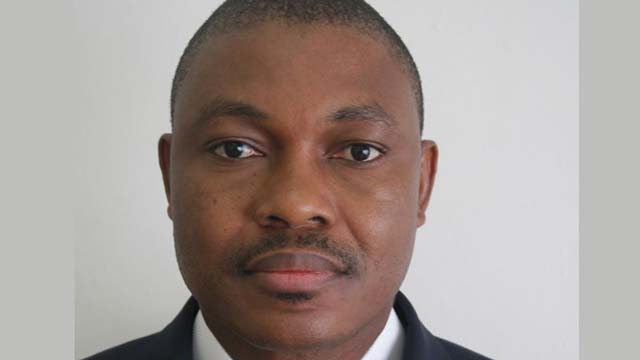
James, a member of the International Press Institute (IPI), lives in Abuja.