



Nigeria’s second colonisation: The elite capture of a nation
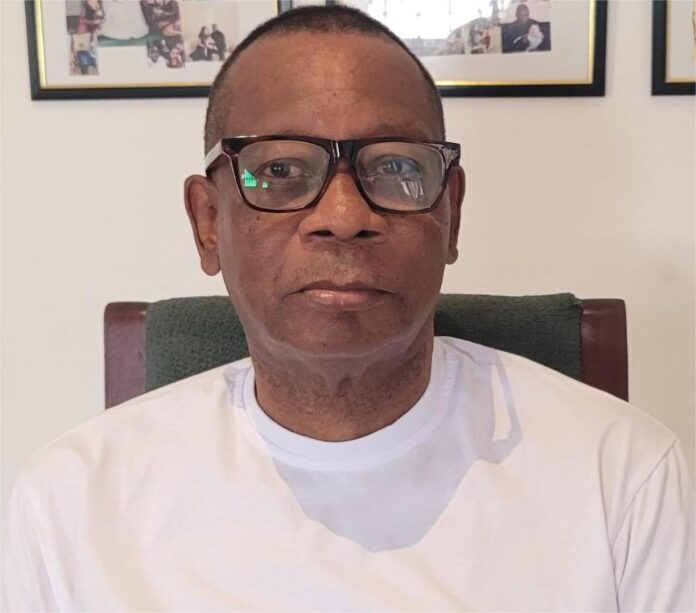
By Uche J. Udenka
The second colonization wears agbada but carries the same chains
Nigeria fought hard to end colonial rule in 1960. The promise of independence was simple yet profound: that Nigerians would finally control their own destiny, resources, and institutions. The colonial administrators who once dictated the nation’s political and economic direction would depart, leaving behind a sovereign people capable of governing themselves. Yet more than six decades later, many Nigerians are beginning to ask a troubling question: Did colonialism truly end, or did it merely change hands? What Nigeria faces today increasingly resembles a second colonization — not by foreign powers this time, but by a domestic elite class that has captured the state and its institutions. The instruments of power — politics, bureaucracy, security agencies, and economic resources — have been monopolized by a small circle of influential individuals who operate the country not as a republic serving citizens, but as a private estate serving their interests. The tragedy of this second colonization lies in its betrayal of the very ideals upon which independence was founded.
The rise of elite capture
In theory, democracy offers every citizen equal opportunity to participate in leadership based on competence, ideas, and public trust. In practice, Nigeria’s political structure has evolved into a closed system in which merit is increasingly irrelevant and favour is the dominant currency of advancement. Appointments into strategic institutions — from ministries and parastatals to regulatory bodies — often follow the logic of patronage rather than qualification. Loyalty to powerful individuals frequently outweighs professional competence. In such an environment, leadership is no longer a reflection of the nation’s brightest minds but rather a network of those who belong to the right political families, ethnic blocs, or patronage circles. The consequences are devastating. Institutions that should function as engines of national progress become tools of elite preservation. Policies are designed not to serve the public good but to reinforce existing power structures.
This is how a nation becomes quietly colonised from within.
When merit dies
Meritocracy is the lifeblood of any thriving society. Countries that progress do so because they harness the talents of their most capable citizens. Nigeria, however, has gradually drifted away from this principle. Brilliant young Nigerians graduate from universities every year with exceptional abilities and ambition. Yet they soon discover that hard work alone is insufficient. Without connections, endorsements, or political godfathers, the path to meaningful leadership or opportunity becomes nearly impossible. The result is widespread frustration and brain drain. Some of Nigeria’s most talented minds leave the country in search of societies where merit is rewarded. Others remain but retreat into private survival strategies, abandoning hope of influencing national development. Meanwhile, mediocrity thrives within the corridors of power. A nation cannot rise when competence is replaced by convenience.
The institutionalisation of patronage
Nigeria’s second colonisation is not merely a matter of individual corruption; it is a systemic structure that perpetuates itself through patronage networks. Political godfathers sponsor candidates, expecting loyalty and access to state resources in return. Once elected, those leaders distribute positions and contracts to loyal supporters, who in turn sustain the political machine. The system reproduces itself election after election, creating a cycle in which power circulates within the same elite circles. This patronage network resembles colonial administrative structures in a disturbing way. Under colonial rule, local chiefs and intermediaries were empowered to maintain control on behalf of foreign rulers. Today, similar intermediaries exist within Nigeria’s political order — individuals whose primary responsibility is not service to citizens but maintenance of elite dominance. Thus the modern Nigerian citizen often finds themselves in the same position as their ancestors under colonialism: governed by authorities whose accountability to the people is weak or nonexistent.
Democracy without representation
Nigeria proudly calls itself a democracy, yet the reality experienced by many citizens is far removed from democratic ideals. Elections often revolve around power struggles among established elites rather than genuine ideological competition. Campaign promises dissolve quickly once power is secured. Governance becomes an exercise in elite negotiation rather than national problem-solving. Infrastructure collapses, education struggles, healthcare remains inadequate, and unemployment rises — yet political elites continue to recycle themselves within government positions. In this context, democracy risks becoming a ritual rather than a reality. Ballots are cast, but power rarely changes hands in meaningful ways.
The social cost of elite colonisation
The damage inflicted by this internal colonisation extends far beyond politics. Economically, resources that should drive development are diverted into private enrichment. Nigeria possesses vast oil reserves, fertile land, and a vibrant entrepreneurial population, yet poverty remains widespread. Socially, inequality deepens as the gap between the ruling class and ordinary citizens widens. A small elite enjoys immense wealth and global lifestyles while millions struggle with basic necessities. Psychologically, citizens lose faith in the fairness of the system. When people believe that opportunity is determined by connections rather than capability, the motivation to contribute meaningfully to national progress erodes. A society that loses faith in justice gradually loses faith in itself.
Breaking the cycle
Nigeria’s future depends on dismantling the structures that enable elite domination. This will not happen overnight, nor will it be achieved solely through rhetorical appeals to patriotism. It requires deliberate structural reforms.
First, institutions must regain independence from political patronage. Regulatory agencies, judicial bodies, and public service institutions should operate according to clear professional standards rather than political loyalty.
Second, leadership recruitment must prioritise competence. Transparent processes for appointments and public service selection can restore trust in the system.
Third, citizens themselves must demand accountability. Civil society, media, and professional communities have a crucial role in challenging elite capture and advocating for governance reforms.
No nation liberates itself from internal domination without civic vigilance.
A nation at a crossroads
Nigeria stands at a historic crossroads. The country possesses immense human potential, cultural diversity, and economic resources capable of transforming it into a global powerhouse. Yet this potential remains constrained by the structures of elite control that limit opportunity and suppress merit. The first colonisation deprived Nigerians of political sovereignty. The second colonisation threatens to deprive them of national possibility. If Nigeria continues along this path, independence will remain symbolic rather than substantive. But if citizens reclaim their institutions and insist on merit-based leadership, the promise of independence can still be fulfilled.
True freedom is not simply the absence of foreign rulers. It is the presence of justice, fairness, and equal opportunity for all citizens.
Until Nigeria restores those principles, the struggle for independence remains unfinished.
Until merit returns to the centre of leadership, Nigeria’s independence will remain unfinished business.
- Arc. Uche J. Udenka, social and political analyst – #AfricaVisionAdvancementTrust – C.E.O. Igbo Renaissance Awakening, writes from Ghana.


