



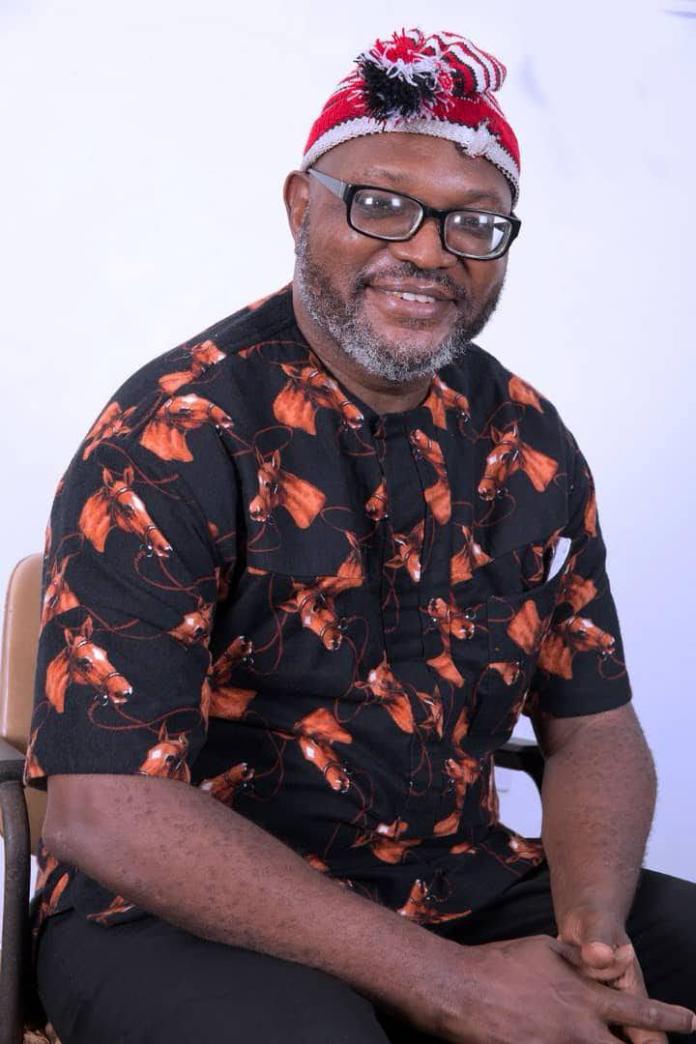
66 years after: An anthropological enquiry into the infrastructure of independence
By Kalu Onuma
“Nigeria is not a nation. It is a mere geographical expression.” — Obafemi Awolowo, Path to Nigerian Freedom, 1947
“We are grateful to the British officers… who have shown that they had the welfare of Nigeria truly at heart.” — Abubakar Tafawa Balewa, Independence Day Address, 1 October 1960
“The child who is not embraced by the village will burn it down to feel its warmth.” — African proverb
Very soon on October 1, they will start filling us with all sorts of garbage, telling us all sorts of lies and statistics and data, as if statistics and data transforms and translates into real development, real sense of belonging and real sense of independence. Of course, they will have their dinners, they would have all sorts of shows. There will be green, white, green everywhere. There will be talk shows, paid advertorials all over the newspapers, congratulations and all that. Yet, sitting down and reflecting about Nigeria 66 years down the road, I don’t feel any sense of all this enthusiasm that they are going to fill us up with. So I have rather taken a kind of seat and a long view back to where we’ve been, where we are, and where we sort of are going. And none of what I see gives me any sense of joy or happiness or even an ebullience. I don’t feel any of this. And I ask myself, is it that the architecture is wrong? Or is it that the foundation wasn’t gotten right? Or is it that something just isn’t it? Because I don’t feel independent. Not in Nigeria. I don’t feel independent. Not in the sense that one would have to say, I am proud of this country. A sense of pride lives in all of us, but that pride, none of our leaders have done enough to bring it out, to stoke it up, and to make us really exhibit that. Where are the things that join us together? Where are the things that make us one? Where are the really things that we can touch and say, this belongs to all of us? Everything is sectionalized, factionalized, broken down into small pockets of tribes and regions and ethnic affiliations. Nothing really is weaving all this into a wonderful tapestry. And that is the story of Nigeria, 66 years down the road.
In the swamp town of Oloibiri, in what is now Bayelsa State, there stands — or stood, the last anyone checked — a signboard rusted the colour of dried blood, bolted to a wellhead that has not produced a barrel of anything since the Beatles were still together. The inscription, where the weather has not yet eaten it entirely, reads: OLOIBIRI WELL 1, DRILLED JUNE 1956, 12,008 FEET. Twelve thousand and eight feet is a considerable depth to go looking for the thing that would either save or ruin a nation, and Shell D’Arcy — the company’s name itself a small comedy, a British firm wearing a French aristocrat’s surname the way a colonial officer wears a borrowed title — went down all twelve thousand and eight of them and found both. It found the oil that would make Nigeria, within two generations, the largest economy on the African continent by some measures and one of its most impoverished by every measure that matters to a person trying to feed a child. And it found, though nobody wrote this on the signboard, the exact shape of what independence would come to mean for the people who happened to be standing on top of the good fortune: not sovereignty, but proximity. Not command of the wealth, but a ringside seat to its departure. Oloibiri gave Nigeria its first well four years before Nigeria gave itself, or was given, or was allowed to receive, whichever verb one finds least offensive, its independence. By the time the flag went up over the Race Course in Lagos in October of 1960, the extraction had already begun; the country was drilling its own future out from under itself before it had finished writing the paperwork for statehood. There is no better opening image for what follows, because Oloibiri today is not merely poor — plain poverty has its own dignity, the dignity of subsistence, of having never been promised anything else — Oloibiri is bereft, which is a different and crueler condition, the condition of having been rich once, in front of witnesses, on the record, and having nothing to show for it but a signboard nobody has bothered to repaint. That is the scaffolding I mean to inquire into here: not roads and bridges, though we shall come to those, and not constitutions, though we shall come to those too, but the deeper architecture of expectation and betrayal on which the whole edifice was built, sixty-six years ago, by men in good suits who believed, or said they believed, or were paid to say they believed, that a flag lowered and another raised amounted to the transfer of a nation’s fate into its own hands.
Let me put the question the way it deserves to be put, without the varnish that anniversaries usually require of those charged with speaking at them. Are we independent? It is worth noting, before we go one sentence further, that the question is not rhetorical in the way such questions are usually rhetorical — asked so that the asker may supply his own comforting answer and move briskly to the refreshments. I am asking it the way a physician asks whether a wound has actually closed beneath the bandage, or whether it has merely stopped bleeding on the surface while something goes on festering underneath, invisible, patient, waiting. Independent from what. From whom. These are not synonyms, though the anniversary speeches tend to use them as though they were. From what: this points to a condition — poverty, foreign domination, the specific humiliations of being administered rather than governed. From whom: this points to a person, an agent, someone who can be named and, in principle, held to account. Nigeria’s difficulty across six and a half decades has been that it answered the first question in 1960 — we are no longer, formally, a colony of the United Kingdom — while leaving the second question radically, almost wilfully, unresolved, so that the “from whom” simply changed personnel without changing structure. The British left, or rather the British were asked to leave a stage they had already begun dismantling for their own reasons, chief among them that direct colonial administration had become, after the Second World War, more expensive in treasure and more embarrassing in conscience than indirect extraction through nominally sovereign proxies. And into the vacancy stepped men who had, in most cases, been groomed by the departing power for precisely this succession, educated in its schools, promoted through its civil service, flattered at its garden parties, and who took up the reins of the coach without pausing to ask whether the coach itself — its axles, its wheels, the very road it ran on — had been built for the benefit of the passengers or for the benefit of wherever the coach had originally been going. It is one of the great unexamined jokes of African history, funny and serious in exactly the same measure, that the constitution under which Nigeria became independent in 1960 — the Lyttleton Constitution, named for Oliver Lyttelton, 1st Viscount Chandos, a British colonial secretary and Old Etonian and Oxford man to his fingertips — was not drafted by a constituent assembly of Nigerians at all. It emerged from conferences in London and Lagos that were, in the technical vocabulary of the time, advisory. Nigerians were consulted the way a tailor consults a client about the colour of the lining while retaining full discretion over the cut of the coat. We did not write our own founding document. We received it, the way one receives a parcel, signed for it, and were told it fit.
Before we arrive at the question of independence, it is worth pausing on the rather more basic and rather more embarrassing question of the name itself, because a people who did not choose their own name are already, in the most literal sense available to language, starting the conversation about sovereignty from a position of some disadvantage. “Nigeria” was coined not by any of the hundreds of nations and city-states and caliphates and kingdoms that occupied the territory before 1914, but by Flora Shaw, a British journalist writing for The Times of London in an 1897 article, who needed a tidy word for the Royal Niger Company’s sprawling concession along the river whose name it borrowed, and who would some years later marry Frederick Lugard, the very administrator who would go on to stitch the Northern and Southern Protectorates together in 1914 into the entity that would eventually bear the name his future wife had coined. This is not merely a charming piece of trivia to be recited at pub quizzes; it is the founding metaphor for everything that follows, because the Amalgamation of 1914 — the single administrative act that made “Nigeria” a geographic and political fact rather than a journalist’s coinage — was undertaken for reasons that had nothing to do with the wishes, or even the awareness, of the peoples being amalgamated. The Northern Protectorate ran a chronic deficit; the Southern Protectorate ran a healthy surplus from customs duties on palm oil and other coastal trade; Lugard’s brief, in the driest and most consequential sentence in the whole of Nigerian history, was to use the South’s solvency to subsidise the North’s shortfall, a bookkeeping convenience elevated, by the stroke of a colonial pen, into a nation. Lugard himself would later describe the union, with the candour that colonial administrators reserved for their private correspondence rather than their public despatches, as a matter of administrative and financial convenience rather than any belief in a natural affinity between the peoples concerned. Nigeria, in other words, was invented before it was imagined, assembled before it was asked, and given a name coined by a woman who never had to live inside the thing she named. Every subsequent argument about restructuring, about resource control, about whether the country as presently constituted is even the right shape for the aspirations it contains, is in some sense still relitigating the arithmetic Lugard did in 1914 on behalf of a treasury in London that no longer exists.
I want to dwell on the ceremony of transfer itself, because ceremonies reveal what speeches conceal. On the first of October 1960, at the Race Course in Lagos — a patch of ground whose very name tells you what the British had used it for, betting on horses, and which would later be renamed Tafawa Balewa Square, an irony we will return to shortly and which deserves its own paragraph of mourning — the Union Jack came down and the green-white-green went up, and Sir James Robertson, the last colonial governor-general, stood on the dais, and beside him stood Princess Alexandra of Kent, a young cousin of the Queen, sent to represent Her Majesty because Her Majesty herself found it, in the delicate phrase of the court, inconvenient to attend. Consider what that single fact tells you about the transaction taking place. A nation of some forty-five million souls at the time — souls who had fought two world wars under that same flag, who had grown the cocoa and mined the tin and drilled at Oloibiri, who had, in the Aba Women’s War of 1929, mounted one of the most sophisticated mass mobilisations against colonial taxation and the warrant-chief system anywhere in the British Empire, thousands of women without a single Western degree between them organising through the Igbo institution of “sitting on a man,” converging on district offices across two provinces, forcing the colonial administration to abandon its plan to tax women’s property, an uprising so effective that the British literally could not comprehend it and filed reports insisting it must have been orchestrated by hidden male agitators, because the imagination of empire could not accommodate the idea of women organising a rebellion on their own initiative — a nation with that history was handed its freedom charter not by the sovereign whose name had justified a century of administration, but by a young woman standing in for her, a proxy’s proxy, a substitute teacher handing out diplomas on the last day of term while the headmistress took the day off. I do not say this to diminish Princess Alexandra, who did nothing wrong and behaved, by all accounts, with grace. I say it because the substitution tells you something the speeches that day did not say and could not have said: that from the very moment of transfer, Nigeria’s independence was being handled as a matter of administrative housekeeping rather than a historic reckoning between two peoples. One does not send a substitute to the reckoning that matters. One sends her to the ones that do not.
And Tafawa Balewa, standing at that podium — a man of real dignity, whatever else history will say of the coalition he led and the North-South arithmetic that put him there — thanked the departing British officers for their service with what reads, sixty-six years later, as heartbreaking sincerity, praising men who had, a mere three decades earlier, been suppressing the Aba women with rifle fire that killed some fifty-five of them at Opobo alone, whose administrative fathers had, in September of 1887, marched aboard a Royal Navy vessel and abducted King Jaja of Opobo — a man who had begun life enslaved and risen, through sheer commercial genius, to become the ruler of one of the wealthiest trading states on the Oil Rivers, a self-made king in the fullest sense the phrase allows — abducted him at gunpoint under a flag of parley he had trusted, and shipped him to the West Indies for the crime of insisting that Opobo’s palm-oil trade be conducted on Opobo’s terms rather than Liverpool’s. Jaja died in exile in 1891, on his way home, having been permitted to return only after his usefulness as a cautionary tale had been exhausted. His story is not taught with anything like the reverence Nigerians reserve for the four gentlemen in Western suits generally credited with “winning” independence — Azikiwe, Awolowo, Balewa, and Bello — and this asymmetry of memory is itself a kind of infrastructure, invisible but load-bearing: a nation’s sense of who its heroes were determines what it believes heroism costs, and a country that remembers only the men who negotiated politely at Lancaster House will draw very different conclusions about what independence required than a country that also remembers the king who was kidnapped for refusing to negotiate at all, or the Oba Ovonramwen Nogbaisi of Benin, whose kingdom’s resistance to British “free trade” ended in 1897 with the Benin Punitive Expedition, his city burned, his court’s extraordinary bronzes — among the most sophisticated metalwork produced anywhere on earth before the industrial age — looted wholesale and scattered into European museums, several thousand pieces of which sit in glass cases in Bloomsbury to this day, sixty-six years after “independence,” under a British Museum Act that its own trustees cite as a legal obstacle to returning what was never legitimately theirs to keep. This is not ancient history requiring a séance to access. It is a live grievance with a postal address. Sovereignty that cannot compel the return of its own looted patrimony is sovereignty of a peculiarly limited and, I would argue, largely ornamental variety — a flag without a treasury, a passport without a country behind it in the sense that matters when the country goes asking for what is its own.
I labour these older stories — Jaja, Ovonramwen, the Aba women, the ninety-nine-year dream the Horniman Museum’s own curators concede independence represented, since the Royal Niger Company’s original charter had been calculated to run that long — because the anniversary literature tends to begin the clock at 1960, as though Nigeria’s relationship with the question of freedom started fresh on that October morning, unencumbered baggage, a clean page. It did not. It could not. A country does not get to choose its own starting gun. And what strikes me, turning the pages of this pre-history, is how much more literate the resistance was, in the deepest sense of that word, than anything the postcolonial state has managed since. Peter Nwana, an Igbo schoolteacher, published in 1937 a novel called Omenuko — the first novel written in the Igbo language, appearing a full generation before Chinua Achebe would make African fiction a matter of international record with Things Fall Apart. Nwana is barely remembered outside a small circle of literary historians; his book is not taught in most Nigerian secondary schools; his name does not appear on a single naira note. I want to suggest, without straining the point past what it can bear, that the forgetting of Peter Nwana and the impoverishment of Oloibiri are not unrelated phenomena. Both are casualties of the same institutional amnesia, a state that has never quite decided whether it exists to remember its own people or merely to administer them, and has, across six and a half decades, consistently chosen administration over memory whenever the two have come into conflict, which is to say almost always.
Let us return, then, briefly and with the appropriate wince, to Tafawa Balewa Square, the renamed Race Course, because it is one of history’s more efficient ironies and deserves to be treated as such rather than smoothed over in the manner of official plaques. On 15 January 1966, a group of young majors — Kaduna Nzeogwu chief among them, idealistic in the specific and dangerous way that young officers convinced of their own righteousness are idealistic — struck in a coup that killed, among others, the Sardauna of Sokoto, Ahmadu Bello, and the Premier of the Western Region, and very nearly succeeded in installing a different order entirely before it collapsed into the hands of General Aguiyi-Ironsi. Tafawa Balewa himself, the man who had thanked the British so warmly on the Race Course six years earlier, was abducted from his residence, driven out of Lagos, and murdered by the roadside, his body left in the bush and not recovered for days. The square that bears his name today, where schoolchildren are marched each first of October to sing the anthem and watch the flag go up, sits a few hundred metres from where his life ended at the hands of his own countrymen, in uniforms his own government had paid for, wielding rifles his own defence budget had purchased. There is no more precise monument to the distance between the ceremony of independence and its substance than this: a square renamed for a murdered prime minister, where the murder itself goes conspicuously unmentioned in the plaque’s copy, because a nation that has not resolved what it thinks about its own coups cannot very well erect a monument that tells the truth about them.
And the coups did not stop at one. Twenty-nine of Nigeria’s sixty-six years — very nearly half its independent life — have been spent under direct military rule, men with guns rather than men with mandates, a fact so bluntly stated in the anniversary trivia columns that its horror has been sanded down by repetition into a mere statistic, the way “six million” can be recited by a bored schoolchild without the number detonating in the mind the way it ought to. Twenty-nine years. Consider what that means practically: an entire generation of Nigerians born, educated, married, employed, and buried without once having cast a meaningful vote for the persons who taxed them, conscripted their sons, devalued their currency, and awarded oil blocs to their brothers-in-law. There is Murtala Mohammed, assassinated in 1976 after barely two hundred days in office, killed in a coup attempt whose leader, Bukar Suka Dimka, made his announcement over the radio in tones so casual — instructing citizens to remain calm while soldiers took over the studio behind him — that the broadcast has since become a kind of dark national folk memory, replayed at anniversaries with the peculiar reverence Nigerians reserve for their traumas, as though repetition might eventually drain them of their sting, which it never quite does. There is the Civil War itself, 1967 to 1970, the Biafran secession under Odumegwu Ojukwu, somewhere between one and three million dead depending on whose estimate one trusts and how generously one counts starvation among the causes of death, a famine so severe and so photogenic in its cruelty — the kwashiorkor bellies of Biafran children became, unfairly and unforgettably, the visual shorthand by which much of the world first learned that African children could starve on camera and move a Western conscience — that it produced one of the great cynical slogans of the era, “no victor, no vanquished,” issued by General Gowon at the war’s end in a spirit that was, depending on one’s vantage point, either genuine statesmanship or the most successful piece of face-saving propaganda in the country’s history, since a war that killed a million people and specifically targeted, through federal policy and popular pogrom alike, an ethnic nation’s economic base — the seizure of Igbo bank accounts under the notorious postwar policy that converted any deposit, regardless of its prewar size, to a flat twenty pounds, a policy still remembered in Igbo households with the same precision that Jewish families remember the Nuremberg Laws — such a war does not, in any honest accounting, end without a victor and a vanquished. It ends with one side calling itself neither, out of the same instinct that makes a burglar, caught leaving with the silver, insist that nothing unusual has happened here.
The women who had marched against the warrant chiefs in 1929 did not disappear from this story merely because the uniforms in charge of it changed; they kept surfacing, generation after generation, in the path of whatever violence the state was currently dispensing, and one name in particular belongs here, sandwiched as it is between the coups and the war, because it draws a straight and largely unremarked line from Aba to the years of the men with guns. Funmilayo Ransome-Kuti — teacher, suffragist, the first woman in the country to drive a car, an organiser who had led her own tax protests among the market women of Abeokuta in the 1940s in direct descent from the Aba tradition — was, by February 1977, in her seventies, and the mother of a musician who had spent the decade turning the studio and the stage into the only opposition party the military dictatorship could not simply proscribe. Fela Anikulapo-Kuti had built, on a compound he called the Kalakuta Republic and declared independent of the Nigerian state in spirit if not in law, a new kind of music that fused highlife and jazz and street pidgin into something that could say, over a groove nobody could resist dancing to, what the front pages did not dare — that soldiers who took orders without question were, in the mocking conceit of his 1976 record Zombie, no better than the walking dead, obeying without asking why. The army did not find this funny. On the eighteenth of February 1977, some thousand soldiers stormed the Kalakuta Republic, beat its residents, burned it to the ground, and threw Funmilayo Ransome-Kuti, in her seventy-eighth year, from a second-storey window; she never recovered from her injuries and died the following year, a grandmother of the independence generation killed by the same uniformed state her own generation of market women had once forced into retreat. Fela carried her coffin, quite literally, to the gates of Dodan Barracks in Lagos and laid it at the doorstep of the head of state, and released, the same year, the album whose title alone told you everything the newspapers were too frightened to print: Sorrow Tears and Blood, sung in the pidgin the ordinary man in the go-slow actually spoke rather than the English the state preferred to be interrogated in. Fifty years on, that same pidgin — inventive, elastic, contemptuous of euphemism — remains the register in which Nigerians say the truest things about their own condition, on the radio, in the market, in the comment section, because it was forged, in no small part, in exactly this kind of grief.
It is worth pausing, too, on the peculiar material culture the war produced, because a people fighting for the right to exist as a nation will, if given even a few months, attempt to manufacture the paraphernalia of nationhood out of whatever is at hand, and Biafra’s attempt remains one of the most poignant such efforts on record. The secessionist republic, blockaded by sea, air, and land, nonetheless found the means to design and print its own postage stamps — vivid, almost defiantly cheerful images of Biafran soldiers, of the rising sun emblem, of maps of the young republic, printed in Lisbon and Zurich by sympathetic or mercenary printing houses and smuggled back through the same night flights that carried in the relief agencies’ stockfish and powdered milk — and its own currency, the Biafran pound, printed initially in Portugal and later, extraordinarily, on presses improvised inside the shrinking territory itself as the noose tightened and foreign printers grew reluctant to deal with a state whose survival looked increasingly unlikely. A stamp is a small thing, a currency note smaller still, but a people who insist on printing their own money and their own postage while starving under blockade are making an argument about sovereignty more eloquent than any communiqué, an argument written in ink and paper rather than in the diplomatic language both sides preferred for their public statements: that a nation is, at the most basic level, a group of people who agree among themselves what the paper in their pockets is worth, and Biafra, for its brief and catastrophic existence, insisted on making that argument even as the wider world declined to recognise it. The Biafran pound today is a collector’s curiosity, traded among numismatists for sums that would have fed a starving child in 1969 for a month; the stamps are pinned under glass in philatelic exhibitions. Both survive their republic, which did not survive itself, and both remain, sixty years later, more honestly designed and more carefully considered than a great many of the naira notes the Central Bank of Nigeria has issued since in the name of the country that won.
I raise the war and the coups not to relitigate them — other writers, and better historians than I, have done that work — but to make a structural point about what “independence” has actually meant, operationally, for the ordinary Nigerian across these decades, as distinct from what it has meant in the rhetoric of anniversary broadcasts. For most of the years since 1960, the average Nigerian’s relationship to the state has been one of subjection rather than citizenship: subject to currency devaluations decided in rooms he was never in; subject to fuel subsidy removals announced at midnight so that the fury they provoke has less daylight to organise itself; subject to the whims of state governors who treat federal allocations the way a colonial district officer once treated a warrant chief’s stipend, as a personal honorarium rather than a public trust; subject, in the starkest cases, to being shot by the very security forces whose salaries his taxes fund, as at Lekki Tollgate on the twentieth of October 2020, when soldiers opened fire on young Nigerians protesting police brutality under the SARS unit — a generation that had organised itself, tellingly, not around a party manifesto but around a two-word Yoruba phrase, soro soke, speak up, that spread from Twitter timelines to hand-painted placards to the name an entire cohort of Nigerians would afterward be known by, the Soro Soke generation, still speaking up years later into a state that has spent the time since alternately denying the shooting occurred, minimising it in scale, and prosecuting the survivors of it rather than the shooters. A citizen, in the fullest sense the word deserves, is one who can, through some actual mechanism, hold the state to account for what it does to him. A subject is one who cannot, and must instead hope, pray, emigrate, or endure. By this measure — the only measure that actually matters to the 250 million human beings the question in front of us invokes, rather than to the historians who will write the retrospectives — Nigeria’s independent years divide unevenly between decades of naked subjection under uniformed rule and decades of a subtler, more decorated subjection under civilian rule, in which the forms of democracy are scrupulously observed — the elections held, the tribunals convened, the inaugurations photographed — while the substance of accountability remains as elusive as it ever was under a military decree, because the same small class of men who moved from regional premierships to federal ministries to military juntas to civilian “godfather” networks has simply worn each era’s appropriate costume without once relinquishing the underlying wardrobe of power.
This is where the anthropological framing of the title earns its keep, because an anthropologist studying “the infrastructure of independence” does not confine herself to bridges and broadband. She asks what a society actually believes about power, and she reads that belief off the artefacts the society builds to house it: its palaces and its potholes, its private jets and its public hospitals, the ratio between the two telling her more than any budget speech. And what the infrastructure of Nigeria says, read this way, six and a half decades on, is a story of scale rather than of category — the same essential relationship between the governing and the governed that obtained under the Colonial Office, merely swollen to accommodate 250 million people instead of forty-five million, and dressed, since 1999, in the language of democracy rather than the language of empire. The colonial administrator built himself a residency with a view and left the native quarter to its own devices, connected by a single unpaved road that flooded every rainy season; the contemporary Nigerian governor builds himself a mansion with a helipad and leaves the local government area to its own devices, connected by a single unpaved road that floods every rainy season, and the flood, it must be said in fairness, does not discriminate by administration; it simply keeps arriving, decade after decade, on schedule, the one truly reliable institution the country possesses. I do not offer this comparison to excuse the colonial period, which requires no excusing from me and deserves none, but to insist on a harder truth than the anniversary speeches are generally built to carry: that flags are cheaper than institutions, that a green-white-green banner raised over a Race Course changes the emotional temperature of a nation far more quickly and far more completely than it changes the actual distribution of a nation’s resources, and that Nigeria’s founding generation — men of real intellect and, in several cases, real patriotism, Awolowo not least among them, whose Western Region built the first free primary education scheme and the first television station on the African continent, an achievement that deserves every ounce of the credit it is given — nonetheless inherited a state apparatus designed from its foundations for extraction rather than for welfare, and largely kept using it for the purpose it was built for, merely redirecting the extraction from London to Lagos, from Whitehall to the state houses, from the Colonial Office to what an unkind observer, and I am prepared on this occasion to be unkind, might call the Nigerian Office, an institution with no fixed address because it exists in every governor’s lodge and federal ministry simultaneously, a distributed system of extraction that has proven, across the decades, considerably more resilient than any single colonial governor ever was, because one cannot dislodge with a nationalist movement a thing that has learned to speak the nationalist movement’s own language back to it, fluently, at every inauguration.
It is a matter of historical record, and one the anniversary calendar prefers not to dwell on, that the British themselves knew, before they ever lowered their own flag, that the arrangement they were bequeathing carried the seeds of exactly the fractures that would later produce Biafra, the Niger Delta insurgency, and the perennial argument over restructuring that dominates Nigerian political discourse to this day. In 1957 and 1958, in response to anxious petitions from ethnic minorities in each of the three regions who feared, correctly as it turned out, that independence would simply hand them from a distant colonial master to a nearer and less accountable regional one, London appointed a commission under Sir Henry Willink to investigate those fears and recommend safeguards. The Willink Commission’s report, delivered in 1958, is a genuinely remarkable document to read today, because it confirms, in the dry and unimpeachable language of a colonial inquiry rather than the heated language of a nationalist pamphlet, that the minority fears were real, that the federation as designed gave the majority ethnic group in each region an instrument with which to dominate the minorities trapped inside its boundaries, and that some structural remedy — the Commission considered and ultimately declined to recommend the creation of additional states — would be needed if the new nation were to hold together on voluntary terms rather than on the terms of whichever regional bloc happened to command the most seats. The recommendation that was implemented instead was a modest one, a Niger Delta Development Board with limited powers and limited funding, palliative rather than structural, a plaster applied to a wound the Commission’s own report had diagnosed as requiring surgery. Nigeria proceeded to independence eighteen months later on the original three-region structure anyway, the minority anxieties formally noted, formally sympathised with, and substantially unaddressed, and every subsequent decade has been, in one register or another, a continuation of the argument the Willink Commission catalogued and then declined to resolve: the state creation exercises of 1967, 1976, 1987, 1991, and 1996 that eventually multiplied the original three regions into thirty-six states, each carve-out a partial and grudging concession to a grievance first documented in writing before the flag had even changed; the Niger Delta militancy of the 2000s, which took up arms over precisely the resource-control question the Commission had flagged and the Development Board had failed to resolve; the restructuring conferences and constitutional conferences that Nigerian civil society continues, six and a half decades on, to convene and reconvene, still working, essentially, from the same brief Sir Henry Willink was handed in 1957 and never fully discharged. A nation whose most fundamental structural argument was identified, accurately, before its founding ceremony, and has still not been resolved sixty-six anniversaries later, is not a nation that lacks for diagnosis. It is a nation that has consistently preferred the diagnosis to the cure, because the cure would require someone currently holding power to relinquish some portion of it, and no commission, however eminent, has yet found the formula for making that relinquishment attractive to the people who would have to perform it.
And if one requires a still more literal illustration of how porous Nigerian sovereignty has remained even in matters of simple geography, there is the strange and largely unmourned case of the Bakassi Peninsula, a slender, oil-rich, mangrove-choked strip of land in the Gulf of Guinea that Nigeria administered, populated overwhelmingly by Nigerians, garrisoned with Nigerian troops, and regarded, for the better part of a century, as unambiguously its own — until the International Court of Justice at The Hague ruled in 2002, on the strength of a 1913 Anglo-German treaty signed between colonial powers who had never troubled to ask the peninsula’s fishing communities their opinion on the matter, that Bakassi belonged instead to Cameroon. In 2006, in a ceremony conducted with a diplomatic tidiness that stood in obscene contrast to the human upheaval it caused, the Nigerian flag came down over Bakassi and the Cameroonian flag went up, and tens of thousands of Nigerian citizens — fishermen, traders, schoolchildren, people who had never lived under any other flag — discovered that their nationality had been redrawn overnight by a court in the Netherlands interpreting the fine print of a document their own great-grandparents had had no hand in negotiating, exiled from the only home they had known into a Nigeria that had few resettlement camps ready and fewer answers for them. It is a sobering thing to realise that a full ninety-two years after the Amalgamation, and forty-six years after independence, Nigeria’s actual physical boundaries could still be redrawn on the authority of a colonial-era treaty between two European powers, with the Nigerian state’s own recourse limited to a dignified compliance rather than a defiant assertion of the sovereignty its founding generation had supposedly secured. Sovereignty that can be recalculated by reference to paperwork drawn up in Berlin in 1913, over the heads of the people actually living on the land in question, is sovereignty of the same ornamental variety I have already diagnosed in the matter of the Benin bronzes: real enough to be photographed at a flag-lowering ceremony, insufficiently real to prevent the ceremony from being necessary in the first place.
The same colonial habit of governing through convenient fictions rather than through the peoples actually on the ground produced, closer to home and with consequences that have never stopped compounding, the institution of the warrant chief, and it matters to understand this history because so much of what passes today for “traditional leadership” in Nigeria’s godfather politics is its direct, if largely unacknowledged, descendant. Lugard’s system of indirect rule worked admirably, on its own colonial terms, in the pre-existing emirates of the North, where a settled hierarchy of obas and emirs already possessed the authority the British wished to rule through; it worked considerably less well in the largely acephalous, republican societies of the Igbo-speaking South-East, which had never organised themselves around monarchs at all, preferring instead councils of elders, age-grade associations, and the diffuse, negotiated authority of the kind the Aba women would later draw on so effectively. Rather than adapt the administrative model to the society it was governing, the colonial administration simply invented chiefs where none had traditionally existed, appointing “warrant chiefs” — often men chosen for their pliability rather than any inherited legitimacy, handed a warrant, a staff of office, and the power to levy taxes and adjudicate disputes on the colonial administration’s behalf — over communities that had never recognised individual rule in that form and deeply resented having it imposed on them by fiat. It was, not incidentally, colonial resentment of the warrant chief system and its abuses of the tax power that helped ignite the Aba Women’s War in the first place. And the pattern the warrant chiefs established — local authority manufactured from above, loyal to the power that appointed it rather than to the people it nominally represented, deriving its legitimacy from its usefulness to a distant centre rather than from any organic mandate — is recognisable, with only the costume changed, in the godfather system I have already named: the state governor who anoints a chairman, the party chieftain who manufactures a senator, the traditional ruler’s staff of office that a state government can now, in several jurisdictions, revoke or bestow according to political convenience rather than customary law. We did not entirely leave the warrant chief behind in 1960. We promoted a great many of his descendants to Government House.
Nowhere is the gap between the ceremony of democracy and its substance more starkly illustrated than in the events of June and July of 1993, which deserve far more attention from the anniversary calendar than they generally receive, perhaps because they indict the uniformed and the civilian classes in equal measure and neither has much appetite for a monument that implicates itself. On the twelfth of June 1993, Nigerians went to the polls in what independent observers, foreign and domestic alike, would describe as the freest and fairest election the country had yet conducted, an election that cut cleanly across the ethnic and religious lines that Nigerian politics is forever told cannot be crossed, delivering a decisive victory to Chief Moshood Kashimawo Olawale Abiola, a Yoruba Muslim businessman from the West who had somehow, remarkably, carried the Muslim North as comfortably as he carried his own region, a coalition of the kind Nigerian democracy is theoretically designed to produce and almost never does. General Ibrahim Babangida, the military president who had himself designed the transition programme under which the election was held, annulled it before the results could be formally declared, offering explanations that shifted and dissolved under scrutiny in the manner such explanations always do, and Abiola, who had won the presidency of his own country in the most legitimate election it had held since independence, spent the years that followed first in hiding, then in open defiance, then in the Abacha regime’s detention, where he died in 1998 under circumstances — a sudden collapse during a meeting with visiting American diplomats, no independent autopsy permitted, the timing exquisitely convenient for a government eager to be rid of him — that Nigerians have never stopped quietly doubting. He is memorialised now with a national holiday, June 12 having replaced the old Democracy Day of May 29 as the officially sanctioned date, a graceful enough gesture except that it arrived only in 2018, a full quarter-century after the annulment, granted not by the government that stole his mandate but by one many governments later, which is to say that it took the Nigerian state twenty-five years to find the courage to admit, even symbolically, that the people had once been right and the generals wrong. A nation that requires a quarter-century to honour its own most legitimate election is not a nation in any hurry to be held to the standard that election set.
The same decade offers two further case studies in what happens to Nigerians who insist too loudly on being told the truth or shown the money. Dele Giwa, founding editor of Newswatch magazine and by most accounts the most fearless investigative journalist Nigeria had yet produced, was killed in October 1986 by a parcel bomb delivered to his Lagos home days after he had been interrogated by the State Security Service over allegations, never substantiated, of gun-running; the bomb detonated on his lap as he opened the package at his own breakfast table, in front of a colleague who survived to describe it, and the case remains, to this hour, formally unsolved, the file gathering the specific kind of dust that Nigerian governments reserve for questions to which several powerful people would prefer no answer ever be found. And in November 1995, the writer and environmental activist Ken Saro-Wiwa, who had spent years organising the Movement for the Survival of the Ogoni People against the ecological devastation the oil industry had visited on the Niger Delta — a devastation that is, in the most direct possible sense, Oloibiri’s inheritance extended across the whole delta, the same extraction I opened these pages with, merely spread wider and compounded by three further decades of spillage — was hanged by the Abacha regime alongside eight fellow Ogoni activists after a military tribunal that the Commonwealth, the United Nations, and virtually every credible international legal observer condemned as a travesty, convicted on charges connected to the killing of four Ogoni chiefs in circumstances his defenders insist were engineered to silence him rather than to deliver justice for the actual victims. Saro-Wiwa’s last words, reportedly, were a prayer that the Lord would take up his cause, and it says something uncomfortable about the distance between a nation’s rhetoric and its accountability that thirty years later, the oil companies whose practices he died protesting continue to operate across the Delta under terms not radically different from the ones he was hanged for opposing, while his hometown, like Oloibiri before it, still waits for the ordinary decency of a clean creek and a working clinic. Wole Soyinka, who was himself imprisoned for two years during the civil war for daring to broker contact with the Biafran side, had already written, in the prison notes he published as The Man Died, the sentence that Giwa’s bomb and Saro-Wiwa’s gallows both went on to prove correct long after he wrote it: “The man dies in all who keep silent in the face of tyranny.” Nigeria’s twentieth century supplies no shortage of men and women who declined that particular death and paid, instead, the other kind.
I have, to this point, written mainly of a nation’s dependence on itself — on a governing habit inherited whole from the men who once ruled it from abroad. But there is a second and more literal dependence that the word “independence” was supposed to have retired in 1960, and it has not been retired; it has merely changed its wardrobe, and it deserves to be named in full rather than glimpsed in passing. Consider that Nigeria, Africa’s largest producer of crude petroleum for most of the last half-century, spent decades unable reliably to fuel its own cars, because the four state-owned refineries built to process that crude into usable petrol were allowed, through a mixture of neglect, sabotage, and the sheer profitability of importation to the men positioned to profit from it, to operate at a fraction of their installed capacity, some years at effectively nil, so that a country sitting on some of the richest oil reserves on the continent was reduced to shipping its own crude abroad for refining and buying it back, at world prices, in foreign currency it did not have enough of, propped up for years by a subsidy regime so opaque and so lucrative to those who administered it that a single parliamentary probe in 2012 could not even agree on how many billions of dollars had vanished into it. There is an old pidgin proverb that had already named this exact arrangement long before any economist coined a term for it, and it names it better than the economists ever have: monkey dey work, baboon dey chop — the one who labours is not the one who eats. A nation that must import the finished form of the one resource it possesses in the greatest abundance has not achieved independence in any sense that would have been recognisable to the men who fought for it; it has achieved a more elaborate kind of tenancy, dressed in the national colours. The recent arrival of a privately built refinery, financed by a Nigerian industrialist rather than by the state that had six decades and every incentive to build one itself, is less a triumph of national capacity than a monument to the scale of the state’s earlier failure — a citizen doing, at his own risk and for his own profit, the one thing sixty years of government white papers had promised and never delivered.
The same pattern repeats itself, with variations, across nearly every register of national life. A country that fed itself comfortably at independence — the groundnut pyramids stacked high in Kano, the cocoa houses of the West, the palm produce of the East, agriculture supplying the overwhelming share of both employment and export earnings in 1960 — now imports the greater part of the rice, wheat, and fish its people eat, the oil boom of the 1970s having drawn labour, capital, and official attention away from the farm and toward the well in a shift economists have a tidy name for and Nigerians have a less tidy one, spoken with the particular bitterness reserved for a wound that was self-inflicted. A country that once balanced its books now depends, for a meaningful share of its foreign exchange, on the remittances its departed sons and daughters send home from London, Houston, and Dubai — a flow of money that in recent years has come to exceed both foreign direct investment and foreign aid combined, meaning that the nation now leans for its solvency on precisely the citizens the earlier passages of this inquiry described as fleeing it, an irony too complete to require much embellishment: a state that could not make room for its most capable people now depends on their absence to keep the currency from collapsing altogether. A country whose Central Bank spends much of every year defending the naira against the dollar has, in the process, taught an entire population to price its own eggs, school fees, and rent in a currency that is not its own, so that the dollar has become, in ordinary speech and in the silent arithmetic of every market transaction, the truer measure of value, the naira merely its embarrassed local translation. A country whose government ministries run their websites on servers housed in countries thousands of miles away, whose military has at several critical junctures in the fight against insurgency in the North-East found it necessary to quietly engage foreign private military contractors to do what its own defence budget and training pipeline could not, whose examinations board still styles its senior credential after a British model a century old, whose citizens still recite a pledge and sing an anthem periodically rewritten by committees working, whether they acknowledge it or not, within a template inherited rather than invented — such a country has not merely inherited a colonial economic structure, as the earlier pages of this inquiry argued; it continues, deal by deal, import licence by import licence, to renew its own subscription to it. Dependence, in other words, did not end when the flag changed. It only stopped being called by its old name.
And yet — because nothing about this country ever resolves into a single clean verdict for very long — set against every one of those dependencies is a set of achievements built by ordinary Nigerians in the precise places the state left empty, achievements so improbable that no development economist writing in 1960 could have plausibly predicted them. Nobody in government drew up a master plan for what would become Nollywood; it began in 1992 with a straight-to-video melodrama called Living in Bondage, shot on borrowed equipment and sold on cassette out of Onitsha and Idumota market stalls because no cinema chain and no state broadcaster had any use for it, and grew, entirely on its own financing, its own hustle, its own word of mouth, into one of the most prolific film industries on earth, employing more people than the civil service of several states combined, without a single meaningful subsidy to show for it. Nobody in government drew up a master plan, either, for what the music would become: the same Lagos that could not keep a streetlight on for a full evening produced, across the decades since Fela’s Afrobeat first fused highlife and jazz and protest into one sound, an entire lineage — juju, fuji, highlife, Afrobeat, and now Afrobeats, the genre that would carry Wizkid, Burna Boy, Davido, Tiwa Savage, and a generation after them onto Billboard charts, into Grammy ceremonies, and through stadiums in London and Houston and Accra filled with people who had never set foot in Nigeria and did not need to, because the sound had already told them everything about its swagger and its suffering both. None of this was engineered by a ministry. It was built the way most durable things in this country get built: by people who stopped waiting for their turn on the government’s agenda and simply started, in a rented studio, on a market stall, on a laptop running off a generator, because no condition, as the street’s own theology insists, is permanent, and Naija — whatever else is true of it — no dey carry last.
It would be a species of intellectual cowardice, and I hope the reader has by now taken my measure well enough to know I intend no such cowardice here, to describe all this without naming what it has cost, in the coin that actually matters, which is not GDP but grief. I want, therefore, to make room here — indeed I consider it obligatory, and I make the space deliberately rather than as an afterthought — for the tens of millions of Nigerians who have never held a governorship, never sat on a board, never been mentioned in a single newspaper, and who have nonetheless paid, in full and often in advance, for every failure of the state I have catalogued above. The market woman in Onitsha who has rebuilt her stall three times after three separate fires that an adequately funded and honestly run fire service might have contained in minutes rather than hours. The okada rider in Kano who ferries strangers through streets his taxes were meant to light and did not, navigating by the glow of other people’s generators, because the national grid that was promised at independence and re-promised at every subsequent election still cannot keep a bulb burning through an entire evening in the capital of the wealthiest country on the continent — a failure so constant, so intimately familiar to every household, that Nigerians long ago stopped calling the power authority by its own name and started calling it by what it actually does, so that NEPA, and PHCN after it, and whatever the privatised successor companies now style themselves, are all still greeted, the moment the lights die mid-programme for the third time in an evening, with the same weary backronym: Never Expect Power Always. The teacher in a rural school in Adamawa who has not been paid in four months and continues, for reasons that ought to embarrass an entire political class into silence, to teach anyway, because the alternative is a classroom of children with no one at all. The mother in Maiduguri who buried a child taken by an insurgency that a state which spends more on ministerial convoys than on classroom construction has fought, with real and often heroic sacrifice from its ordinary soldiers, for the better part of two decades without resolution. Spare a thought, too, for the specific and by-now half-forgotten anguish of Chibok, where on the night of the fourteenth of April 2014 armed men stormed a girls’ secondary school and abducted two hundred and seventy-six students preparing for their final examinations, an atrocity that briefly seized the conscience of the entire world under the hashtag Bring Back Our Girls, generating a photograph of the then First Lady of the United States holding up a handwritten sign that circulated further and faster than any Nigerian government statement on the matter ever did, before the world’s attention, as the world’s attention reliably does, moved elsewhere, leaving the parents of the roughly one hundred girls still unaccounted for a decade later to keep a vigil that has by now outlasted several changes of government, several changes of the security chiefs who promised imminent rescue, and, for some of those parents, their own lives, several of whom have died still waiting, still hoping, still marking the anniversary each April with a grief the state’s own attention span was never built to match.
There is, alongside these griefs of blood, a quieter and more insidious erosion worth naming plainly, because it is the one still unfolding as I write this sentence: the erosion of the currency itself, and with it, of the ordinary Nigerian’s ability to plan a life more than a season ahead. The naira, introduced in 1973 to replace the pound as a deliberate assertion of postcolonial monetary sovereignty, has since been devalued, redenominated, floated, and redesigned so many times that a Nigerian in his sixties has watched the value of his own currency evaporate against the dollar by a factor that would be comic if it were not also the mechanism by which an entire generation’s savings, pensions, and life insurance policies were quietly, legally, undramatically wiped out. The 2023 naira redesign, undertaken in the name of fighting vote-buying and cash hoarding on the eve of a general election, produced instead a cash scarcity so severe that Nigerians queued for days outside banks that had run out of their own newly printed currency, elderly women fainted in the sun waiting for money that was, on paper, unquestionably theirs, and small traders who operate entirely in cash — the market women I have already asked the reader to keep in mind — watched their livelihoods stall for weeks over a policy engineered, ostensibly, for their own protection. And it is this same accumulated arithmetic of devaluation, insecurity, and foreclosed opportunity that has produced the phenomenon Nigerians have taken, with the country’s characteristic gift for turning catastrophe into a mordant coinage, to calling “Japa” — a Yoruba word meaning, roughly, to flee, to escape by any means necessary, now applied nationwide, irrespective of tribe, to the single largest and most sustained brain drain in the country’s history, doctors and nurses and software engineers and university lecturers queuing outside foreign embassies with the same patience their grandparents once queued outside colonial district offices, seeking not independence this time but its opposite, a passport that will let them live somewhere else’s dependency rather than their own country’s promise. A nation is not merely failing its people when its most capable citizens organise their entire lives around leaving it; it is failing a specific and measurable test of the very independence this inquiry has been interrogating, because a country whose most educated, most mobile, most employable citizens regard emigration as the rational response to citizenship has, whatever the flag above the National Assembly says, exported the argument for its own irrelevance to its own best-qualified witnesses. Spare a further thought for the young graduate — and Nigeria produces more of them, per capita, than the domestic economy has ever had any credible plan to employ — who has sat the same immigration interview three times, hoping this year’s visa lottery will do for him what six decades of national development plans have not, which is to say, give him a future he can actually plan around. Think, too, of the commercial motorcyclist in Lagos who has been flogged, extorted, or had his only means of livelihood confiscated by a task force enforcing an okada ban decided in an air-conditioned chamber by men who arrived at that chamber in a government convoy he will never be permitted to approach. Think of the widow in a rural community anywhere between Sokoto and Calabar who has spent a decade and the greater part of her modest savings pursuing a land case through a court system so slow, so susceptible to the better-resourced litigant’s patience and connections, that “justice delayed” has ceased to be a proverb in her household and become instead a lived, generational condition, her children now old enough to inherit the same unresolved file. Picture the corps member serving in a remote posting under the National Youth Service Corps scheme, sent by a government that has never fully protected its own volunteers, into regions the same government’s own security briefings privately concede are unsafe, because the scheme’s founding ideal of national integration was never matched, across five decades, by a founding commitment to national protection. Picture, too, the small business owner who did everything the development economists and the government’s own enterprise agencies advised — formalised his trade, opened a business account, paid his levies — only to watch multiple tiers of government tax the same transaction under different names, none of the resulting revenue visibly returning to him in the form of the reliable power or passable road that might have justified the multiplication. These are not statistics to me, and I resist rendering them as statistics here, because the moment one converts a person into a percentage one has performed, in miniature, the exact violence the state performs on its citizens at scale: one has made them disappear into an aggregate so that no one in particular is required to answer for what happened to them. I would rather name the category and let the reader supply the face, because every reader of this piece knows at least one such face personally, has one such face in the family, perhaps is, on certain mornings when the fuel queue is longer than the patience of the man in front of him, that face himself.
It is precisely here, at the point where a piece of this kind is customarily expected to collapse into either unrelieved despair or into the cheap, warmed-over patriotism of the Independence Day supplement — the kind that insists, against the whole weight of the preceding argument, that better days are surely coming because the national anthem says so — that I want instead to insist on a harder, more useful discipline: the discipline of the diagnosis that does not flinch, paired with the discipline of the affection that does not depart. There is a mode of writing, old and well tested, that understands the most devastating criticism is the criticism delivered with a smile, because the smile proves the writer was paying close enough attention to find the thing funny, and cruelty delivered without attention is merely cruelty, whereas cruelty delivered with attention is, occasionally, love in an unfamiliar coat. There is a neighbouring mode, equally well tested, that understands political language is most often designed to make lies sound truthful and murder respectable, and that a writer’s first duty in a compromised political culture is the scrupulous, unglamorous work of calling things by their names — not “structural adjustment” but hunger, not “settling of scores” but a coup, not “no victor, no vanquished” but a war one side lost and both sides are still, sixty-six years later, refusing to finish grieving. I have tried, across the preceding pages, to write in the register where those two disciplines meet: to find the black comedy in a signboard nobody has repainted since 1956, and to refuse, in the same breath, the euphemisms that would let a government off the hook for the fact that the signboard has not been repainted. It is worth adding, in this same spirit, that the specific vocabulary Nigerian public life has developed for describing its own failures is itself a case study in the manufacture of comfortable language, one some future linguist with a stronger stomach than most ought to catalogue in full. A politician who has stolen from the public treasury is not a thief; he is “being investigated,” a phrase that in practice has come to function as a kind of ritual absolution, since the investigation itself, in a remarkable number of celebrated cases, quietly evaporates once the news cycle moves on, the file joining Dele Giwa’s in the specific drawer reserved for matters someone powerful would prefer stayed unresolved. An election manifestly rigged is not rigged; it is “won amid irregularities,” a formulation so elastic it can accommodate anything from a single spoiled ballot to the wholesale manufacture of results in a local government area that never opened its polling units at all. A recession is not a recession but “a period of economic recalibration”; a currency in freefall is not devaluing but “finding its true value,” as though the naira were engaged in some admirable process of self-discovery rather than being pushed, decision by decision, off a cliff by the very officials narrating its descent in the passive voice. And when a musician simply refuses to use the state’s preferred vocabulary at all — as the rapper Eedris Abdulkareem did in 2004, with a single blunt Nigerian-pidgin title that translates, roughly, to “everything is scattered, everything is a mess,” cataloguing potholes and unpaid salaries and a National Assembly more interested in its own allowances than in the people who funded them — the reflex of the government of the day was not to fix what the song described but to have it pulled from state radio and television altogether, as though the country’s condition were a broadcasting standards violation rather than a policy failure; the ban made the song more popular than any airplay could have, which is usually what happens when a government tries to legislate away a mirror instead of the reflection in it. Language of this kind exists for one purpose only: to dress the indefensible in the clothing of the reasonable, to make wind sound like weight, and Nigerian public discourse, across six and a half decades of practice, has become extraordinarily accomplished at exactly that particular alchemy, so accomplished that a foreign visitor reading only the government’s own communiqués could be forgiven for concluding that the country was in a state of continuous, if occasionally recalibrated, progress, rather than the state its actual clinics, classrooms, and currency queues would describe to him within the hour.
And here the reckoning must, in fairness, turn inward on itself, because the “infrastructure of independence” is not solely a matter of what governments build or fail to build; it is also a matter of what citizens tolerate, excuse, participate in, and, on our less honest days, aspire to reproduce the moment we ourselves acquire a fraction of power. The godfather system that anoints governors in exchange for future favours did not invent itself out of nothing; it drew on older logics of patronage and obligation that predate the British and will, unless we are unusually rigorous with ourselves, outlast whatever I manage to publish here by several more anniversaries. The ethnic calculus that decides, before a single vote is cast, which zone “owns” the presidency this cycle is not merely imposed from above; it is renewed from below, at family tables and market stalls, every time a Nigerian decides that his kinsman’s corruption is more forgivable than his rival’s competence, obeying, whether he would put it this way or not, the old Igbo counsel that onye aghana nwanne ya, let no one abandon his own kinsman — a wisdom built for famine and funeral contributions, pressed now into service excusing a governor. And when the ordinary citizen is asked why he tolerates in his own ward what he condemns in the next one, the honest answer is usually some version of another inherited saying, na condition make crayfish bend: circumstance, not conviction, wrote most of the compromises I have catalogued here, mine very much included. I do not say this to distribute blame evenly between the powerful and the powerless — that would be its own dishonesty, a way of letting the men with the budgets off far too lightly by pretending the woman selling groundnuts by the roadside bears equal responsibility for the state of the roads — but I say it because a nation genuinely serious about the word independence has to be willing to examine its own reflexes and not merely its rulers’ appetites. The Aba women of 1929 did not wait for a constitution to grant them standing before they organised; they simply organised, out of the conviction that dignity was theirs by right and not by permission, and something of that conviction — inconvenient, undocumented, largely unrewarded by the official record — is the actual ancestor of whatever real independence Nigeria will one day achieve, far more than anything signed at Lancaster House.
It is perhaps telling that when Nigerian cinema finally turned its own camera on this date, it could not bring itself to film a celebration. Kunle Afolayan’s 2014 thriller October 1 sends a police inspector into a small colonial town in the days just before the flag-raising, chasing a serial killer, and finds, by the time independence morning finally arrives, that the darkest secret in the town was never the murders at all but the respectable colonial authority that had been sheltering the killer the whole time — a fiction, but not an unreasonable one, from a filmmaker working in an industry that owes the state nothing and therefore owed the date no flattery either. Even our own storytellers, given a free hand and six decades of hindsight, went looking underneath the bunting before they would agree to film the parade.
Let me close, then, not with a summary, which I have been too digressive and too deliberately so to permit myself, but with a return to Oloibiri, because a good story, like a good river, ought to arrive back near where it began, altered by the distance travelled. The well is still there, or its rusted marker is. Twelve thousand and eight feet down, the oil that made and unmade so much of what I have catalogued here is very likely, in that particular reservoir, exhausted; Shell moved on decades ago to richer fields further into the swamp, the way an empire moves on once a colony’s usefulness has been extracted, the way a political godfather moves on once his client has served his term. What remains at Oloibiri is not oil but evidence — evidence that a nation can discover its own extraordinary fortune and still fail, across seven decades, to discover the far more ordinary decency of sharing it with the people standing closest to the well. That, in the end, is the true architecture I set out to inquire into: not the pipelines and the constitutions, though they matter and I have not spared them, but the durable, load-bearing habit of a governing class that has learned, generation after generation, coup after coup, election after election, to extract first and to remember second, if at all. Sixty-six years after the Union Jack came down at the Race Course, the honest verdict is neither the bunting nor the despair but something harder-won than either: independence, for Nigeria, remains an unfinished sentence, drilled to a very great depth in some places and, in the places where it counts most — in the clinic without electricity, in the classroom without a paid teacher, in the courtroom where the poor man’s testimony still weighs less than the rich man’s, in the signboard nobody has thought worth repainting — left disgracefully, dangerously shallow. Whether the next sixty-six years complete that sentence, or merely append another clause of the same broken grammar, will be decided not at another ceremony on another Race Course, with another substitute standing in for another absent sovereign, but in the accumulated, unglamorous decisions of the 250 million people I have written this, with whatever inadequacy, in honour of — decisions about which market woman rebuilds and which government finally, at long last, pays for the fire truck.
It is a stubborn truth of any honest reckoning that the whole picture is rarely pure and never simple, and nowhere does that truth find a more demanding test than in the question I set out, at the top of these pages, to answer. It would be simple, and false, to say Nigeria has achieved nothing in sixty-six years; the telecommunications revolution alone, which took a country with fewer than half a million working telephone lines at the turn of the millennium to one of the largest mobile phone markets on the continent within a single decade, is a real achievement, propelled admittedly more by private enterprise and market liberalisation than by any coherent state vision, but an achievement nonetheless, and it has done more to connect a market woman in Onitsha to a supplier in Kano, or a diaspora son in London to his mother’s hospital bill, than sixty years of national development plans managed between them. It would be equally simple, and equally false, to say nothing has gone wrong that could not be laid at some foreign door, some lingering colonial residue, some IMF conditionality imposed from outside — the convenient absolution of blaming only the departed coloniser lets the resident governor, the sitting senator, and the incumbent president off a hook they have each, across the decades, richly earned a turn on. The truth, pure in the sense of being accurate and anything but simple, is that Nigeria’s independence has been real and partial, hard-won and squandered, cause for real pride and legitimate fury, sometimes within the same paragraph of the same speech delivered by the same official, and a nation serious about its own future cannot afford the comfort of choosing only one half of that sentence to believe.
To those millions — the ones who queued for fuel at four in the morning and went to work anyway, the ones who buried children the state’s failures had a hand in killing and did not turn to nihilism, the ones who kept a shop open through three currency redenominations and two recessions on nothing but stubbornness and faith, sustained by nothing more elaborate than the roadside wisdom that this life na hustle and, somehow, e go better, living out, whether they have ever heard the record or not, the exact posture Fela named on a 1978 album of his own: suffering and smiling, the ones who have every rational reason to have given up on this country and have not — I owe, and gladly pay, my final and most sincere debt. They are not the footnote to Nigeria’s independence. They are, whether the official record has yet found the humility to say so, its actual and only substance. History, when it is finally written with the honesty this anniversary deserves, will record the names of the men who cut the ribbons and read the speeches; it should record, with at least equal care, the names — most of which it will never manage to recover, since no ministry keeps a register for this kind of heroism — of the ones who simply refused, decade after disappointing decade, to let the failures of the state become the final word on who they were.
And if there is one thing I would ask of the first of October going forward, it is only this: that Nigerians stop waiting for the state to instruct them on how to feel about a date the state itself has never fully earned the right to narrate. The politicians will cut their ribbons and read their speeches regardless of anything I or any other writer concludes about them. But October 1 was never really the podium’s to give, and so it cannot be the podium’s to take back. It belongs, instead, to whoever hums a fifty-year-old Fela groove in a Lagos go-slow without needing the history explained; to whoever danced to a Wizkid or Burna Boy record at a wedding in Peckham or Houston or Accra and felt, for three minutes, unmistakably and proudly Nigerian; to whoever marched behind a placard that said only soro soke and meant every syllable of it; to whoever still says, against a fair share of the evidence gathered in these pages, that no condition is permanent. Let the people take that day however they wish to take it — in celebration, in protest, in silence, in prayer, in song, in the particular Nigerian genius for turning grief into a groove before the week is out — because it was never the government’s day to bestow in the first place, and sixty-six years on, it is long past time the government understood that.


