




Wike operates with a remarkably illiterate, byzantine sense of politics. It is illiterate not in the literal sense of letters, but in its absolute rebuff of constitutional warrants, civic philosophy and the democratic contract. To him, politics is not a map of ideological principles or policy frameworks; it is a dark, labyrinthine maze of shadows, shifting alliances, whispered betrayals and backroom extortions. It is a worldview where institutions do not exist to protect citizens, but function merely as levers for a courtier to manipulate in the pursuit of raw power. Where modern governance requires the vocabulary of institutional respect, he relies on a crude, ancient literacy of leverage, transactional fealty and brute force… By reducing the grand experiment of Nigerian democracy to a series of personal vendettas, transactional triumphs and dynastic feuds, Wike does not build a legacy; he merely piles up ruins.
By Bruce Malogo
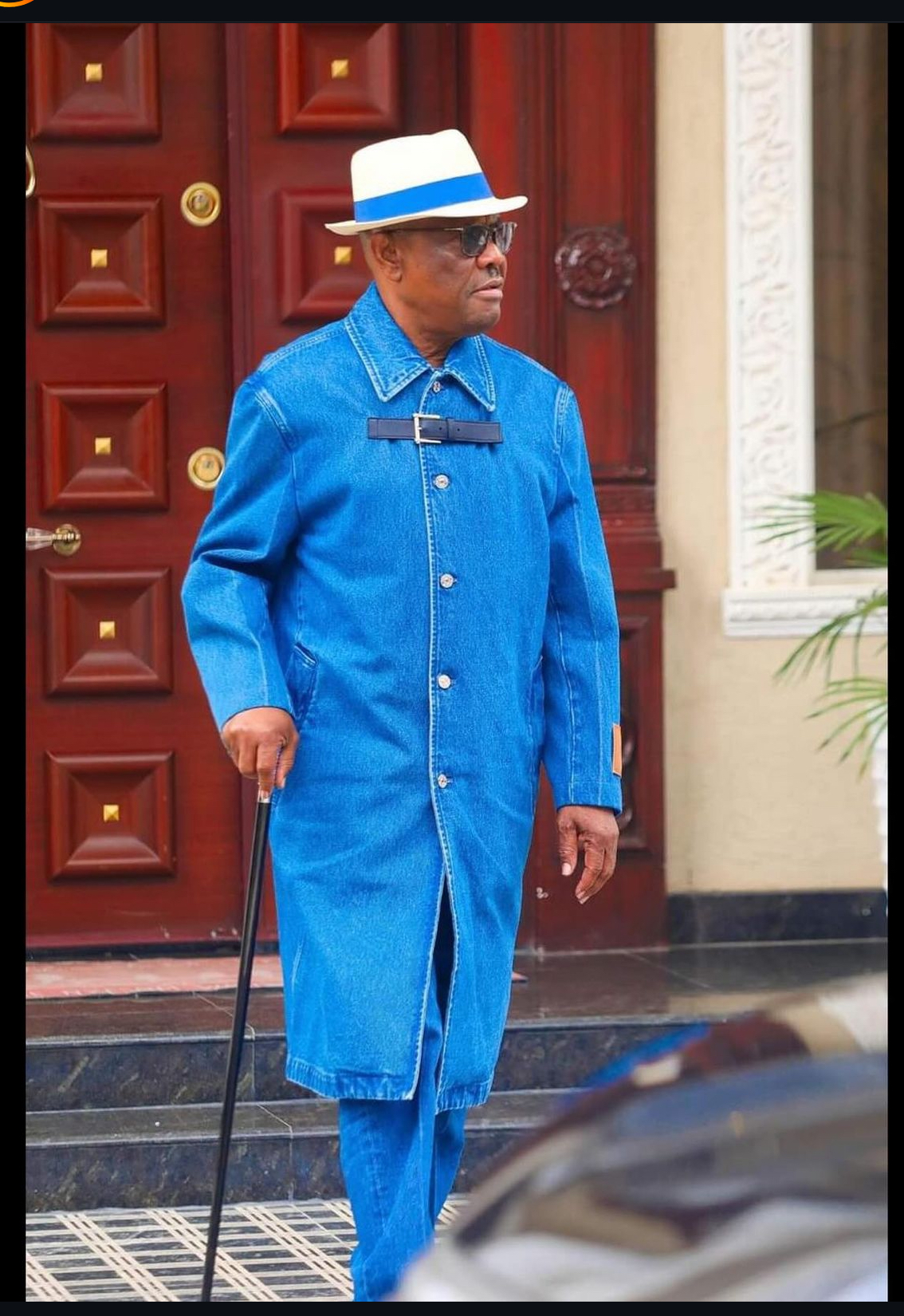
The tyrannical courts of the late Roman Republic or the cutthroat city-states of Renaissance Italy knew exactly how to handle men like Nyesom Wike. They did not build monuments to them; they wrote cautionary tales about them. They recognized that the political strongman, driven by a pagan appetite for absolute dominance, always carries the seeds of his republic’s ruin – and, ultimately, his own destruction. Today, as the Minister of the Federal Capital Territory strides through Abuja, he wears the clothes of a modern democrat, but his methods are purely ancient: rule by fear, demand complete subjugation from his successors and burn the house down if he cannot hold the keys or pull the strings.
Wike operates with a remarkably illiterate, byzantine sense of politics. It is illiterate not in the literal sense of letters, but in its absolute rebuff of constitutional warrants, civic philosophy and the democratic contract. To him, politics is not a map of ideological principles or policy frameworks; it is a dark, labyrinthine maze of shadows, shifting alliances, whispered betrayals and backroom extortions. It is a worldview where institutions do not exist to protect citizens, but function merely as levers for a courtier to manipulate in the pursuit of raw power. Where modern governance requires the vocabulary of institutional respect, Wike relies on a crude, ancient literacy of leverage, transactional fealty and brute force.
To understand Wike’s political theology is to understand the logic of the heathen society, the deity of the soil. In the ancient world, gods were not loved because they were kind; they were placated because they were powerful. They built roads and they tore down walls. Wike operates on this exact axis of elemental utility and terror. When he moves through Nigeria’s capital city, threatening demolition to unapproved structures and demanding absolute fealty from subordinates and all, he is performing the ancient ritual of the “rex” – the sovereign who stakes out the boundaries of the city with a plough and kills anyone who dares step over the furrow.
In a past heathen society, his political methodology would need no translation: First, the cult of the builder: Like the god-kings who carved empires out of the marshes, Wike’s legitimacy is written in concrete. His tenure as governor of Rivers State is marked by flyovers, asphalt and structural upheaval. To the ancient mind, the man who reshapes the physical earth possesses a spark of the divine. You do not argue with a man who moves rivers or flattens hills; you clear the way.
Second, the wrath of the hearth: Heathen politics were intensely personal. There was no abstract “state” – there was only the chieftain and his oath-bound warriors. Wike’s legendary political feuds, characterized by public, microphone-gripping tirades and unapologetic score-settling, are the modern equivalent of the tribal feast hall. You are either drinking from his horn or you are the target of his next campaign or public outing.
Third, the total absolute of power: Democracy asks leaders to pretend they are mere servants. Wike disdains the mask. He carries on with the conviction that in the subconscious of the governed, there remains a primal hunger for the strongman – the figure who can protect the tribe from chaos, even if his own temperament is a tempest. Here is a valiant who has convinced himself that when the institutional machinery stalls and the jungle threatens to grow back over the pavement, he is the ready fixer who doesn’t mind getting mud on his boots – and blood on his hands, if things go down to the wire.
Here is one who has told himself that power is set above conscience and morality, that empathy is the preserve of the weak, that vulnerability is the vernacular of losers, and that humility is the cloak of the conquered. He delights in reminding us that just beneath the thin veneer of our modern institutions lies the ancient world, waiting for a chieftain gusty and loud enough to command it.
This dark, transactional ethos is best laid bare in his homeland of Rivers State, where he treated the governorship not as a temporary public trust, but as a dynastic bequest. When his chosen successor, Governor Siminalayi Fubara, attempted to govern with even a shred of independence, Wike did not offer the grace of an elder statesman. He unleashed a scorched-earth campaign that would make a Roman proconsul proud. In Wike’s view, Fubara’s ultimate sin was not bad governance. No, not that! Fubara sinned because he refused to “kiss the ring” and maintain the pre-existing patronage network.
To punish the governor’s perceived insolence, Wike’s loyalty-driven machinery threw the state into such a profound crisis – complete with attempted impeachments and weaponized legislative fractures – that it ultimately triggered a six-month state of emergency. For Wike, the stability of an entire oil-rich state was acceptable collateral damage in a personal war for territorial dominance.
In Abuja today, this ancient, autocratic urge manifests as an exercise in raw territorial conquest. Land revocations and swift demolitions are executed not with the careful deliberation of urban planning, but with the sudden, terrifying whim of a ruler imposing his will on a conquered province. He demands absolute submission, confusing fear with respect and compliance with loyalty.
Yet, this destructive instinct is no longer confined to his home turf or to the Federal Capital Territory. By importing his mercenary brand of politics into the heart of the federal government, Wike has triggered intense friction within the ruling All Progressives Congress (APC). Prominent figures and support groups within the party have begun to openly revolt against his overreaching influence.
His controversial creation of a cross-party “Rainbow Coalition” – which he insists is a vehicle to secure President Tinubu’s re-election while bypassing formal party lines – has drawn fierce condemnation from the Progressive Governors’ Forum. For a man whose survival depends on maintaining a permanent theatre of war, his inability to respect institutional boundaries has transformed him from a useful political asset into a volatile liability inside the very tent that shelters him.
And to be true, the same history that instructs us about the heathen and their pagan approach to politics and governance also warns us that the tragedy of the classical strongman is his inability to stop. The ultimate warning of unchecked vanity is found in the cautionary tale of Roman’s Gaius Julius Caesar Augustus, also known as Emperor Caligula. Like Wike, Caligula began his ascendancy surrounded by grand expectations and early popularity. Yet, absolute power and a fragile ego soon devolved into an insatiable hunger for godhood.
Caligula spent his brief reign demanding absolute, grovelling submission from Rome’s elite, staging performative displays of power while the stability of the empire groaned under his whims. He mistook the silent terror of his subordinates for genuine control, entirely blind to the truth that the more he sought to humiliate those around him, the faster his political capital decayed.
Emperor Caligula believed in his invincibility. Not only that; he also believed it was eternal, right up to the moment the daggers of the Praetorian Guard proved he was merely mortal. The lesson Rome left behind is clear: a leader who believes the entire state exists in his pocket will eventually find that his allies have outgrown his utility. By reducing the grand experiment of Nigerian democracy to a series of personal vendettas, transactional triumphs and dynastic feuds, Wike does not build a legacy; he merely piles up ruins.
He remains a vivid, warning testament that when ancient tribal power dynamics are injected into a modern republic, it is the institutions, the rule of law and the people who ultimately bleed. History also has something to say about those who attempt to embody and practice godhood. In the end, history tells us that the crown they fought so desperately to protect often becomes the very weight that sinks them. Such is the fatal vanity of the strongman.
- Malogo is a director at Oscar and Halliday Media Company and a member of the Nigerian Guild of Editors (NGE) bruce.malogo@gmail.com.


