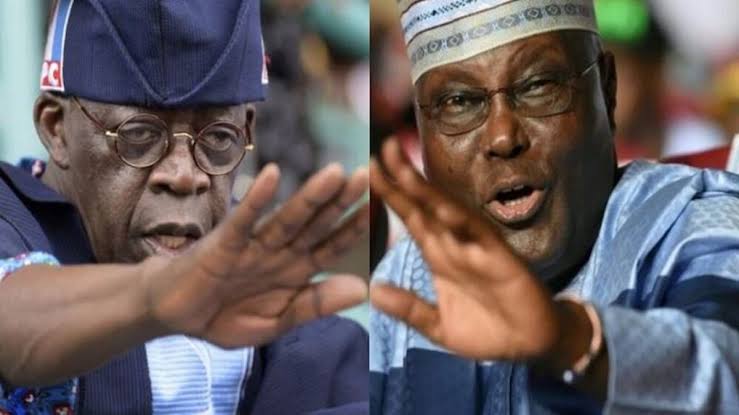
Where is the Waziri? Perhaps it is time to step aside for Tinubu
By Ogechi Okoro
A curious silence now shrouds the Waziri of Adamawa. As the political contest heats up, I find myself searching for signs of the much-celebrated strategist, wondering if the famed political wizard has vanished into the shadows. Once hailed for his mastery, he now seems to be fading from view, struggling to cast a spell in a contest that grows more polarised by the day.
The shifting political landscape now frames the race as a duel between President Bola Tinubu and Peter Obi. Regardless of where one’s loyalties lie, it is impossible to overlook the fact that the Waziri’s campaign lacks the spark and momentum expected from someone who has spent a lifetime preparing for this very moment.
Experience, they say, is wealth. Yet when experience stands still, it risks becoming a burden. The Waziri has thrown his hat into the presidential ring time and again, but there is scant sign that his strategy has kept pace with a restless, evolving electorate. Perhaps his greatest flaw is clinging too tightly to a playbook that has grown all too familiar.
This is especially disappointing, as many hoped for a bold new approach in what may well be his last presidential act. Instead, his campaign seems to be fighting for relevance, while the APC’s attention is drawn far more to Peter Obi than to the Waziri himself.
Adding another twist to this political drama is the family angle. Reports that his son prefers Tinubu have sparked conversations that deserve a brighter spotlight. Imagine the uproar if Peter Obi’s son had openly backed a rival from another camp. Would the public reaction be as muted? Our political discourse often exposes uncomfortable double standards. But beyond the family drama lies a more fundamental question: what exactly is the Waziri hoping to achieve by remaining in the race?
One may triumph in every televised debate, deliver stirring speeches, and win the applause of pundits. Yet, elections are not conquered by eloquence alone. They are decided by organisation, alliances, the hard math of electoral numbers, and, in the end, the votes. The Waziri may be a champion of words, but the ballot box is a battlefield of a different kind.
President Tinubu is not an ordinary political opponent. He is an experienced political operator, a formidable strategist and, importantly, an incumbent with all the advantages that come with occupying the presidency. The power of incumbency should never be underestimated. Removing an incumbent from Aso Rock requires much more than public dissatisfaction; it requires a credible, united and strategically coordinated opposition.
Sadly, the opposition seems to be pulling itself apart. If this splintering persists, Tinubu could stroll down an open road to another term. The greatest gift the opposition can hand the incumbent is their own failure to unite behind a shared purpose. This leads me to a difficult yet necessary suggestion: perhaps it is time for the Waziri to consider stepping aside and lending his support to Tinubu.
Such a decision should not be interpreted as an admission of political defeat or a surrender of personal ambition. Sometimes, political maturity is demonstrated not by insisting on leading but by recognising when another strategic arrangement offers a better outcome. The Waziri has invested considerable time and resources in Nigeria’s political development. He has had his opportunities, contested repeatedly, and remained a significant figure in the country’s political conversation.
At this point, another defeat at the polls may do little to burnish his legacy. There is a fine line between perseverance and political obstinacy. Persisting with the same approach while hoping for a new result is hardly the mark of strategic insight.
However, any arrangement with Tinubu must be conditional. The Waziri should not simply withdraw to become another political cheerleader. He should negotiate a clear political understanding that addresses the issues he has consistently raised, including economic recovery, national cohesion, institutional reform, and democratic accountability. Political support should be earned through commitments, not merely personal friendship.
Tinubu, for his part, should be honest enough to recognise the value of such an alliance and make a compelling case for it. If the Waziri is indeed an old friend and a respected political figure, there should be room for a conversation that goes beyond personal ambition.
Waziri, you have poured years of your political life into this ambition. Perhaps now is the moment to seek a different kind of triumph: one won through strategic retreat, negotiation, and wielding influence, rather than enduring yet another bruising presidential battle.
Politics in Nigeria is not a matter of sentiment. It is a contest of numbers, timing, and shrewd decisions. Sometimes, the wisdom lies in knowing when to exit the battlefield, just as much as when to charge in.
The Waziri has fought his battles. Perhaps now is the time to offer his support to Tinubu, but only on terms that truly serve the greater national good.
- Dr Ogechi Okoro, a political and social analyst, writes from Hamilton, New Zealand.