University of Mbaise must produce capability, not just degrees – Kila
By Ishaya Ibrahim
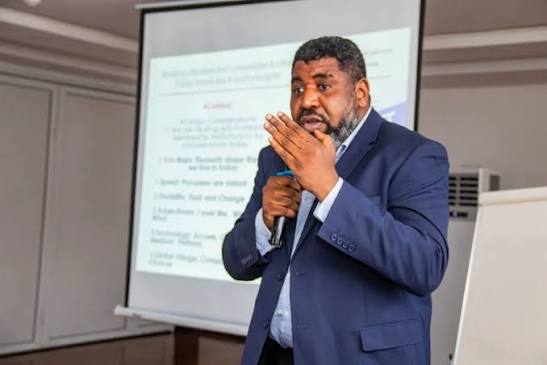
Jean Monnet Professor of Strategy and Development, Anthony Kila on Friday said the proposed University of Mbaise must not be merely a place to obtain degrees but where people acquire capability.
Kila, who is also Director of the Commonwealth Institute of Advanced and Professional Studies, stated this while delivering a keynote address at a colloquium organised by the Mbaise Peoples Congress.
The colloquium was themed: Education as the bedrock of development of a people, society and a nation. The case of the university of Mbaise
According to the don, the idea of a University of Mbaise has moved from conversation to undertaking, a transition he described as critical to development.
“For years, communities have gathered to complain about what government has not done. But development begins at the precise moment when a people stop asking only, ‘Who will do something for us?’ and begin to ask, ‘What are we prepared to do for ourselves?’ That is the transition,” Kila said.
He said the university, whose groundbreaking ceremony was held on 3 January 2025 in Ife-Ezinihitte in Imo State, would amount to no more than a real estate project if it remains merely a collection of lecture halls without the capacity to build minds.
“A university is not a collection of lecture halls. If all we build is a collection of lecture halls, we have built real estate. A university begins when we build minds,” he said.
Dissecting the theme of the colloquium, Kila said education must be distinguished from certificates.
“If education were simply the ability to pass examinations, then examination halls would have produced the most developed countries in the world. They have not,” he said.
“A certificate tells us that somebody passed through an institution. Education should tell us that something passed through the person. The educated person should emerge with better judgement, better skills, greater curiosity, greater discipline and a greater capacity to solve problems.”
He stressed that the word “as” in the theme was key, noting that “education as the bedrock” means education must serve as foundation for agriculture, industry, technology, healthcare, finance and governance.
“If we educate people and they have nowhere to apply what they know, we have produced frustration. If we build industries without educating the people who will run them, we have produced dependence,” he said.
“A university must not simply ask: ‘What courses can we teach?’ A university must ask: ‘What problems can our graduates solve?'”
On bedrock, Kila warned that weak educational foundations eventually show in national life.
“Nobody visits a building and says, ‘What a magnificent foundation!’ You normally don’t see it. But when the foundation is weak, everybody eventually sees the consequences. That is what education is,” he said.
“The quality of our education may not immediately appear in the GDP figures… But give us 10 to 20 years and education will reveal itself. It will reveal itself in the quality of our doctors. In the quality of our teachers. In the quality of our engineers… And, perhaps most importantly, in the quality of our citizens.”
He redefined development as becoming better, not just having more.
Hear him: “Let us use this opportunity to rescue the word development from abuse.
Development is not merely having more. Development is becoming better. If we have more billionaires but fewer productive citizens, that is not necessarily development. If we have more universities but less learning, that is not development. If we have more graduates but fewer jobs, something has gone wrong. If we have more political appointments but poorer public services, we have expanded government without necessarily developing society.”
Kila then explained what development really means. “It means increasing the capacity of people and institutions to create value, solve problems and improve human welfare. It means that the child born in Mbaise today has more possibilities than the child born here twenty years ago.”
Speaking on the Mbaise people, the professor said the community already possesses enormous human capital spread across business, medicine, academia and technology worldwide, and the challenge is organisation.
“The question is no longer whether Mbaise has intelligent people. We have enough evidence to settle that argument. The question is: Can we organise our intelligence? Can we convert individual success into institutional success?” he asked.
“The Mbaise diaspora is not merely a population outside Mbaise. It is an extension of Mbaise’s intellectual capital. The university should become a bridge between the Mbaise at home and the Mbaise everywhere.”
Kila further charged that the university must not exist in isolation from society, but must be both “a mirror” that understands its own society and “a window” that allows that society to see the wider world.
On nation-building, he said Nigeria will not be developed from Abuja alone. “If the University of Mbaise produces one excellent agricultural scientist who increases food production, that is nation-building. If it produces a public administrator who refuses to steal public money, that is nation-building. And yes, that last one may be the most revolutionary course we can offer! Perhaps we should introduce a course in Applied Integrity. The first examination question: ‘You have been given ₦100 million to build a road. The contractor offers you ₦20 million to approve inferior work. Discuss.’”
Kila then outlined five pillars that must define the University of Mbaise if it is to be different.
First, he said it must be unapologetically excellent. “Do not build a university because Mbaise deserves a university. Let us build a university because Mbaise deserves an excellent university… The ambition should be to become one of the best universities from Africa.”
Second, it must be solutional. “Our graduates must not all be trained to look for employment. Some should create employment. The question after graduation should not always be: ‘Who is hiring?’ It should sometimes be: ‘What problem can I solve?'”
Third, it must be technologically intelligent. “Artificial intelligence can give you an answer. Education must teach you whether the answer is worth anything. A machine can generate text. Education must teach you how to think.”
Fourth, it must be deeply connected to the community. “The university should have laboratories for real problems. Agriculture, Water, Energy, Healthcare… Let students graduate having solved actual problems, not merely answered examination questions.”
Fifth, it must build character. “An intelligent thief is still a thief. A brilliant corrupt official is still corrupt… The university must therefore produce people who are not only clever, but useful; not only knowledgeable, but responsible; not only ambitious, but ethical.”
He also called for an educational ecosystem beyond the university itself, comprising primary and secondary schools, teacher development, vocational and entrepreneurship training, and lifelong learning.
“Why? Because the child who eventually enters the University of Mbaise must first pass through a system that prepares him or her to succeed there,” he said.
Kila urged Mbaise to think in generations, noting that universities are intergenerational investments.
“You may plant a mango tree and enjoy its fruit in a few years. You may build a hotel and begin making money immediately. But when you build a university, you are making an investment in people you may never meet,” he said.
He proposed a new yardstick for measuring success in 20 years: “How many companies were created by its graduates? How many jobs did they create? How many patents emerged from its laboratories? How many farmers became more productive because of its research?… And finally: How many people became better human beings because they passed through this university?”
Concluding, Kila said the university must be more than a trophy. “The University of Mbaise should not be built merely because every respectable community wants to say, ‘We have a university.’ A university is not a trophy. It is a responsibility,” he said.
“If you give your child money, the money may finish. If you give your child property, the property may be sold… But if you give your child a good education, you have given that child a tool with which to recreate wealth, opportunity and dignity. That is why education is the bedrock. And this is why the University of Mbaise must be more than a university. It must become a promise.”