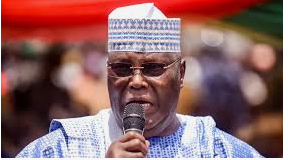
Tinubu took subsidy from the poor and gave it to his rich friends – Atiku, as he vows policy reversal
Former Vice President Atiku Abubakar has accused President Bola Tinubu of running “one of the biggest economic frauds” on Nigerians, arguing that the administration cannot claim to have ended fuel subsidy while extending tax credits and other fiscal incentives to petroleum industry operators.
In a statement issued by his Senior Special Assistant on Public Communication, Phrank Shaibu, on Saturday, Atiku said the Tinubu government has grown increasingly defensive since the unveiling of the Atiku Economic Recovery Plan, dismissing calls for targeted intervention even as it continues to offer incentives to major oil investors.
Atiku said Tinubu’s declaration at Eagle Square that subsidy had ended was followed by a spike in petrol prices, transport costs and food prices, alongside a decline in household purchasing power, pain he said Nigerians were told was unavoidable. He argued that the same government which insists on strict market forces for citizens has quietly kept the door open for oil investors, pointing to the Deep Offshore Oil and Gas Projects Incentives framework, under which qualifying petroleum developments can earn production tax credits of between $3 and $4.50 per barrel, with supplementary credits pushing the combined benefit to as much as $11.50 per barrel in some cases.
He also cited NNPC’s audited accounts, which he said recorded about ₦4.84 trillion in energy-security expenses and related shortfalls in 2023, rising to roughly ₦7.13 trillion in 2024. According to Atiku, NNPC’s own explanation that the figure stems from the gap between the exchange rate used to fix the regulated petrol price and the rate prevailing when import obligations are settled shows government was still absorbing a price differential well after subsidy was declared over.
Atiku argued that whether officials call it subsidy, under-recovery, shortfall or energy security, the underlying reality is the same – public resources being used to bridge the gap between the cost of petrol and its selling price. He said the administration cannot lawfully defend such intervention when it benefits oil investors while rejecting a comparable, targeted intervention for citizens.
He described his own economic plan as distinct from a return to the old, opaque subsidy regime, proposing instead a capped, transparently budgeted and independently audited intervention with a defined exit plan, alongside efforts to boost domestic refining, competition and mass transportation.
The former vice president called on Tinubu to disclose the beneficiaries of major petroleum tax credits and incentives, the value of revenue forgone, and whether Nigerian investors have equal access to similar concessions, warning that such incentives must not become tools of patronage.
Atiku vowed that “even 100 million Tinubus” cannot stop him from pushing for the restoration of a targeted subsidy for Nigerians, describing the administration’s current approach as “classic economic apartheid” – favouring corporate interests over citizens.