Tinubu can’t stop piling up Nigeria’s borrowings even though positive impact not felt by citizens
By Jeph Ajobaju, Chief Copy Editor
*******************************
“What is the component of a country’s budget? You have your expenditure, revenue, and loan in all budgets,” he insisted.
“So, if my expenditure for this year is N100,000 and my plan is that N80,000 will be from my revenue, I will borrow N20,000. If I’ve done revenue of N90,000 and I’m borrowing N10,000 according to what I have in my budget, what is the problem with that?
“Borrowing is not a problem. Don’t forget that banks are part of our economic ecosystem. There is no country or individual in the world that survives based on its own income. Don’t forget that when the government borrows from banks, it will pay interest.
“It’s from that interest that they pay their salary. It is from the salary that the banks pay taxes to the state government; it is from this profit, the difference between deposit and lending, that gives them the profit that I collect taxes from” – FIRS Chair Adeedji.
*******************************
Assurance given by Bola Tinubu that improved revenue means Nigeria will no longer borrow funds has been shattered by the Federal Inland Revenue Service (FIRS) Executive Chairman who has alerted that the President will continue to take loans for the country despite 411 per cent revenue rise in recent months.
Zacch Adedeji argued that borrowing is not a sign of weakness but part of a broader economic strategy which lifted federal revenue to N3.64 trillion in September 2025, a 411 per cent jump from N711 billion in May 2023.
“Borrowing is not a problem … is borrowing not part of the budget we submitted to the National Assembly [NASS]. Was it not approved? Are we borrowing aside what was approved?” Adedeji asked when he fielded questions from journalists in Abuja.
His stand came two months after Tinubu in July sought and obtained NASS approval for a $21.5 billion external loan, including a $2 billion foreign currency bond and a N757.98 billion bond, to settle pension liabilities under the Contributory Pension Scheme (CPS).
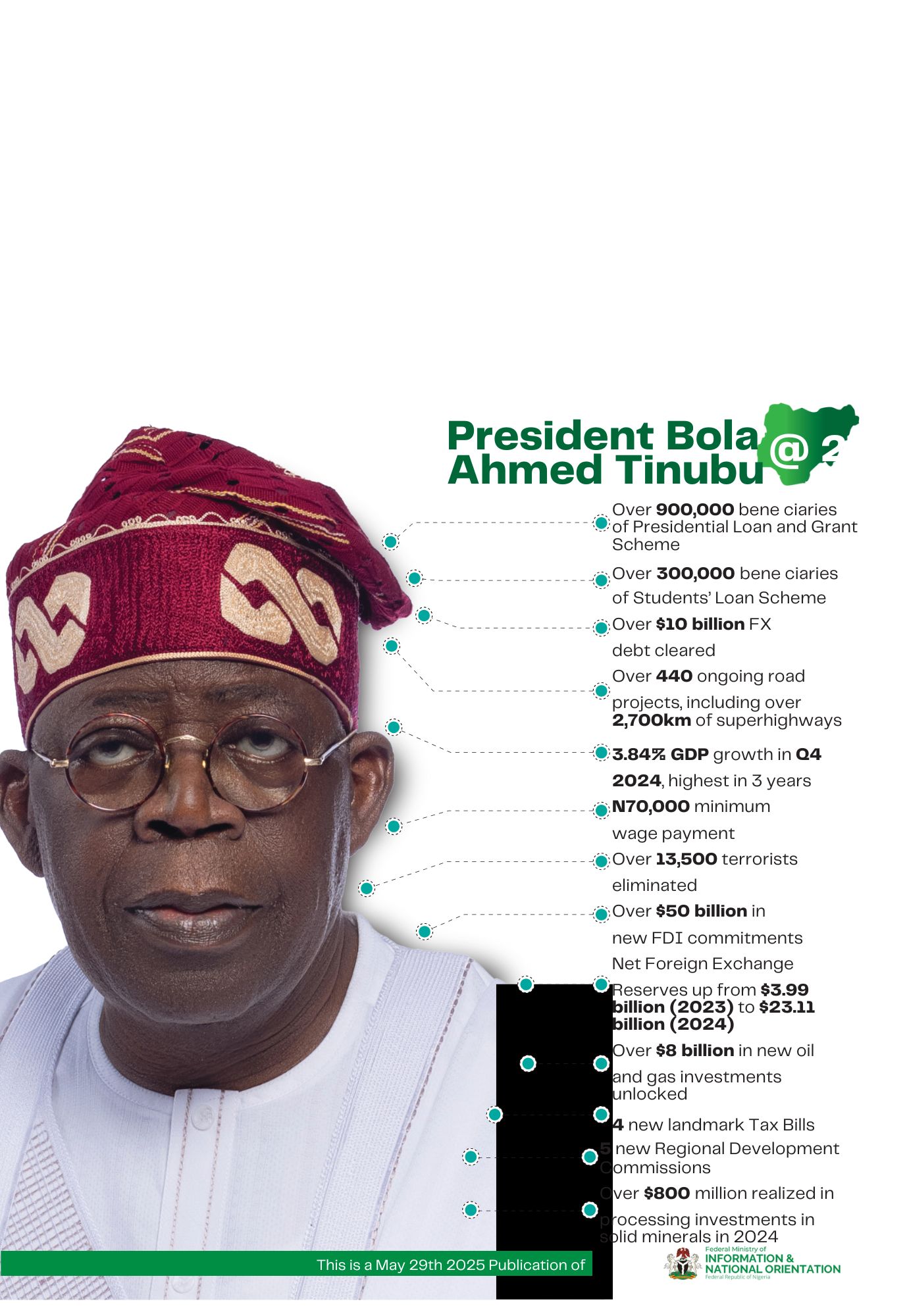
Then Tinubu declared on September 2 that Nigeria had met its revenue target for 2025 by August and would no longer rely on borrowing to fund its budget – as he is heavily criticised for excessive borrowing.
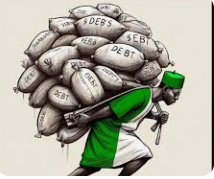
Nigeria’s debt has mounted to $210 billion on his watch, yet there is no relief for citizens from overtaxation, poverty, hunger, and collapse of businesses while the public is awash with allegations of humongous stealing from the treasury by various nefarious means by government officials.
Adedeji described borrowing as an integral component of Nigeria’s financial ecosystem and overall economic plan designed to balance revenue performance with long-term development objectives.
“What is the component of a country’s budget? You have your expenditure, revenue, and loan in all budgets,” he insisted.
“So, if my expenditure for this year is N100,000 and my plan is that N80,000 will be from my revenue, I will borrow N20,000. If I’ve done revenue of N90,000 and I’m borrowing N10,000 according to what I have in my budget, what is the problem with that?
“Borrowing is not a problem. Don’t forget that banks are part of our economic ecosystem. There is no country or individual in the world that survives based on its own income. Don’t forget that when the government borrows from banks, it will pay interest.
“It’s from that interest that they pay their salary. It is from the salary that the banks pay taxes to the state government; it is from this profit, the difference between deposit and lending, that gives them the profit that I collect taxes from.”
Adedeji explained that government borrowing is not used to pay salaries but to secure long-term investments.
He asked critics to imagine how much more expensive it would have been if the current fiscal structure had not been built at the time it was, stressing that borrowing allows governments to avoid higher future costs.
He also described borrowing as part of the “Matchy Concept” in business, which emphasises continuity.
According to him, projects with benefits that outlive the present generation should not be shouldered entirely at once – for example, borrowing to build a road ensures that future users can contribute through taxes, thereby paying their fair share over time.
In Adedeji’s view, borrowing is a critical element of any sound economic plan, and no company or country can grow sustainably without it, since it is integral to a viable national ecosystem.
He flagged critics he referred to as “container economists” who fail to truly understand the issues or ask the right questions, with some relying on surface-level narratives, drawing arguments from social media chatter without grasping the economic logic behind borrowing.
Adedeji disclosed that federal revenue collection rose to N3.64 trillion in September 2025, jumping 411 per cent from N711 billion in May 2023.
The increase, he explained, was driven by higher non-oil receipts, with non-oil collections by the FIRS topping N1.06 trillion compared to N151 billion two years prior.
Oil revenue from FIRS also grew to N644 billion and Value Added Tax (VAT) jumped more than threefold to N723 billion, he added.
Adedeji also disclosed that:
- The gains came through reforms that streamlined taxes, cut burdens on small businesses, and rationalised incentives.
- Ongoing measures, including a new fiscal policy framework, excise rules, and e-invoicing, are expected to deepen compliance and expand the tax net.
- The government plans to harmonise subnational levies, introduce a presumptive regime for hard-to-tax groups, and reduce corporate tax rates as part of broader spending and constitutional reforms.
Read also: