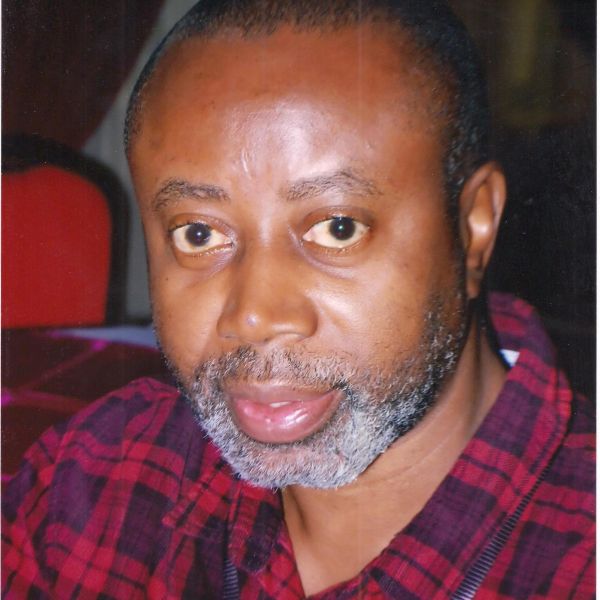
By Chido Onumah
Who is afraid of restructuring?
For those who fear the word restructuring, let it be clear that it doesn’t imply breaking Nigeria into tiny sovereignties or going back to the status quo ante. That is far-fetched. Of course, there are many positions just as there is much misperception and confusion when it comes to restructuring. Many people genuinely do not understand what is at stake when the issue of restructuring is mentioned vis a vis the politics of Nigeria, while others, for purely partisan and ethnic reasons, decide to conflate the issue.
Make no mistake, the “restructuring” of Nigeria both politically and economically has been a continuous process since amalgamation in 1914. The restructuring in 1939 saw the division of the South into two regions, the West and East. In 1946, the country was again restructured to create a federation of three regions: East, West and North. The process continued in I963 with the creation of Mid-Western Region out of the former Western Region, the unitary system in 1966 and beyond, the creation of 12 states on May 27, 1967, etc. Add to this, the emasculation of the states through the reduction of the percentage of revenue accruing to states from their resources.
Basically, what restructuring willdo is to createnew, workable and generally acceptable rules on how Nigeria should federate. We need to reorder the polity for effective governance. Clearly, our fortunes as a nation is tied to the kind of political, economic and social structure we put in place. We need to review revenue generation and allocation. We can’t talk or wish our way to prosperity as a nation. We must end financial irresponsibility and fiscal rascality by revisiting the issue of fiscal federalism. We must allow states to share greater responsibility in the policing of their states. We must abrogate local governments as enshrined in the 1999 Constitution and allow states to create local governments according to their needs. We must redefine citizenship rights and banish the indigene-settler dichotomy. This is what restructuring is about. We must continue to interrogate Nigeria because our misleaders (past and present) have failed to forge a nation out of what was bequeathed to us by the colonialists. The nationhood question is never settled. The way out is to never be afraid to confront it.
Any attempt to understand and tackle Nigeria’s seemingly intractable problems must go back to the basic principles of the formation of Nigeria. We may not have it the way it was in 1960 or 1963, but it is important that whatever way we decide to have it, the decision is inclusive and acceptable. That is the essence of restructuring. Restructuring is not a silver bullet. It won’t solve all our problems, but trying to solve our national crises without restructuring the country effectively will amount to putting the cart before the horse.
The bottom line is that Nigeria is not working for Nigerians. It may be working for some Nigerians, either Igbos, Fulanis, Yorubas, Hausas, Kanuris, Efiks, Tivs or Ijaws, but for the majority across the country, it is a nightmare living the Nigerian dream. We can point to poor leadership, bad governance, corruption and the need for attitudinal change, but these are symptoms of a much insidious problem, the existential crisis that confronts Nigeria.
Nigeria is not working not because Nigerians can’t make it work or are not willing to make it work. Nigeria is not working simply because there is no incentive to make it work; there is no allegiance to the Nigerian dream, if it does exist. That explains the mindless corruption in the country, the contempt the rulers have for the country and its citizens, their eagerness to run it aground and their willingness to run to the Metropole at the slightest opportunity either for medical attention, to educate their children or simply to enjoy the good life. And, the country, the proverbial giant of Africa remains, in the words of Noble Laurette, Prof Wole Soyinka, “the open sore of a continent”; a nation that made billions of dollars from oil, yet (with Pakistan and Afghanistan) is one of the three-remaining polio-endemic countries in the world with one of the highest cases of out-of-school children and maternal mortality.
Reclaiming Nigeria
The purpose of restructuring, therefore, is to set Nigeria on the path of a civic nationhood, a modern egalitarian society, and not to create new fiefdoms for ethnic warlords. It aims to end internal colonialism wherever it exists in the country and to free the creative and intellectual capacities for Nigerians from the east, west, north and south, to contribute to the development of the country.
Can we reconstruct Nigeria? Can we reclaim the country and provide succour to millions of our countrymen and women in the east, west, north, and south who have endured decades of misrule, impoverishment, injustice and oppression? This is the question that should engage true patriots and the current generation of Nigerians. Can the post-civil war generation of Nigerians reclaim the country and create a new Nigeria that can become a global contender? I think it can. But nation building is not a tea party. This generation must learn to overcome the fear and loathing; it mustn’t allow our tragic history to repeat itself.
The future of Nigeria belongs to young men and men, millions who are unemployed and daily roaming the streets of major cities across the country. I share your frustration, pain, suffering, anger and anxiety. But no one feels the pain more than you and, therefore, you are in the best position to bring about the kind of change you and Nigeria need.
You must rise to the occasion. You are the future of this great nation. Nigeria of 2017 is not Nigeria of 1914, 1960, 1966, or 1967-70. John F. Kennedy, the 35th President of the United States, once admonished Americans, “Let us not seek the Republican answer or the Democratic answer, but the right answer. Let us not seek to fix the blame for the past. Let us accept our own responsibility for the future.” Kennedy was speaking to Americans and the “right” answer may not be in the interest of non-Americans, but the same principle can apply in our own situation. In seeking solutions to the country’s problems, you must learn from the past but you should not allow the past to cripple you. You must accept your own responsibility for the future. You should see yourselves as Nigerians first before being Yoruba, Hausa, Igbo, Ibibio, Fulani or Ijaw. And in seeking to deal with the Nigerian question, that should be your guiding principle.
Nigerian youth must seize the moment and define the kind of future they want to create. Nobody will live that future but you. Don’t let our crooked politicians and so-called statesmen define that future. You can’t leave the solution to Nigeria’s problems to those who created it in the first place for, as Einstein poignantly put it, “No problem can be solved from the same level of consciousness that created it.”Our rulers have defined themselves and the country for too long; they have no right to define you and the future.
Our rulers and so-called elders shouldn’t speak for you any longer. Don’t let a 90-year-old Edwin Clark or Prof. Ango Abdullahi, who as Vice Chancellor of Ahmadu Bello University from 1979–1986, was more of a despot than an administrator, ruining the future of many students in the process, speak for you. Don’t let the dishonourable men and women posing as your representatives in the Senate and House of Representatives speak for you. Afenifere, Northern Elders Forum, Ohaneze Ndigbo, OPC, Arewa Youth Forum (AYF), IPOB, MASSOB, and sundry agglomeration of ethnic jingoists and bigots, shouldn’t speak for you.
Your reality and challenges—in the light of globalization and a world where oil is increasingly becoming irrelevant and advances in science and communication technology are changing the way we live and operate—are different from the realities of your forbears. Don’t let the prejudices of the past hold you down. We have wasted 57 years as an independent nation, we can’t afford to waste the next 50 years. As we mark the 50th anniversary of Biafra and the start of the civil war, we must remember our fellow citizens from the east, west, north and south and everywhere in between who lost their lives or loved ones, were injured or maimed for life in that unfortunate 30-month war and resolve to say never again!
I believe we can a build a nation where no group or individuals place their ethnic, sectional, state, regional or religious interests above the national interest. That is the condition precedent for the survival of Nigeria. That is what restructuring can do for us.
The eternal words of Tajudeen Abdul-Raheem, the great Pan-Africanist who died on Africa Day, May 25, eight years ago, are apropos: “don’t agonise, organise.”
Concluded
Onumah is the author of We Are All Biafrans. This essay was written in 2017 as part of a conference presentation. It is being published now because of its relevance to Nigeria’s current situation.