



Telcos finally agree with banks and subscribers, a boon for phone users in rural and underserved areas without digital connection
By Jeph Ajobaju, Chief Copy Editor
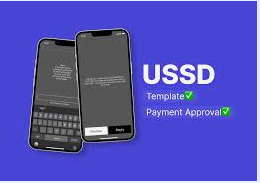
Telecom operators have finally agreed with banks and subscribers to deduct Unstructured Supplementary Service Data (USSD) charges from airtime balances as approved by the Nigerian Communications Commission (NCC) and the Central Bank of Nigeria (CBN).
The new model, known as the End-User Billing (EUB), allows mobile network carriers – MTN, Glo, Airtel, and 9mobile – to eliminate banks as intermediaries and deduct USSD service charges direct from subscribers’ airtime balances.
The arrangement came after mobile operators complained for years that banks were not remitting USSD service fees which at some time mounted up to N250 billion before it reduced to about N200 billion in 2024.
“Before now, banks would deduct the money from our accounts and fail to remit it to the telcos. It was always a problem,” National Association of Telecoms Subscribers (NATCOMS) President Adeolu Ogunbanjo told The PUNCH.
Under the revised model, subscribers will pay N6.98 per session lasting up to 120 seconds only after receiving a prompt to opt in and approve the deduction.
Ogunbanjo described EUB as a long-overdue reform that brings transparency and accountability to the telecom sector.
His comment followed announcement on Wednesday by the Association of Licensed Telecom Operators of Nigeria (ALTON) on the rollout of the new billing regime.
ALTON Chair Gbenga Adebayo said: “This transition marks a significant milestone in the evolution of Nigeria’s digital financial ecosystem. It aims to establish a transparent, sustainable, and customer-centric model for USSD service delivery.”
He assured subscribers that there would be no disruption to USSD service and existing codes used for transactions like balance enquiries, fund transfers, and bill payments would remain active.
Adebayo advised users experiencing difficulties to contact their mobile network provider and issues related to specific transactions should be directed to their banks.
Some banks, including GTB, UBA, and FCMB, already notified their customers by this week that USSD transactions would be charged directly by telcos from their airtime balance effective from June 18.
Ogunbanjo commended telecom regulator NCC for leading the reform in collaboration with the CBN, and expressed hope that “the telcos will now use this to develop the telecom sector so that we won’t be having poor-quality services.”
Dispute over USSD billing dates back to 2019 when mobile operators accused banks of defaulting on agreed payment plan for services rendered.
The CBN and NCC to stepped in with an interim solution in 2021, introducing a flat-rate of N6.98 per USSD session, to be collected by banks on behalf of telcos.
However, compliance was inconsistent, with operators warning of service disruption and threatening to disconnect indebted banks.
USSD is a critical tool for digital financial inclusion in Nigeria, particularly for users in rural and underserved areas who lack access to smartphones or internet-enabled devices.
With billing now fully aligned with subscriber consent and direct payment, stakeholders expect greater trust and efficiency across the digital finance value chain.
Adebayo declared last week that the telecom industry is technically ready for end-user billing but that most banks had failed to meet regulatory and operational conditions, including clearing historical debts and devising systems for error reporting and compensation.
A circular issued jointly by the CBN and NCC on 20 December 2024 said the transition to end-user billing would only be activated for banks and telcos that comply with the stipulated payment terms.
Banks still owe telcos but a payment plan has been agreed to settle the debts.
The plan is divided into three phases:
- Banks must pay 60 per cent of old bills by 2 January 2025.
- Settle all outstanding pre-existing bills by 2 July 2025.
- Pay 85 per cent of new bills by 31 December 2025.
Read also:

 charges from airtime balances ....)