
‘South Africa bites the hand that fed it,’ Ray Ekpu says as African columnists weigh in on xenophobia
By Ishaya Ibrahim
Pan-African columnists have urged the Government of South Africa to address the economic challenges fuelling the country’s xenophobic crisis, warning that the attacks on other Africans have damaged the continent’s sense of solidarity, with veteran journalist Ray Ekpu describing South Africa as “the baby that bites the nipples that gave him milk.”
Speaking at the Pan-African Roundtable organised by the League of Nigerian Columnists (LNC) in collaboration with the Commonwealth Institute of Advanced and Professional Studies (CIAPS) in Lagos, the columnists condemned xenophobic attacks against other African nationals in South Africa.
The high-level Pan-African roundtable themed, “From Mayibuye iAfrica to Abahambe! South Africa and other African countries: Reflections on the trajectory of a relationship,” was an attempt to interrogate South Africa’s evolving relationship with the rest of the continent.
In his welcome address, the President of the LNC, Chief Tola Adeniyi, described the attacks as unfortunate, saying South Africa appeared to have forgotten how other African countries, including Nigeria, played a critical role in the fight against apartheid.
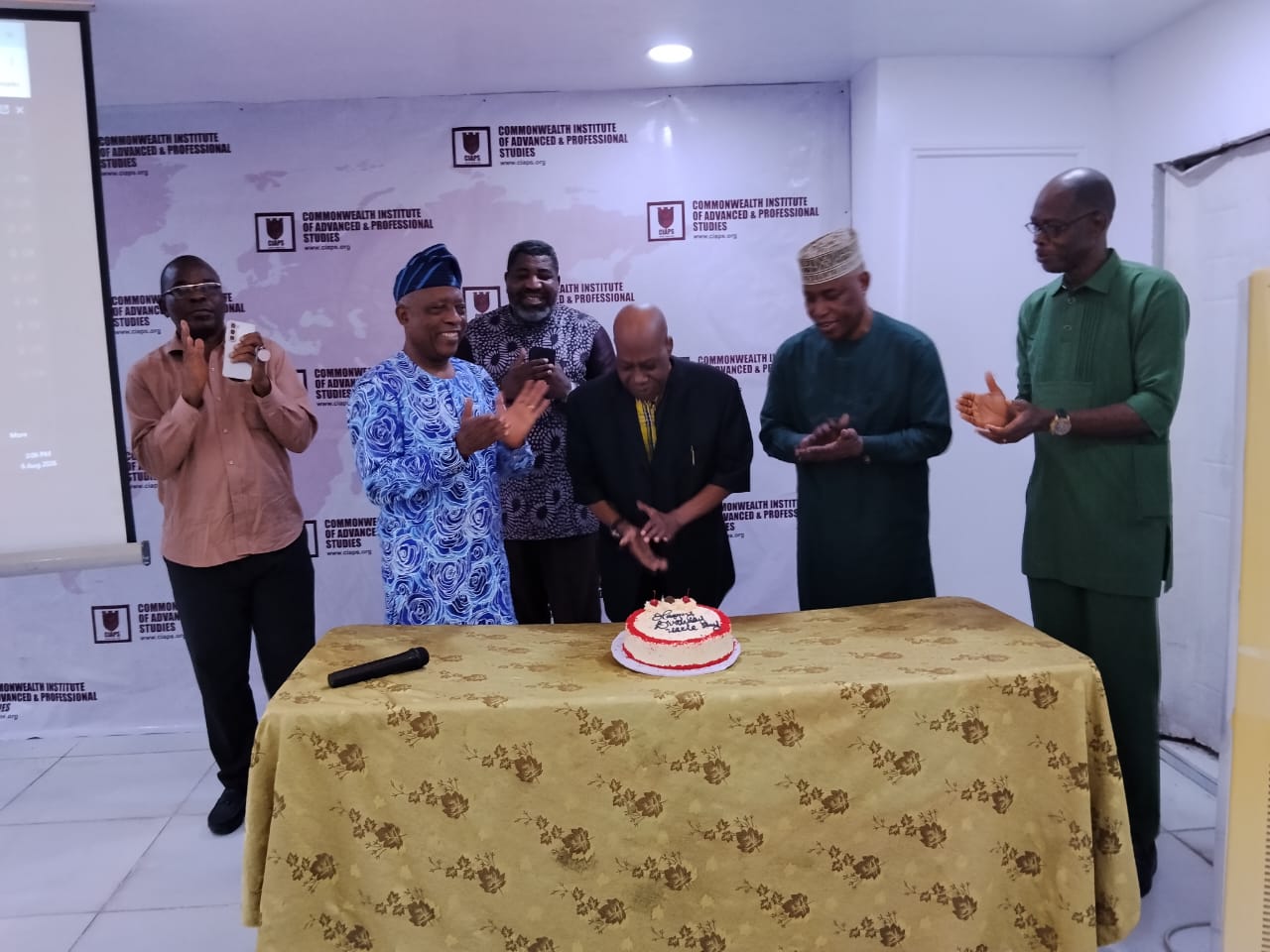
Delivering the lecture, the Vice President of LNC, Ray Ekpu, said many Africans have felt assaulted by the developments in South Africa. Ekpu’s lecture coincided with his 78th birthday, which the League honoured in recognition of his decades-long contributions to journalism.
Ekpu attributed the crisis to deep-seated economic challenges, including unemployment, poverty, and poor governance. “The other issue to examine is the unemployment level,” he said. “According to Statistics South Africa, the official unemployment rate in the first quarter of 2026 is 32.7%, up from 31.4% in the last quarter of 2025.”
He broke down the figures further: “These figures translate to these: 8.137 million people were jobless in Quarter one of this year. Youth unemployment (15-24 years) is 60.9% while those aged 25-34 years is 40.6%.”
Turning to poverty levels, Ekpu said: “What is the poverty level in South Africa? It is between 37.9% and 55.5% of the population.”
He cited World Bank and Statistics South Africa data on food insecurity, stating: “For food poverty, the figure is between 10.8 million people and 13.8 million people. These people cannot afford basic food daily.”
Ekpu added: “About 23.2 million people lack adequate money for both food and essential non-food items. Over 71% of poor individuals are under 35 years of age.”
He linked South Africa’s crisis to a broader continental pattern: “The truth, the unvarnished truth, is that most countries in Africa are going through stress because of high poverty and low employment levels which are caused by poor governance, climate challenge, economic stagnation, technological advances and globalization.”
He pointed to the resulting instability across the continent, noting: “These challenges have led to high insecurity, high crime, high illegal migration to countries that they see as Eldorados. Just a few days ago, about 600,000 Moroccans trooped into Spain illegally causing quite a stir in that country.”
But Ekpu said South Africa’s situation stood out for its particular contradiction. “It is South Africa that is on the table today because of the compelling paradox that its afrophobia exhibits. It shows South Africa as the scorpion that stings the horse that carried him across the stream; as the baby that bites the nipples that gave him milk; as the man that bites the finger that fed him.”
In his contribution, a former member of the South African Parliament, Coetzee Bester, described the xenophobia crisis as complex, and urged Africans to examine it not merely from the standpoint of politicians and police, but from the perspective of the protesting communities and their struggles.
Coetzee Bester was however countered by Managing Director and Editor-in-Chief of TheNiche Newspaper, Ikechukwu Amaechi, who accused the South African government of being complicit in the wave of xenophobic attacks against fellow Africans. He pushed back against the narrative that current unrest is driven by African migrants “taking over” jobs, insisting that xenophobic incidents in the country date back decades.
“If you do a little research about xenophobia or Afrophobia as it is now called, as early as 1994, there were issues,” he said. “But the first major nationwide outbreak of xenophobia occurred in 2008, leading to the death of 62 people.”
He said he has personally witnessed the scale of anti-migrant sentiment in South Africa, having travelled extensively across the country since 2010. “I’ve been to almost all parts of South Africa — from Johannesburg to Cape Town to Kimberley, Durban, and other cities,” he said. “What is going on there now has little or nothing to do with African migrants taking over jobs.
“Make no mistake about it, the South African government is complicit in what is going on in South Africa today. They are afraid that if they move against the Afrophobic mobs that have taken over South Africa, they may not be able to get their votes in the Zulu lands when the time comes. So the ANC is afraid of losing power if they go against these mobs.”
Modou Joof from The Gambia urged South African government to address the economic concerns of its people, which she said is at the root of the xenophobic attacks against other Africans.
Other speakers from various African countries including Bravious Kahyoza (Tanzania), Wanza Kioko (Kenya), Shepherd Mpofu (South Africa), Sylvia Nankya spoke in the same vein, insisting that there was no justification for the zenophobic attacks. They are frowned at the seeming inability of the South African government to address the matter in a manner that will promote unity in Africa.
Other speakers at the event included Jean Monnet Professor of Strategy and Development, Anthony Kila, who also moderated the event, veteran journalist Dare Babarinsa and former Managing Director and Editor-in-Chief of The Guardian Newspaper, Martins Oloja.