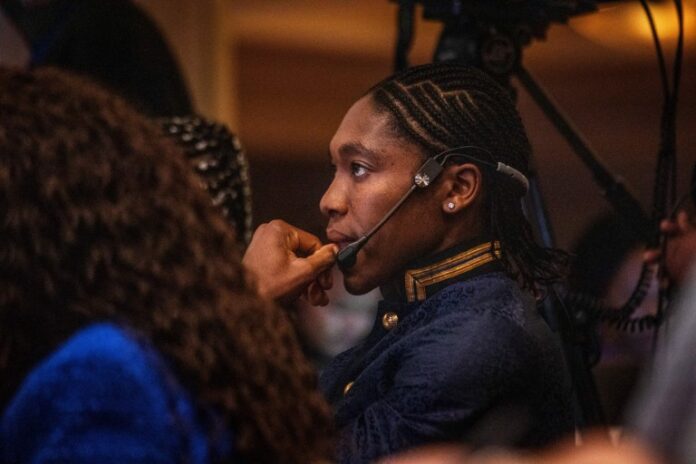
South Africa middle distance runner and Olympian Caster Semenya has lost an appeal to the Swiss Supreme Court over a World Athletics ruling which means she must take testosterone-reducing medication in order to be eligible to compete.
The current rules force athletes with differences in sexual development (DSD) to take drugs to medically reduce their naturally-occurring testosterone if they want to compete in women’s events ranging from 400 metres to a mile.
Semenya, the 800m champion at the London 2012 and Rio 2016 Olympic Games, had previously appealed to the Court of Arbitration for Sport (CAS) over the policy, but was unsuccessful.
This latest ruling is a further blow for Semenya, who will be unable to defend her Olympic crown at the postponed Tokyo 2020 Games unless she takes medication as things stand.
“I am very disappointed by this ruling, but refuse to let World Athletics drug me or stop me from being who I am,” the South African said in response to the ruling.
“Excluding female athletes or endangering our health solely because of our natural abilities puts World Athletics on the wrong side of history.
“I will continue to fight for the human rights of female athletes, both on the track and off the track, until we can all run free the way we were born.
“I know what is right and will do all I can to protect basic human rights, for young girls everywhere.”
The World Athletics regulations mean that DSD athletes with naturally high levels of testosterone wanting to compete over the distances in question need to medically limit that level to less than 5 nmol/L, double the normal female range of below 2 nmol/L.
World Athletics, known as the International Amateur Athletic Federation (IAAF) when the controversial rules were introduced, insists that they exist to protect women’s sport, but others have criticised them for infringing on human rights.
World Athletics welcomed what it termed a decision “to uphold our DSD Regulations as a legitimate and proportionate means of protecting the right of all female athletes to participate in our sport on fair and meaningful terms”.
The governing body also “rejected the suggestion that they infringe any athlete’s human rights, including the right to dignity and the right to bodily integrity.”
A United Nations report published in July was critical of the regulations, which it said “effectively legitimise the surveillance of all women athletes based on stereotypes of femininity” and “denies athletes with variations in sex characteristics an equal right to participate in sports and violates the right to non-discrimination more broadly.”–Ali Iveson