



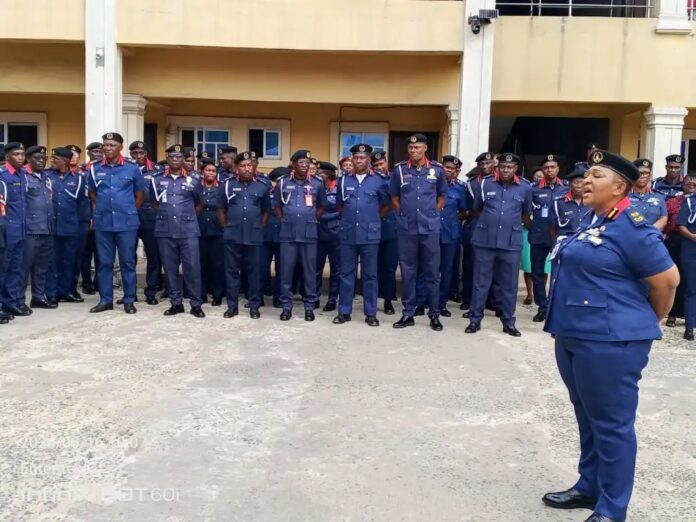
RULAAC demands independent probe into deaths of suspected illegal miners in NSCDC custody
By Ishaya Ibrahim
The Rule of Law and Accountability Advocacy Centre (RULAAC) has called for an independent investigation into the deaths of several suspected illegal miners who reportedly died while in the custody of the Nigeria Security and Civil Defence Corps (NSCDC) in Niger State.
In a statement signed by Okechukwu Nwanguma, Executive Director of RULAAC on Friday, September 18, 2026, said the circumstances surrounding the deaths were serious and required an immediate, transparent and independent investigation.
The organisation noted that while reports differed on the exact number of fatalities, the NSCDC had confirmed that deaths occurred among persons arrested and detained by the agency.
RULAAC also cited media reports quoting a survivor who allegedly said that dozens of detainees were held in an overcrowded and poorly ventilated cell, where some reportedly struggled to breathe and called for assistance.
According to the organisation, the allegations must be established or disproved through credible evidence rather than speculation.
RULAAC stressed that the suspected involvement of the detainees in illegal mining was separate from the government’s responsibility to protect their lives and dignity while in custody.
It said people arrested on suspicion of committing an offence remained presumed innocent until proven guilty and retained their rights to life, humane treatment, medical care and due process.
The group said the State assumed a heightened duty of care once a person was deprived of liberty because detainees depended substantially on authorities for their safety, medical needs and basic conditions of survival.
It therefore urged authorities to establish the precise causes of the deaths through independent medical and forensic evidence rather than relying solely on claims that the detainees may have died from illness or disease.
RULAAC listed several questions it said investigators should answer, including the number of people arrested and the number who died, the authorised capacity of the detention facility, the actual number of detainees held in the affected cell, and the ventilation and sanitation conditions.
It also called for investigations into whether detainees received medical screening upon admission, when signs of illness or distress first emerged, whether officers responded to alleged calls for help, and when medical assistance was sought.
The organisation further demanded examination of custody registers, duty rosters, incident reports, medical records, communication logs and available CCTV footage to establish what happened.
While welcoming reports that the NSCDC had decided to investigate the incident, RULAAC argued that an internal investigation by the institution in whose custody the deaths occurred could not, on its own, guarantee independence or public confidence.
It consequently called on the Federal Government to establish an independent investigation involving the National Human Rights Commission and other relevant authorities outside the NSCDC chain of command.
RULAAC also demanded independent forensic post-mortem examinations of the deceased, including laboratory and toxicological tests where necessary. It said families of the victims should be promptly notified and given reasonable access to information concerning the examinations.
The group urged authorities to immediately secure all relevant evidence, including CCTV recordings, custody and arrest records, duty rosters, medical records, communication logs and incident reports, to prevent their loss, alteration or destruction.
It also called for confidential interviews with survivors and protection for witnesses against intimidation or retaliation.
RULAAC said the incident raised wider concerns about the conditions under which security agencies conduct mass arrests.
The organisation maintained that although the government had a legitimate responsibility to enforce laws against illegal mining and address its economic, environmental and security consequences, law-enforcement operations must comply with legal and human-rights obligations.
It said no allegation of illegal mining could justify torture, inhuman or degrading treatment, dangerous detention conditions or neglect of detainees experiencing medical distress.
RULAAC called for the verified number and identities of those who died to be made public, proper accounting for survivors, independent investigations and autopsies, witness protection, and prosecution or disciplinary action against anyone found responsible.
It also demanded effective remedies, including appropriate compensation for victims’ families, if negligence, unlawful conduct or other official failures were established.


